Dehydrated skin can look dull, feel less supple, and develop a rough or tired-looking appearance as its moisture balance changes. When topical skincare alone does not provide the desired level of skin-quality improvement, injectable treatments may be considered as another aesthetic option. For individuals researching Skin Booster Injection in Abu Dhabi, understanding how skin boosters work for dehydration can help determine whether this approach aligns with their skin goals. Skin boosters are generally designed to enhance hydration, smoothness, texture, and radiance rather than alter facial contours, making them particularly relevant to concerns associated with dehydrated-looking skin.
What Is Dehydrated Skin?
Dehydrated skin refers to skin with insufficient water content, and it can occur regardless of whether someone naturally has oily, dry, combination, or normal skin. This distinction is important because dehydration is primarily about water availability rather than the amount of natural oil produced by the skin.
When the skin lacks adequate moisture, it may appear dull, feel tight, and show fine surface lines more prominently. Its texture can also look less smooth, and the complexion may lose some of its natural luminosity. Dehydration can be temporary or persistent and may be influenced by environmental conditions, lifestyle factors, aging, and changes in the skin’s natural moisture-retention ability.
What Is a Skin Booster Injection?
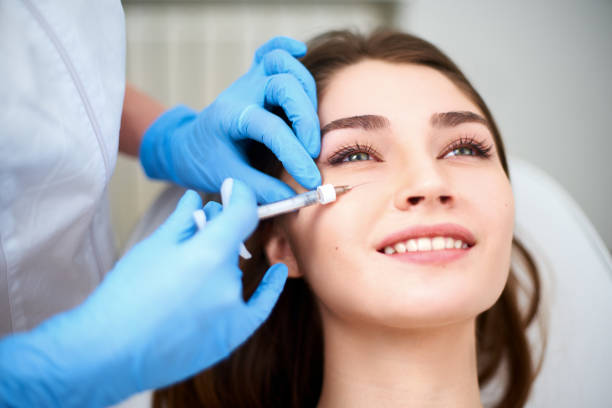
A skin booster injection is an injectable aesthetic treatment focused on improving the overall quality of the skin. Many skin boosters contain hyaluronic acid, a naturally occurring substance with strong water-binding properties.
Unlike conventional dermal fillers, which are generally used to restore volume or enhance facial contours, skin boosters are intended primarily to support characteristics such as hydration, smoothness, texture, suppleness, and radiance.
This makes them particularly interesting for people whose primary concern is skin quality rather than facial reshaping. The goal is usually a more hydrated, smoother, and refreshed-looking complexion while preserving natural facial proportions.
Why Is Hyaluronic Acid Important for Dehydrated Skin?
Hyaluronic acid naturally occurs within the body and plays an important role in maintaining hydration in tissues. Its ability to attract and retain water is one reason it is frequently used in aesthetic skin-quality treatments.
Injectable hyaluronic acid may support moisture within the dermal environment, potentially helping the skin appear more supple and hydrated. Clinical research has reported improvements in skin hydration following injectable hyaluronic acid treatments, with additional changes observed in characteristics such as radiance and texture.
The effect is not simply about adding moisture temporarily to the skin’s surface. Skin boosters are designed to deliver the selected material into specific layers of the skin, where it can contribute to an improved overall appearance.
Can Skin Boosters Improve Dehydrated-Looking Skin?
They may. Hydration is one of the primary characteristics targeted by many skin booster treatments, making them a potential option for people concerned about dehydrated-looking skin.
When hydration improves, the complexion may appear smoother, softer, and more luminous. Fine surface lines associated with dehydration may also become less noticeable because adequately hydrated skin tends to have a more supple appearance.
A systematic review of injectable hyaluronic acid has reported improvements in facial skin hydration as well as other measures of skin quality. These findings support the potential role of hyaluronic acid-based injectable treatments for improving the appearance of dehydrated skin.
Can Skin Boosters Improve Skin Radiance?
Dehydration often contributes to a dull complexion. When the skin surface becomes less smooth and lacks sufficient moisture, it may reflect light less evenly, reducing its natural glow.
Improved hydration can help create a smoother visual surface, potentially enhancing radiance. Research examining injectable hyaluronic acid has reported improvements in radiance and brightness alongside increased hydration.
This does not mean that a skin booster is intended to change someone’s natural skin color. Instead, greater radiance refers to skin that looks fresher, healthier, and more luminous while maintaining its natural complexion.
Can Skin Boosters Help With Fine Lines Caused by Dehydration?
Dehydration can make fine lines appear more visible, particularly when the skin becomes less supple. Supporting hydration may make the skin look smoother and can reduce the visual prominence of superficial lines.
Skin boosters should not be considered equivalent to conventional wrinkle fillers. Their primary purpose is to improve the quality of the skin rather than directly fill every visible line.
For people whose fine lines are strongly associated with dehydration and reduced skin quality, improving hydration may provide a noticeable enhancement in overall smoothness.
Can Skin Boosters Improve Texture and Suppleness?
Dehydrated skin can have a rougher or less refined appearance. Improving moisture levels may help restore a softer and more supple visual quality.
Clinical studies have reported improvements in skin texture following certain injectable hyaluronic acid treatments. Other research has also examined changes in firmness and elasticity, although results can differ according to the treatment formulation and study design.
For this reason, skin boosters may be viewed as treatments that address several connected aspects of skin quality rather than hydration alone.
Is Skin Booster Injection Suitable for Every Type of Dehydrated Skin?
Not necessarily. Dehydrated skin can have different underlying characteristics, and not every person with a dry or dull-looking complexion will have the same treatment needs.
Some individuals may primarily experience temporary dehydration, while others may have age-related changes, uneven texture, pigmentation concerns, or reduced elasticity alongside dehydration. In these situations, a skin booster may address only part of the overall concern.
An individual assessment can help determine whether injectable skin hydration is appropriate and whether the expected outcome matches the person’s goals.
What Should You Expect From Treatment?
The goal of a skin booster for dehydrated skin is generally to produce a more hydrated, smoother, supple, and radiant appearance. The result is typically intended to look natural rather than dramatically change facial features.
The degree of improvement varies between individuals. Factors such as skin condition, age, treatment area, injectable formulation, treatment technique, and individual biological response can influence the outcome.
It is also important to understand that skin boosters enhance skin quality rather than permanently changing how the skin ages. Maintaining realistic expectations is an important part of considering any injectable aesthetic treatment.
How Long Can Skin Hydration Improvements Last?
The duration of visible improvement varies according to the formulation, treatment protocol, individual skin characteristics, and natural aging process. Research has documented improvements in hydration and other skin-quality measures during follow-up periods lasting several months.
Some treatment approaches involve a series of sessions rather than relying on a single treatment. The appropriate schedule depends on the specific product and the individual’s skin goals.
Because hydration naturally fluctuates and the skin continues to age, skin boosters are generally regarded as a temporary approach to improving skin quality rather than a permanent solution for dehydration.
Why Is Personalized Treatment Important?
Dehydration is only one component of skin health. A person’s skin may simultaneously have concerns involving texture, pigmentation, elasticity, fine lines, or loss of firmness.
A personalized assessment can help distinguish dehydration from other causes of dull or tired-looking skin. It can also determine whether a skin booster is appropriate for the specific area and whether the expected benefits align with the individual’s goals.
The most suitable treatment plan should therefore be based on the actual condition of the skin rather than simply assuming that every dehydrated complexion requires the same injectable approach.
Frequently Asked Questions
Is Skin Booster Injection right for dehydrated skin?
Skin boosters may be suitable for selected individuals whose primary concern is dehydrated-looking skin. Many formulations are designed to improve hydration and related aspects of skin quality, such as smoothness, suppleness, and radiance.
How does a skin booster help dehydrated skin?
Many skin boosters contain hyaluronic acid, which has strong water-binding properties. Injectable treatment can support hydration within the skin and may contribute to a smoother, softer, and more luminous appearance.
Can skin boosters make dehydrated skin look more radiant?
Yes, they may improve visible radiance by supporting hydration and smoother skin texture. A more radiant appearance generally means the complexion looks fresher and more luminous rather than lighter.
Can a skin booster permanently fix dehydrated skin?
No. Skin boosters are generally intended to provide temporary improvements in skin quality. Hydration and skin appearance naturally change over time, so the duration of results varies between individuals.
Is a skin booster appropriate for everyone with dehydrated skin?
Not necessarily. The cause and degree of dehydration, overall skin condition, treatment goals, and individual characteristics should all be considered before deciding whether a skin booster is appropriate.