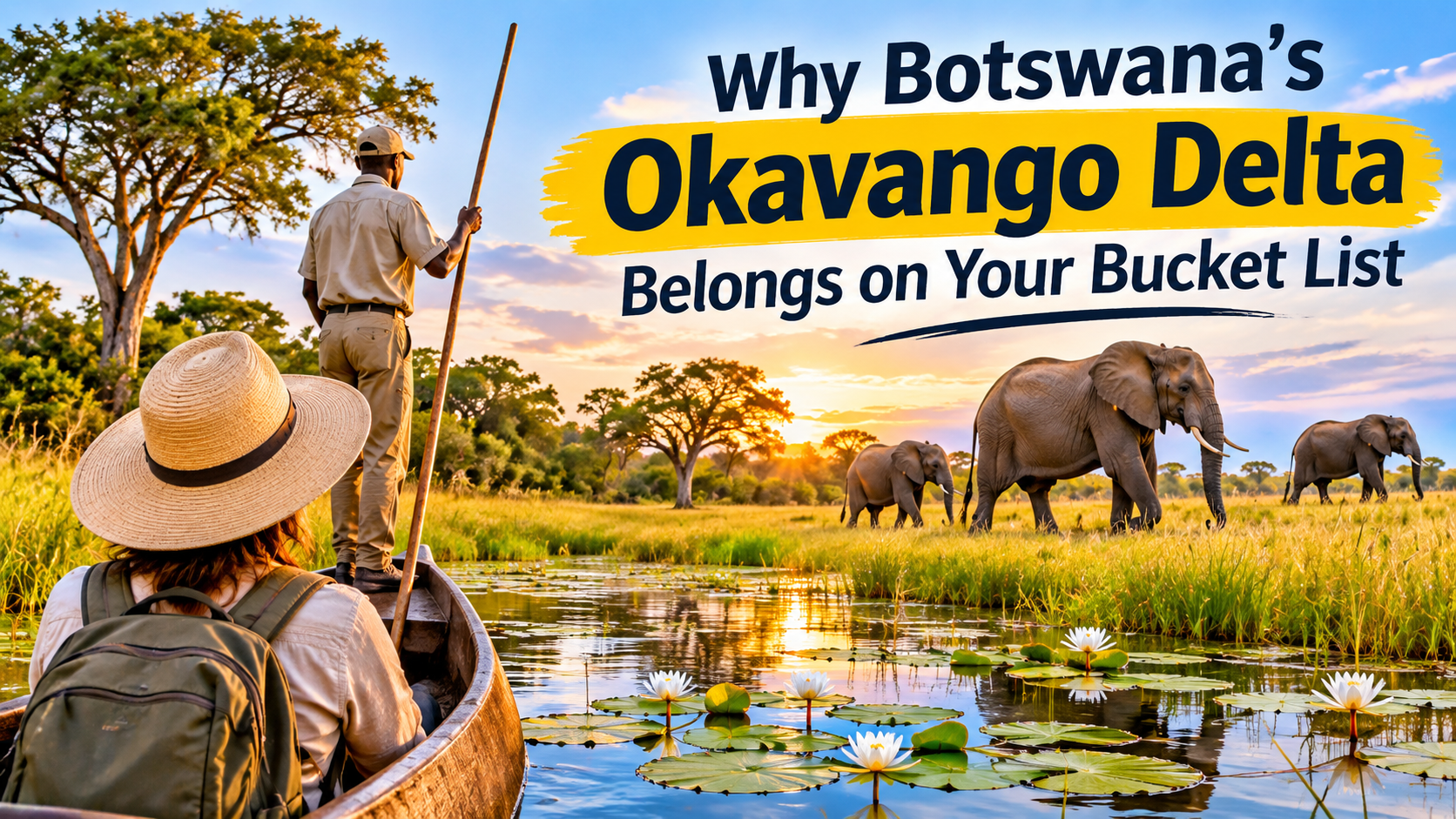
Most rivers run into the sea. The Okavango Delta does not. It flows into the Kalahari Desert and spreads out into a maze of channels, islands and lagoons, creating one of the most unusual wildlife areas in Africa. For anyone who loves nature, it is a very special place to visit.
At Travel to Africa, our team is based in Stratford, East London, and the Delta is one of the places our travellers talk about most when they get home. Here is a plain guide to why it is worth the trip, and how to plan it.
What Makes the Okavango Delta Different
The water that feeds the Delta comes from rain that falls far away in the highlands of Angola. It takes weeks to travel south, and it reaches northern Botswana at the start of the dry season. So while the land around is dry, the Delta fills up.
This is a big reason why wildlife gathers here. Elephants, buffalo, lions, hippos and many other animals come to the water, and the birdlife is excellent too. The Delta is also listed as a UNESCO World Heritage Site, which shows how important it is.
Safari by Water and on Foot
One of the best things about the Delta is how many ways you can explore it.
- Mokoro trips: A mokoro is a small, narrow boat that is poled quietly through the reeds. You sit low on the water and see frogs, birds and lilies up close. It is peaceful and very memorable.
- Boat safaris: Larger boats are used in some areas and are good for watching hippos, crocodiles and birds.
- Walking safaris: With an expert guide, you can explore islands on foot and learn about tracks, plants and small creatures.
- Game drives: In drier areas, you can look for lions, leopards and wild dogs from a vehicle.
What you can do depends on the camp and the season, so it helps to ask before you book.
The Wildlife You Can Expect
The Delta is home to many of the animals people hope to see in Africa. You have a good chance of spotting elephants, hippos, buffalo, giraffes, zebras and a wide range of antelope. Lions and leopards are present, and wild dogs are seen in some areas. With luck, you may find other rare animals too.
Birdwatchers are well looked after as well. Many species live in and around the water, from tiny kingfishers to large eagles. Even if you are not a keen birder, you may find yourself enjoying it.
No one can promise a particular sighting. That is part of the fun, and a good guide will make sure you see plenty.
The Quiet, Low-Crowd Feel
Botswana has long followed a policy of limiting visitor numbers in its wildest areas. This often means fewer camps, smaller groups and higher prices, but it also means a quieter and more private safari.
You may go out for a whole morning and see only your own vehicle or boat. For many travellers, that feeling of space is the main reason they come back.
When to Go
The best time depends on what you want to see.
- May to October (dry season): The floodwater arrives in the Delta, and animals gather near it. The weather is cooler and drier, and this is the most popular time. July to September is usually the busiest.
- November to April (green season): The rains bring fresh green scenery, baby animals and lots of birds. Prices are often lower, but some areas can be hard to reach and it can be hot and wet.
Because water levels change from year to year, it is wise to talk to a travel adviser before booking.
Where to Stay
Camps in the Okavango come in many styles. Some sit on islands surrounded by water, while others are in the dry areas on the edges of the Delta, such as Moremi Game Reserve and the Khwai area. Many are small, with just a handful of tents or rooms.
A good plan is to combine a water camp with a land camp. That way you get to enjoy both mokoro trips and game drives, and you see different kinds of wildlife.
Most camps are in remote places, and guests usually arrive on small planes. This adds to the sense of adventure, and the views from the air are lovely.
Getting There from the UK
There are no direct flights from the UK to the Delta. Most people fly to Johannesburg or Cape Town, then take a connecting flight to Maun, the main gateway town. From Maun, a short flight in a light aircraft takes you to your camp.
The time difference with the UK is small, so jet lag is rarely a problem. Allow plenty of time between flights, and pack soft bags, as small planes have strict weight limits.
Combine It with Other Places
The Delta fits well into a longer trip. Many travellers add Chobe National Park, known for its elephants, and Victoria Falls on the border of Zambia and Zimbabwe. Others finish with a few days in Cape Town.
Travel O Africa can put these pieces together so your flights, transfers and camps all line up neatly.
Is It Expensive?
Botswana is not a budget choice. Camps are small and remote, and getting there takes planning. However, many travellers feel the quiet, the wildlife and the variety of activities make it good value. If cost is a worry, the green season is often cheaper.
Plan Your Okavango Trip with Us
If the Delta is calling you, the Travel to Africa team would be happy to help. We will talk through your dates and budget and suggest camps that suit you. Call or email us for a friendly chat. There is no pressure to book.
Frequently Asked Questions
What is the Okavango Delta?
It is a large inland delta in northern Botswana, where a river spreads out across the desert into channels, islands and lagoons.
When is the best time to visit?
May to October is the most popular time, as the water arrives and animals gather. The green season is quieter and often cheaper.
Is the Okavango Delta safe for tourists?
Yes, with a good guide and a reputable camp. Follow your guide’s advice, especially on walks and boat trips.
Do I need to take malaria tablets?
The Delta is in a malaria area. Speak to your GP or a travel clinic well before you travel.
How many nights should I stay?
We suggest at least three to five nights, so you have time to try different activities.
How can Travel O Africa help me plan a trip to the Delta?
Travel O Africa can suggest the right camps, arrange flights and transfers, and build a trip that fits your dates and budget.
Is it suitable for children?
Some camps accept children and others have age limits, so check before you book.
Contact Travel to Africa
Phone: 0208 178 8400
Email: info@traveloafrica.co.uk
Address: 30 Romford Road, Stratford, London E15 4BZ