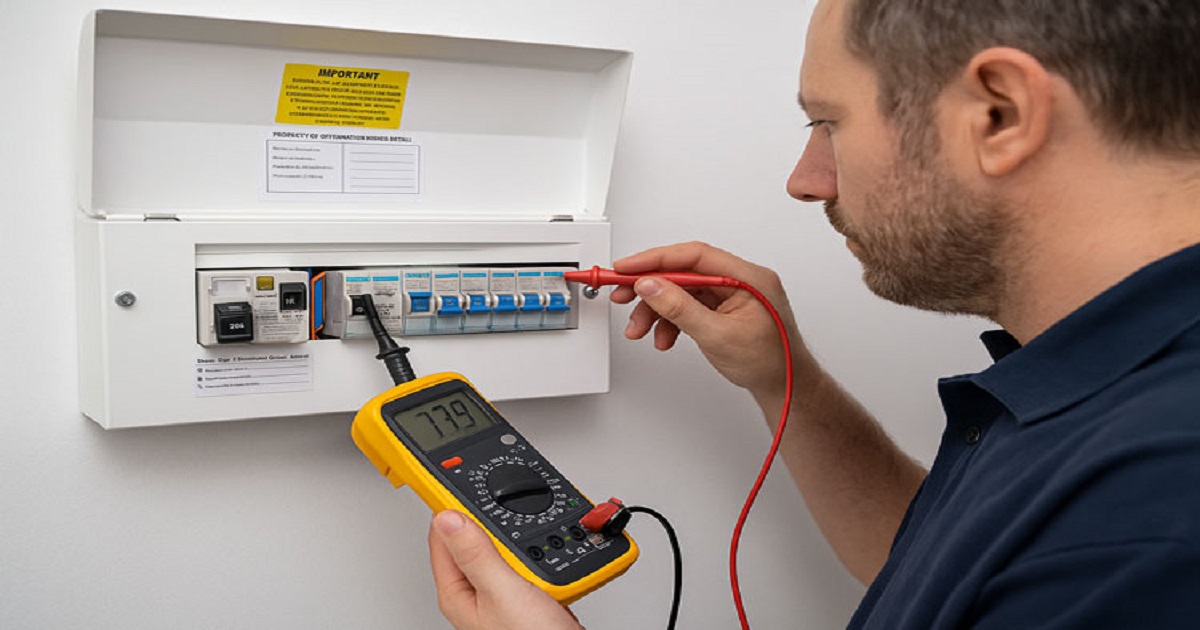
Most of us never think about the wiring behind our walls until a fuse trips, a socket crackles, or a letting agent asks for paperwork. By then, you’re often up against a deadline. If you own, rent, or manage a property in the Royal Borough, arranging an EICR in Kingston upon Thames before you’re pushed into it is one of the smartest and cheapest bits of risk management you can do.
At London Property Inspections, we’ve seen how a calm, well-planned EICR in Kingston upon Thames saves landlords, homeowners, and letting agents time, money, and stress. This guide covers what the report is, who needs one, what happens on the day, what it costs, and how to avoid the mistakes that slow people down.
What Is an EICR, and Why Does It Matter?
An EICR is an Electrical Installation Condition Report. Think of it as an MOT for your fixed electrical system. A qualified electrician inspects and tests your wiring, consumer unit (fuse box), sockets, switches, lighting circuits, and earthing and bonding. They then record what they find against the national wiring standard, BS 7671 (the IET Wiring Regulations).
The report doesn’t just say “pass” or “fail”. It tells you:
- Whether the installation is safe to keep using
- Any damage, deterioration, or wear
- Dangerous defects that could cause shock or fire
- Departures from current standards that deserve attention
The end result is a clear, dated document you can hand to tenants, mortgage lenders, insurers, or a buyer’s solicitor.
Who Needs an EICR in Kingston upon Thames?
Landlords in the private rented sector
Since 1 April 2021, private landlords in England have had to ensure the electrical installation in each rented property is inspected and tested at least every five years by a qualified person. The rules come from the Electrical Safety Standards in the Private Rented Sector (England) Regulations 2020. You must give a copy of the report to existing tenants within 28 days of the inspection and to new tenants before they move in.
Local authorities can enforce these rules, and penalties for non-compliance can reach £30,000. With Kingston’s busy rental market, from student lets near the university to professional flats around Surbiton station, councils take compliance seriously.
Homeowners
There’s no legal requirement for owner-occupiers to have regular testing, but it’s strongly recommended every ten years, or whenever you buy an older home. Many Kingston properties are Victorian terraces or 1930s semis, and some still have wiring that has been patched up over decades.
Buyers, sellers, and agents
If you’re buying, a report can reveal costly surprises before you exchange contracts. If you’re selling, a clean certificate removes a common stumbling block in negotiations. Letting agents often insist on one before they’ll take on a new instruction.
What Happens During an Electrical Safety Inspection?
Knowing what to expect takes the mystery out of the process. A typical domestic inspection runs in four stages.
Step 1: Visual inspection
The electrician examines accessible parts of the installation: the consumer unit, socket outlets, light fittings, visible cabling, and any signs of overheating, scorching, or damage. They also check for things like missing RCD protection, undersized cables, or non-compliant fixtures.
Step 2: Dead testing
With the power off, the engineer carries out continuity and insulation resistance tests. These confirm that protective conductors are properly connected and that cable insulation hasn’t broken down.
Step 3: Live testing
Next, the power goes back on for measurements such as earth fault loop impedance and RCD trip times. These show whether protective devices would operate quickly enough in a real fault.
Step 4: The written report
Everything is recorded in a formal report with an overall assessment of either satisfactory or unsatisfactory. Any observations come with a classification code, covered below.
Understanding Your EICR Codes
This is the part that confuses most people, so here it is in plain English.
- C1 (Danger present): Immediate risk of injury. This needs urgent action, and often the electrician will make it safe on the spot.
- C2 (Potentially dangerous): Not an immediate hazard, but could become one. An installation with a C2 is classed as unsatisfactory.
- C3 (Improvement recommended): Doesn’t meet the latest standard but isn’t unsafe. It doesn’t cause a fail.
- FI (Further investigation): Something couldn’t be fully assessed and needs a closer look. This also results in an unsatisfactory outcome until resolved.
For landlords, the key point is this: if your report is unsatisfactory because of C1, C2, or FI items, you must arrange remedial work within 28 days (or any shorter period stated in the report) and send written confirmation of completion to the tenant and, if requested, the local authority.
Choosing Fast, Fair, and Fully Certified Electrical Testing
Not every inspection is equal. When you’re comparing providers for EICR in Kingston upon Thames, look beyond the headline price.
Check the credentials
Your inspector should be registered with a recognised scheme such as NICEIC, NAPIT, or ELECSA, hold current qualifications in inspection and testing, and carry public liability insurance. Ask for proof. A reputable firm will happily provide it.
Look for transparent pricing
“Fair” means you know the cost before work begins. Prices depend on the number of circuits, property size, and age. As a rough guide, a one-bedroom flat often costs less than a five-bedroom detached house, and extra distribution boards add time. Be wary of rock-bottom quotes, since they’re sometimes followed by inflated remedial costs.
Expect speed without shortcuts
A small flat can often be inspected within a few hours, and a larger home may take most of a day. A good provider turns the paperwork around quickly, usually within a couple of working days, so you aren’t left chasing a certificate while a tenancy start date approaches.
Make sure the report is clear
You should receive a readable document with photographs or notes where relevant, not a wall of jargon. If you can’t understand your own report, ask the engineer to explain it.
Common Problems Found in Kingston Properties
Local housing stock shapes what inspectors typically find. Here are issues we see regularly:
- Outdated consumer units: Old rewirable fuse boards or units without RCD protection are a frequent C2.
- Missing or inadequate bonding: Gas and water pipes need proper equipotential bonding, and older conversions often fall short.
- DIY alterations: Extra sockets and lights added without proper testing can cause problems.
- Loft conversions and extensions: Additional circuits sometimes aren’t documented or tested.
- Deteriorating cable insulation: This is particularly common in properties with original wiring from the mid-20th century.
Knowing this helps you prepare. If your home is a period property in Norbiton or Coombe, or a converted flat in New Malden, it’s sensible to budget for some remedial work.
Practical Tips Before Your Inspection
A little preparation makes the visit smoother and can keep costs down.
- Clear access. Make sure the engineer can reach the consumer unit, under-stairs cupboards, and any outbuildings with electrics.
- Tell your tenants. Power will be switched off for periods, so give them proper notice and agree a time that suits them.
- Gather old paperwork. Previous certificates, plans, or notes about alterations speed up the process.
- Book early. Don’t wait until the five-year anniversary. Allow time for remedial work if it’s needed.
- Plan for the 28-day window. If you suspect problems, line up an electrician for repairs in advance.
- Keep records safe. Store reports digitally and on paper. You’ll need to produce them for local authority requests, insurers, or future sales.
Electrical safety shouldn’t be a last-minute scramble. Whether you’re a landlord with a five-year deadline, a buyer sizing up an older house, or a homeowner who simply wants peace of mind, booking an EICR in Kingston upon Thames with a qualified, transparent provider protects people, property, and your finances. Know your codes, prepare your access, act quickly on any remedial work, and keep your certificate safe.
If you’d like a clear quote and a prompt, professionally certified inspection, the team at London Property Inspections is ready to help you get compliant without the headache.
FAQs
1. How often do I need an EICR in the UK?
Private landlords in England must have one at least every five years, or sooner if the previous report recommends it. For owner-occupiers, every ten years is the usual recommendation, and again when you buy or move into a property.
2. How long does an inspection take?
A one- or two-bedroom flat typically takes two to four hours. Larger houses with several circuits or multiple consumer units can take most of a day. Your inspector can give a better estimate after learning about your property.
3. What happens if my property gets an unsatisfactory result?
You’ll need to arrange remedial work to fix C1, C2, or FI items, normally within 28 days. After the work, you should receive written confirmation or a new report showing the issues are resolved, and landlords must pass this to tenants and, if asked, the local authority.
4. Can I stay in the property during testing?
Yes. Power will be turned off in stages for short periods, so you may lose lights or sockets temporarily. It’s wise to save any work on computers and plan around the outages.
5. How much does an EICR cost?
Prices vary with property size, number of circuits, and condition. A small flat generally costs less than a large family home. Ask for a fixed, itemised quote up front, and check what’s included, such as the written report and any minor fixes.