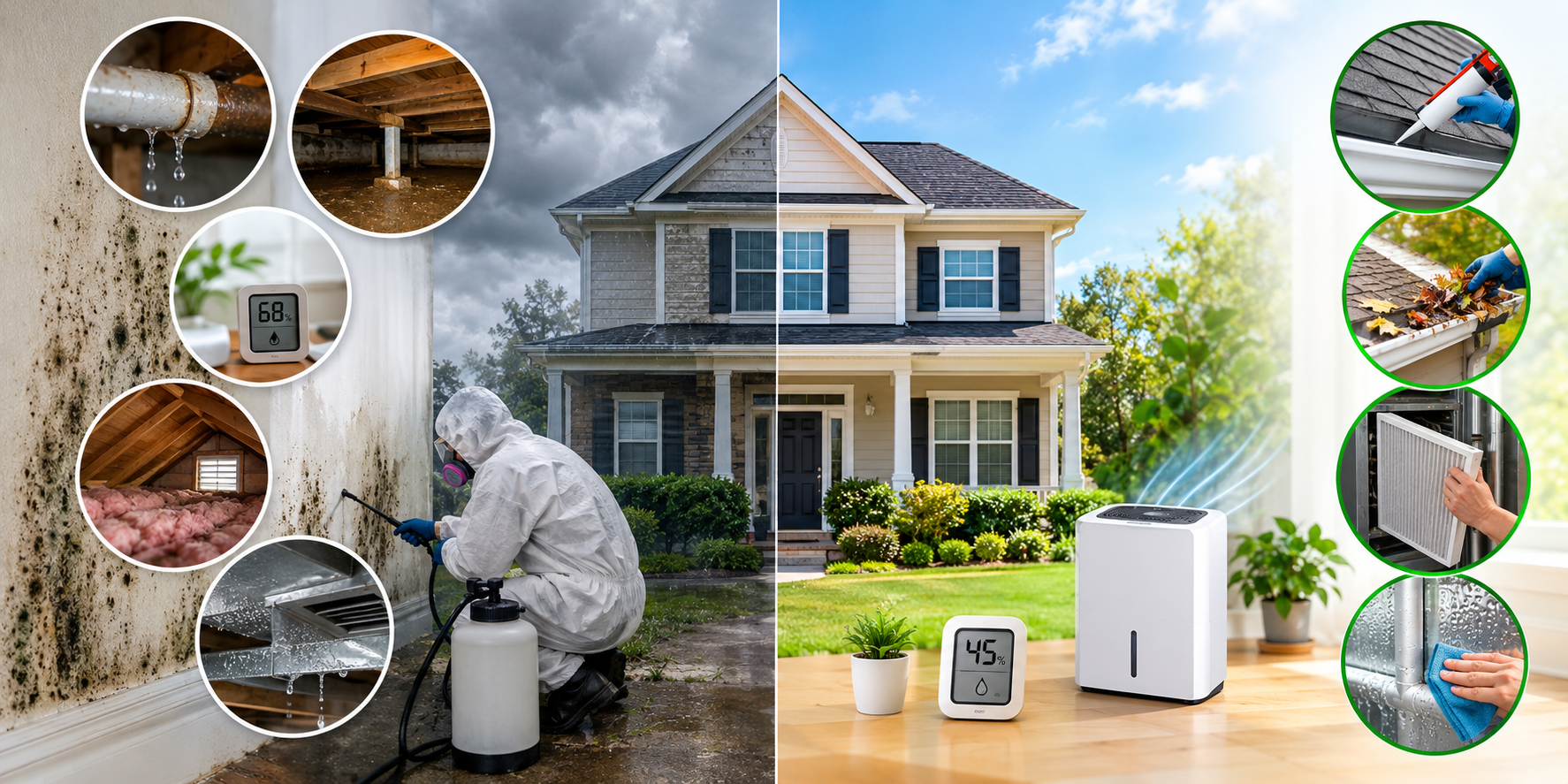
You paid for the cleanup, and then the musty smell came back. That is discouraging, and it does not mean you did anything wrong. Regrowth is common in damp summers, so why does mold come back after remediation in places like Charlotte? The answer usually comes down to moisture that was never fully controlled.
Common Mold Recurrence Causes in Charlotte Homes
Mold spores are always present in indoor air, and the EPA notes that none of them grow without moisture. When regrowth happens, one of the following issues is typically responsible.
The Water Source Was Never Fixed
If you clean mold but leave the water problem in place, the EPA says the mold will most likely return. Leaking roofs, damaged pipes, and poor drainage around the foundation are common causes.
Materials Did Not Dry Completely
Damp materials left behind can restart growth. The EPA advises drying water-damaged areas within 24 to 48 hours, and one restoration manager notes that regrowth is more likely when materials are not dried to proper moisture levels.
Humid Air Keeps Moisture High
Charlotte sits in a mixed-humid climate, and mold thrives when indoor humidity stays above 60 percent. Without dehumidification or working air conditioning, humid summer air makes that level easy to reach.
Crawlspaces and Attics Lack Airflow
Restoration professionals point to crawlspaces and attics with poor circulation as frequent problem areas. In vented crawlspaces, warm outdoor air can settle on cooler wood and insulation, leaving them damp. Some experts recommend sensor-controlled fans in these areas.
The HVAC System Adds Moisture
Condensation in air ducts, filters, and coils can host mold and circulate spores through the home. The EPA advises keeping air conditioning drip pans clean and drain lines flowing freely. Regular HVAC maintenance keeps this risk low.
Surface Cleaning Replaced Full Removal
Scrubbing with household cleaners may remove stains without addressing the root problem, and it can disturb spores in the process. The EPA adds that dead mold can still cause allergic reactions, so it must be removed, not only killed.
Use this guide when something seems off after cleanup. Notice how many of these signs involve moisture rather than the mold itself. That is why a complete remediation plan pairs cleanup with repairs and humidity control.
If regrowth keeps frustrating you, Carolina Mold Experts provides mold removal in Charlotte, NC and can help you find the moisture behind the problem.
Humidity Control to Prevent Mold in Carolina Homes
The EPA recommends keeping indoor humidity below 60 percent, ideally between 30 and 50 percent. A hygrometer, which costs roughly $10 to $50, lets you check the number at any time.
When readings climb, run a dehumidifier or air conditioner, use exhaust fans while showering or cooking, and dry any condensation quickly. Restoration professionals suggest choosing a dehumidifier based on how many pints of moisture it removes daily and the size of the space.
Condensation is an early signal. If moisture collects on windows, walls, or pipes, dry the surface and address the source. Insulating cold water pipes can also help prevent it from building up.
How to Keep Mold From Returning After Removal
Preventing mold regrowth after treatment takes routine attention, not constant worry. Repair leaks quickly, keep gutters clear, and make sure the ground slopes away from your foundation so water does not collect near the house.
Check under sinks, in attics, and in crawlspaces regularly for musty smells, condensation, or discoloration. Never paint or caulk over moldy surfaces, since the EPA says paint applied over mold is likely to peel. If problems keep returning, consider mold-resistant drywall or paint in the affected area.
Schedule a follow-up inspection after remediation to confirm the treated areas remain dry. Replace HVAC filters regularly, keep drain lines clear, and wipe wet surfaces quickly. Small habits like these add up over a humid Charlotte summer.
FAQs
How quickly can mold return after remediation?
It can return quickly when moisture remains. The EPA notes that in most cases mold will not grow on materials dried within 24 to 48 hours of a leak, so fast drying makes a real difference.
What humidity level should I aim for?
Aim for below 60 percent; 30 to 50 percent is ideal, according to the EPA. Charlotte’s humid summers make regular checks with a hygrometer especially useful.
Can a dehumidifier alone stop mold from returning?
Not by itself. A dehumidifier lowers humidity, but leaks, drainage problems, and damp materials still need repair. Together, these steps help keep mold away for the long term.
Does bleach prevent regrowth?
The EPA does not recommend routine bleach use during cleanup. Removing the mold and fixing the moisture problem matter more, because dead mold can still cause allergic reactions.
Which areas of the home should I check most often?
Check under sinks, sump pump areas, around leaky windows, in crawlspaces, and in attics with little airflow. Restoration experts also note that rooms far from the furnace or on the shaded north side can stay damp longer.
Final Thoughts
Mold that returns after professional work is discouraging, and you deserve clear answers. In most cases, the cause is unresolved moisture rather than failed cleanup. Fix the source, keep humidity within the recommended range, and check vulnerable areas regularly.
Noticing dampness or musty air beneath your home? Carolina Mold Experts can help with a moisture crawl space in Charlotte, NC before regrowth begins.