
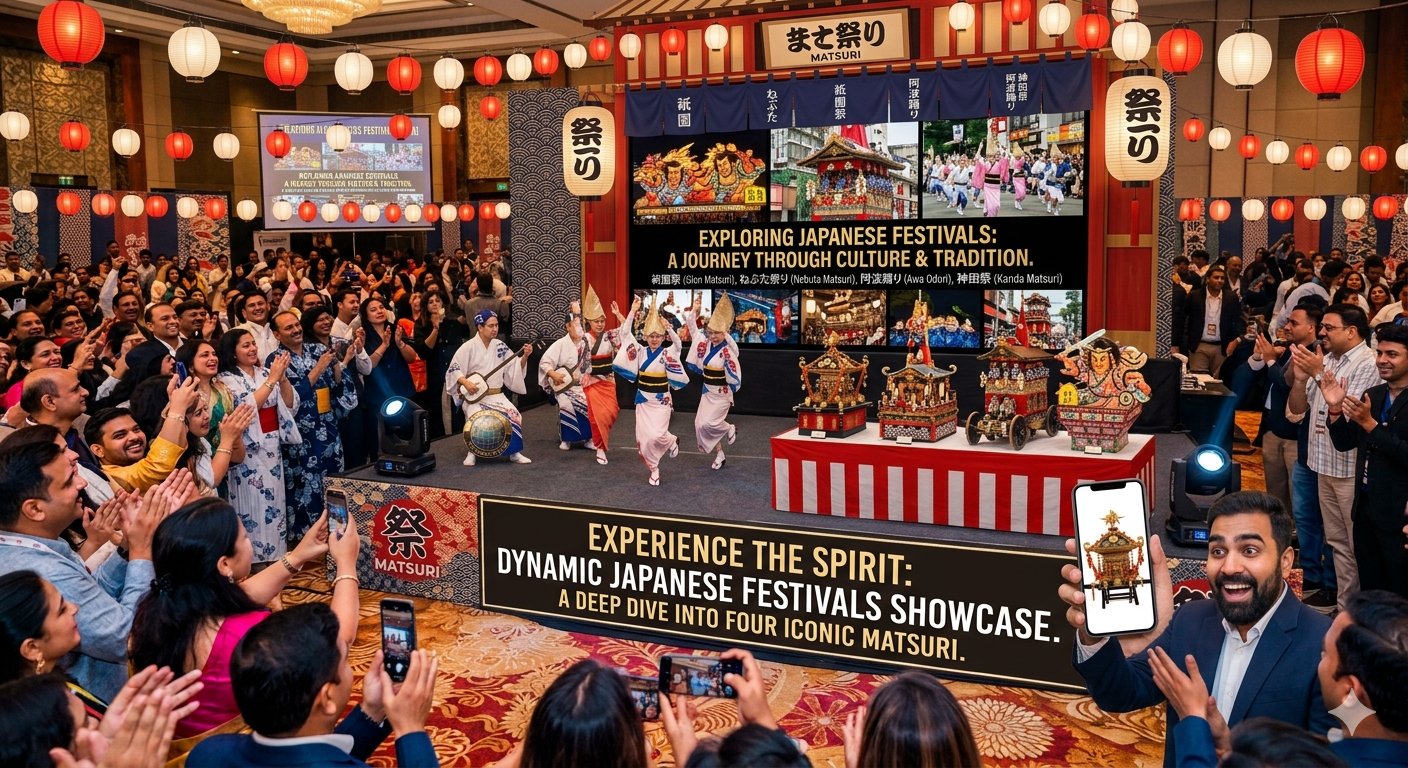
Japan’s most unique festivals in 2026 include the Sapporo Snow Festival (February), Okayama’s Hadaka Matsuri (February), Kyoto’s Gion Matsuri (July), Aomori Nebuta (early August), and Tokushima’s Awa Odori (mid-August). Most follow fixed seasonal patterns, so confirm exact 2026 dates with official organizers before booking.
What Makes a Japanese Festival “Unique”?
Japan holds thousands of matsuri (festivals) every year, and most began as Shinto or Buddhist rituals: giving thanks for harvests, praying for protection from disease, or honoring ancestors. Over centuries, many grew into spectacles with giant floats, fire, dance, or even near-naked crowds.
If you’re deciding where to go, the festivals worth planning a trip around usually share one of three traits:
- A one-of-a-kind ritual you won’t see elsewhere
- Scale and craftsmanship, such as hand-built floats or lanterns
- Visitor participation, where you can join in rather than just watch
Unique Japanese Festivals to Plan Around in 2026
Unique Japanese Festivals Dates shift each year slightly, and some festivals are set by the lunar or Shinto calendar. Treat the timing below as typical patterns, not confirmed 2026 schedules.
| Festival | Location | Typical Timing | What Makes It Unique |
|---|---|---|---|
| Sapporo Snow Festival | Sapporo, Hokkaido | Early February | Massive snow and ice sculptures across the city |
| Saidaiji Eyo (Hadaka Matsuri) | Okayama | February | Thousands of loincloth-clad men compete for sacred sticks |
| Kanamara Matsuri | Kawasaki | Usually April | A fertility festival with a lighthearted, irreverent tone |
| Gion Matsuri | Kyoto | All of July | One of Japan’s most famous festivals, with towering wheeled floats |
| Nachi no Hi Matsuri | Wakayama | Mid-July | Priests carry giant torches up shrine steps |
| Aomori Nebuta Matsuri | Aomori | Early August | Huge illuminated warrior floats |
| Awa Odori | Tokushima | Mid-August (Obon) | Mass street dancing open to participants |
| Yoshida no Himatsuri | Fujiyoshida | Late August | Bonfires marking the end of the Mount Fuji climbing season |
Festival Highlights by Season
Winter: Snow and Sacred Ritual
The Sapporo Snow Festival is best for first-time winter visitors. Its main sites are easy to reach in the city center, and the sculptures are lit at night.
Hadaka Matsuri in Okayama is a different experience entirely. It is intense, crowded, and best watched from a respectful distance unless you’re specifically trained to take part. Photography is allowed in designated areas, but expect crowd control and strict rules.
Spring: Local Character
Spring is peak travel season because of cherry blossoms, but festivals like Kanamara Matsuri add something more offbeat. It’s lighthearted and widely attended by international visitors, though it’s best approached with an open mind. The Takayama Spring Festival (mid-April) is a quieter, more traditional alternative, known for its ornate floats.
Summer: Peak Festival Season
Summer is when Japan’s festival calendar is at its fullest.
- Gion Matsuri (Kyoto): The festival runs the entire month of July. The main float processions take place around mid-July, and the evenings before them are popular for strolling streets lit with lanterns.
- Nachi Fire Festival: Held at Kumano Nachi Taisha, it combines fire, shrine ritual, and a mountain setting.
- Nebuta (Aomori): The floats are painted paper over wire frames, lit from inside. Visitors can often join as haneto dancers by wearing the traditional costume, but check the official rules for costume requirements.
- Awa Odori (Tokushima): The best-known dance festival in Japan. The chant “Yatto sa!” echoes through the streets, and some groups welcome visitors into the dance.
Autumn: Harvest and Heritage
Autumn brings cooler weather and many harvest-themed festivals. The Takayama Autumn Festival (October) and regional danjiri festivals around Osaka are good choices for travelers who prefer smaller crowds than summer events.
How to Say Hello in Japanese (and Other Festival Phrases)
A few words go a long way with festival staff, vendors, and neighbors in the crowd. Here are the essentials:
| English | Japanese | Romanization | When to Use |
|---|---|---|---|
| Hello / Good afternoon | こんにちは | Konnichiwa | Daytime greeting, the standard “hello” |
| Good morning | おはようございます | Ohayō gozaimasu | Morning, polite |
| Good evening | こんばんは | Konbanwa | After sunset |
| Thank you | ありがとうございます | Arigatō gozaimasu | Everywhere |
| Excuse me / Sorry | すみません | Sumimasen | Moving through a crowd |
| Delicious! | おいしい | Oishii | Street food stalls |
Konnichiwa works in almost any daytime situation. At festivals, a smile and a small nod are just as appreciated as perfect pronunciation.
Practical Tips for Visiting Festivals in Japan
- Book early. Major festivals fill up hotels in the host city and nearby areas. Mid-August (Obon) is a national travel peak.
- Check official sources. Dates, routes, and entry rules can change. Rely on the festival organizer or the local tourism office.
- Arrive early. Good viewing spots at parades fill up hours before they start.
- Carry cash. Many food stalls (yatai) don’t accept cards.
- Prepare for weather. Summer festivals are hot and humid, and winter ones can be well below freezing.
- Respect rituals. Don’t touch sacred objects, and follow staff directions, especially at fire or crowd-heavy events.
- Take your trash with you or use designated bins. Public bins are often scarce.
A Simple Example Itinerary
If you have two weeks in summer, one workable route is:
- Kyoto for Gion Matsuri in mid-July
- Top hello in japanese language
- Wakayama for Nachi Fire Festival
- Aomori for Nebuta in early August
- Tokushima for Awa Odori in mid-August
Some of these dates sit close together, so check the exact 2026 calendar and travel times before committing to a route.
Choosing the Right Festival for Your Trip
- Want to participate? Choose Awa Odori or Nebuta.
- Want tradition and history? Choose Gion Matsuri or Takayama.
- Want something dramatic? Choose Nachi Fire Festival or Yoshida no Himatsuri.
- Traveling in winter? Choose Sapporo Snow Festival.
FAQ’s
1. What is the most famous festival in Japan?
Gion Matsuri in Kyoto is widely regarded as one of Japan’s most famous, with a history stretching back more than a thousand years.
2. How do you say hello in Japanese?
Konnichiwa (こんにちは) is the standard daytime greeting. Use ohayō gozaimasu in the morning and konbanwa in the evening.
3. When is the best time to visit Japan for festivals?
Summer, especially July and August, has the most festivals. Winter and autumn offer smaller, distinctive events.
4. Are Japanese festivals open to tourists?
Yes. Most are public events, though some rituals restrict participation to local communities.
5. Can foreigners join festival dances?
At festivals like Awa Odori and Nebuta, visitors can often join, sometimes through organized groups or by renting a costume. Check the official rules.
6. How far in advance should I book accommodation?
For major festivals, several months ahead is sensible, especially around Obon in mid-August.
7. Are festivals free to attend?
Most street parades are free to watch. Reserved seating, where offered, usually costs extra.
8. What should I wear to a Japanese festival?
Comfortable shoes and weather-appropriate clothing. Some festivals are known for yukata (light summer kimono), but they’re optional.
9. Is it appropriate to take photos?
Generally yes, but follow posted rules and avoid photographing people at close range without asking, especially during rituals.
10. Do the dates change every year?
Many follow fixed dates or weekday rules, but some shift. Always confirm the 2026 schedule on official sites.
Conclusion
Japanese festivals are among the best ways to see traditions that are still lived rather than staged. Whether you’re drawn to the scale of Nebuta, the energy of Awa Odori, or the quiet craftsmanship of Takayama, a bit of planning and a friendly konnichiwa will take you further than you’d expect. Confirm the 2026 dates with official organizers, book early, and let the local rhythm guide your trip.
