Group cooking classes can be lively and enjoyable, but they are not always the right format for every learner. Some people have a specific skill they want to improve. Others may be preparing for an event, trying to understand a particular cuisine, or simply feeling more comfortable learning at their own pace.
Private instruction can make the learning process more targeted. Instead of working through a standard lesson designed for many people, the session can focus on the learner’s individual needs. This can be particularly useful when the goal is practical improvement rather than simply trying a new recipe.
Why Specific Goals Lead to Better Learning
“Learn to cook better” is difficult to measure. “Improve knife skills” or “learn to make a balanced sauce” is much more specific. A focused goal gives the lesson direction. It also makes progress easier to recognize.
Before a session, think about what problem keeps appearing in your kitchen. Perhaps vegetables cook unevenly, sauces lack depth, or meals take too long to prepare. A good lesson should address that problem directly.
Match the Lesson to Your Experience
Private teaching works best when the instructor understands the learner’s starting point. A beginner may need more time with basic techniques, while an experienced cook can move quickly into more advanced topics.It helps to be honest about your current ability. There is no advantage in pretending to know more than you do.
Beginner Focused Learning
Beginners often benefit from structured repetition. They can work on a small set of core skills until those actions become comfortable.
A focused lesson might cover knife handling, heat control, seasoning, ingredient preparation, and simple cooking sequences.
Skill-Specific Coaching
More advanced learners may want to address one difficult area. Examples include sauces, seafood preparation, dough handling, cooking proteins, menu planning, or efficient kitchen organization.
Because the session is focused, more time can be spent on correction and refinement.
How Private Cooking Classes can Support Personalized Practice
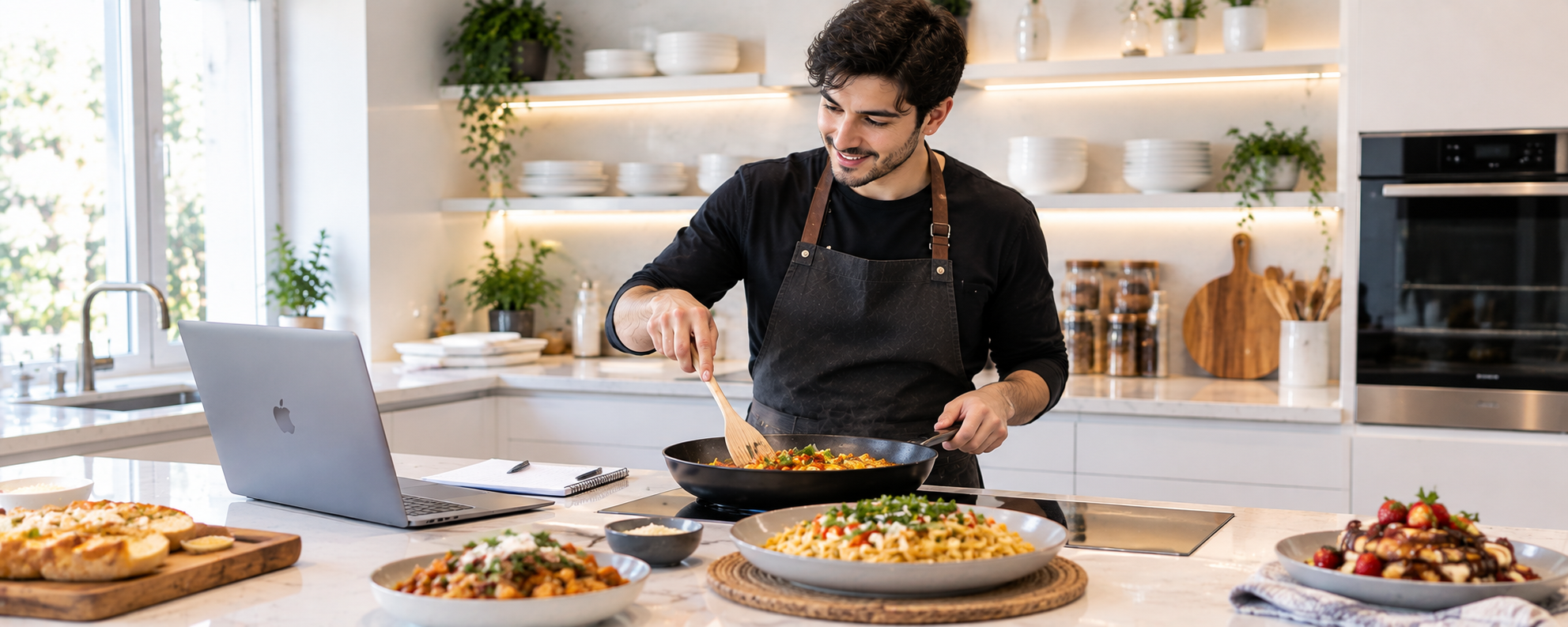
The main advantage of private teaching is the opportunity to match instruction to the learner. Instead of trying to keep pace with a whole room, the student can ask detailed questions and repeat steps when needed.
This format can also make feedback more precise. Private cooking lessons an instructor can watch how the learner holds a knife, manages a pan, or seasons a dish and then suggest a specific adjustment. That type of feedback can be difficult to achieve in a larger group.
Prepare for the Session
A little planning can improve the result. Write down the foods you struggle with and the techniques you want to understand.
It can also help to note:
- Your current experience level
- Equipment you regularly use
- Ingredients you commonly buy
- Dietary considerations
- The dishes you most want to prepare
The more specific the information, the easier it becomes to create a focused lesson.
Use the Session to Learn Decision Making
One of the biggest benefits of personalized instruction is learning how to make decisions rather than simply follow instructions. Ask why a certain pan is chosen, why the heat changes, or why an ingredient is added at a particular point. When learners understand the reasoning, they can apply the principle to new dishes.
Building a Personal Reference System
After a private lesson, create your own practical notes. Record temperatures, textures, timing ranges, ingredient substitutions, and mistakes to avoid. Do not rely only on writing the recipe. Write down the things that helped you understand the process.
For example, instead of noting only “cook until done,” record what “done” looked and felt like during the lesson. This creates a personal reference guide based on direct experience.
Repeating the Same Dish With Small Changes
A useful practice method is to prepare the same dish several times while changing one variable. Reduce or increase the salt. Change the heat. Use a different pan. Adjust cooking time slightly. This teaches you what actually influences the final result. It is a simple form of controlled experimentation, and it can improve cooking judgment quickly.
Private Learning for Special Occasions
Personalized instruction can also be useful for people preparing for a dinner, celebration, or family gathering. Rather than learning unrelated recipes, the lesson can focus on a practical menu and the preparation order needed to serve it efficiently. This makes the learning directly relevant to a real situation.
How to Judge Progress
Improvement should not be measured only by whether the final dish looks perfect. Consider whether you now understand what to do differently next time.
Ask yourself:
- Can I repeat the technique without assistance?
- Can I identify problems earlier?
- Do I understand how heat affects the food?
- Can I adjust seasoning with more confidence?
- Can I explain why I chose a certain method?
These are signs of genuine skill development.
Wrapping Up
Private cooking instruction can be valuable when the learner has a clear goal and wants focused guidance. The format allows more direct feedback, flexible pacing, and detailed questions.
The most useful private lesson is not simply one where an instructor prepares an impressive meal. It is one that leaves the learner better equipped to make decisions independently.
When the lesson is built around real kitchen challenges, the experience becomes practical, personal, and easier to carry into everyday cooking.