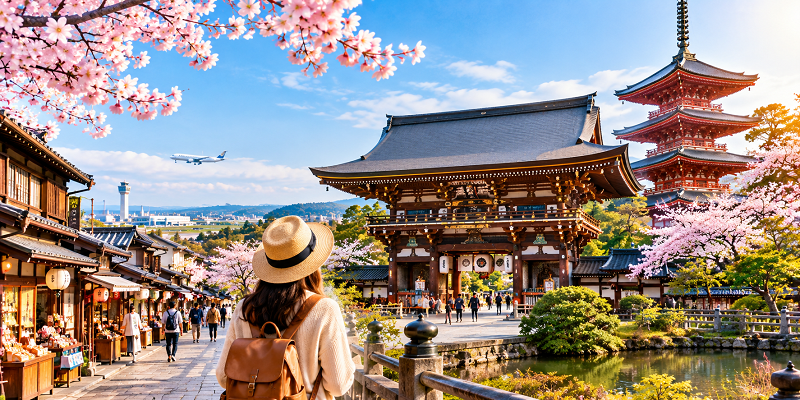
Narita is the historic temple town in Chiba Prefecture that most travellers only know through its airport. Yet it has one of Japan’s most visited Buddhist temples, a charming old shopping street and some of the best grilled eel in the country. This guide explains what to see, how to plan your visit and how to use Narita smartly on your way into Tokyo.
Introduction
Narita is a city of about 130,000 people in Chiba Prefecture, roughly 60 kilometres east of central Tokyo. Most international visitors land at Narita International Airport, collect their bags and rush toward the capital. That is a missed chance, because the town itself is calm, walkable and rich in tradition.
The main attraction is Naritasan Shinshoji Temple, a Shingon Buddhist temple founded in 940 CE. Visitors reach it by walking along Omotesando, a lively old street lined with wooden shops, souvenir stalls and eel restaurants. In a few hours you can experience a side of Japan that busy Tokyo rarely shows.
If you are still deciding how to organise your whole journey, comparing some India to Japan Trip Packages can show how flights, airport transfers and sightseeing are usually combined, so you can judge where a Narita stop fits into the plan. Whether you book independently or not, the sections below will help you plan with confidence.
This article covers what Narita is, the best time to go, entry rules, airport transfers, top attractions, food, layover options, hotels, budgets, sample itineraries and common mistakes.
Key Takeaways
- Narita is a town and an airport. The airport sits in Narita City, about 60 km from central Tokyo.
- Half a day is enough to see Naritasan Shinshoji Temple and Omotesando. A full day allows a relaxed pace.
- The airport has three terminals. Check your terminal before you plan transfers.
- Choose your train wisely. The Narita Express and the Keisei Skyliner are the fastest links to Tokyo.
- Flights operate roughly from early morning to late evening. Late arrivals or early departures often make a Narita hotel stay sensible.
- Carry some cash. Many small shops and eateries around the temple still prefer it.
- Check visa and entry rules early. Indian passport holders generally need a visa for Japan.
What Is Narita? A Quick Definition
Narita is a city in Chiba Prefecture, Japan, known for Naritasan Shinshoji Temple and for hosting Narita International Airport, one of the two main international airports serving Tokyo.
Narita International Airport (NRT) opened in 1978 and handles a large share of Japan’s international traffic. Tokyo’s other major airport, Haneda, is much closer to the city centre. Because of this, Narita often serves as a transfer or gateway point rather than a destination.
The city itself is a traditional pilgrimage town. For centuries, pilgrims have travelled to Naritasan Shinshoji Temple to pray for safety, success and good health. That heritage still shapes the town’s food, festivals and slow, welcoming character.
Why Narita Is Worth More Than a Layover
Narita is worth visiting because it offers a quick, low-stress introduction to Japanese temple culture, traditional food and small-town life, all close to the airport.
Several features make it useful for first-time visitors:
- Easy access: Trains connect the airport to Narita Station in about 10 minutes.
- Cultural value: The temple complex has halls, pagodas, gardens and daily ceremonies.
- Local food: The town is famous for unagi (grilled eel), served in many Omotesando restaurants.
- Manageable size: You can explore the main sights on foot.
- Calm start or end to a trip: It is a gentler way to adjust to jet lag than going straight into central Tokyo.
Who Narita Suits Best
| Traveller Type | Why Narita Works |
| Layover travellers | Short train ride, temple visit and meal possible in a few hours |
| First-time Japan visitors | Gentle introduction to local culture |
| Families | Walkable streets, parks and easy transport |
| Culture and photography fans | Temple architecture, festivals and old shopfronts |
| Early or late flight passengers | Convenient hotels near the airport |
When Is the Best Time to Visit Narita?
Spring (March to April) and autumn (October to November) are the best seasons because of mild weather, cherry blossoms and autumn leaves, while New Year and the July Gion Festival add major cultural events.
Narita shares the climate of the Tokyo region, with four clear seasons.
| Season | Weather | What to Expect |
| Spring (March to May) | Mild and pleasant | Cherry blossoms in Naritasan Park, comfortable walking |
| Summer (June to August) | Hot, humid, rainy in June | Narita Gion Festival in July with floats and music |
| Autumn (September to November) | Cooler, clearer | Colourful maple leaves in the temple gardens |
| Winter (December to February) | Cold, dry, often sunny | New Year temple visits, fewer tourists in January and February |
Crowd Alert
The first days of January are extremely busy, because millions of people across Japan visit shrines and temples for the first prayers of the year. If you want a peaceful visit, go on a weekday morning outside holidays.
Entry Requirements and Pre-Arrival Steps
Entry rules depend on your passport. Indian citizens generally need a Japanese visa, and most visitors should register on Visit Japan Web before landing at Narita to speed up immigration and customs.
Visitors from some countries can enter Japan visa-free for short stays, while others must apply in advance through the Japanese embassy, consulate or authorised agencies. Documents and processing times change, so confirm everything on the official Ministry of Foreign Affairs of Japan website.
For a clear overview of how Indian passengers usually plan flights, visa timing and arrival steps, guides on Narita travel options for Indians can be a helpful starting point before you finalise bookings.
Pre-Trip Document Checklist
- Passport with enough validity and blank pages.
- Tourist visa, if required for your nationality.
- Confirmed return or onward ticket.
- Hotel booking and itinerary.
- Proof of funds, such as bank statements.
- Visit Japan Web registration and a screenshot of the QR codes.
- Travel insurance with medical cover.
Even a layover traveller who plans to leave the airport must meet the entry rules for Japan, so check whether your passport needs a transit or tourist visa before you book a long stopover.
How to Get from Narita Airport to Tokyo and Back
The Narita Express and the Keisei Skyliner are the fastest ways to reach Tokyo, usually taking about 40 to 60 minutes, while limousine buses and the Keisei Access Express offer cheaper or more direct alternatives.
Narita Airport has Terminals 1, 2 and 3. Two rail companies serve the airport, JR East and Keisei, and each has express and standard services.
Airport Transfer Options Compared
| Option | Typical Journey | Best For | Notes |
| Narita Express (JR) | About 55 to 60 minutes to Tokyo Station | Tokyo, Shinjuku, Shibuya, Yokohama | Reserved seats, luggage space |
| Keisei Skyliner | About 40 minutes to Nippori or Ueno | Ueno, Asakusa, Akihabara area | Fastest link to the city’s east side |
| Keisei Access Express | Around 60 to 70 minutes | Budget travellers, Asakusa line | Cheaper, standard train |
| Airport limousine bus | About 60 to 90 minutes | Hotels with direct bus stops | Less walking with luggage, traffic can slow it |
| Taxi | About 60 to 90 minutes | Groups, very late arrivals | Very expensive |
Practical Tip
Pick your train based on your hotel area, not just on speed. If you stay in Asakusa or Ueno, the Skyliner or Access Express is usually easier. If you stay in Shinjuku or Shibuya, the Narita Express is often simpler. A Suica or Pasmo card helps with local trains after you arrive.
Top Attractions in Narita
The top Narita attractions are Naritasan Shinshoji Temple, Omotesando street, Naritasan Park, Boso no Mura and the town’s seasonal festivals.
Naritasan Shinshoji Temple
This is the heart of the town. The complex includes the Great Main Hall, a three-storey pagoda, the Great Pagoda of Peace and calm gardens. The temple is dedicated to Fudo Myoo, a Buddhist deity associated with protection. Visitors can watch the goma fire ritual, a ceremony held several times a day, with drums and chanting. Plan about 1.5 to 2 hours here.
Omotesando Street
Omotesando is the approach to the temple, around 800 metres long. It is lined with old-style wooden buildings, souvenir shops, sweet stalls and restaurants. It is the best place to try local snacks, buy small gifts and enjoy a slow walk. Many shops close in the early evening, so go before 5 PM.
Naritasan Park
Behind the temple lies a large landscaped park with ponds, bridges and walking trails. It is lovely during cherry blossom season and autumn. It is also a quiet place to rest after sightseeing.
Boso no Mura
This open-air museum village nearby recreates life in the Edo period. Visitors can try traditional crafts such as pottery or dyeing and see historic buildings. It suits families and anyone interested in Japanese history.
Seasonal Events
- New Year Hatsumode: The busiest period for temple visits.
- Narita Gion Festival (July): Decorated floats and traditional performances.
- Spring and autumn gardens: Cherry blossoms and maple leaves.
Nearby Add-Ons
If you have a full day, you can also explore the historic canal town of Sawara, sometimes called “Little Edo,” or visit the aviation-themed attractions near the airport. Check opening hours before you go.
Food: What to Eat in Narita
Narita is best known for unagi (grilled eel), along with traditional sweets, rice crackers, noodles and the usual Japanese staples like ramen and tempura.
Eel dishes date back to pilgrim days, when travellers needed filling meals after long walks. Today, unagi restaurants line Omotesando, and many have grilling stations visible from the street.
Must-Try Foods
- Unagi-don or unagi-ju: Grilled eel over rice with sweet-savoury sauce.
- Yokan: Sweet bean jelly, a traditional dessert.
- Senbei: Grilled rice crackers sold at street stalls.
- Ramen and soba: Reliable, quick meals near the station.
- Matcha sweets: Often served in small tea houses.
Dietary Considerations
Vegetarian, vegan and halal options are limited in small towns, because stocks often contain fish or meat. Carry snacks, use translation apps and check ingredients. The airport and larger hotels usually offer more varied choices, including some Indian food.
Planning a Narita Layover or Short Stopover
With at least 6 to 7 hours between landing and your next flight, you can visit Naritasan Shinshoji Temple and Omotesando, but you must allow time for immigration, transfers and returning early.
Many travellers face long connections at Narita. Here is a simple framework to decide whether to leave the airport.
Layover Decision Guide
| Layover Length | Recommendation |
| Under 5 hours | Stay inside the airport; explore shops and restaurants |
| 6 to 8 hours | Possible short trip to Narita town if you have the right visa and your bags are checked through |
| 9 to 12 hours | Comfortable temple visit, lunch and slow walk |
| 12 hours or more | Consider a hotel night, or a short Tokyo visit with careful timing |
Layover Checklist
- Confirm that your passport allows entry to Japan.
- Ask whether your luggage is checked through to the final destination.
- Allow 60 to 90 minutes for immigration and customs, and more at peak times.
- Use coin lockers or luggage storage if needed.
- Return to the airport at least 3 hours before departure.
- Keep your boarding pass, passport and Visit Japan Web QR codes ready.
Narita Airport has night-time operating restrictions, so flights generally run from early morning to late evening. Check your airline’s schedule if you arrive late or leave very early.
Where to Stay Around Narita
Hotels near Narita Airport suit early or late flights, while stays near Narita Station or Omotesando suit travellers who want a slower, cultural experience.
| Area | Best For | Highlights |
| Airport hotels | Late arrivals, early departures | Free shuttles, quick check-in |
| Narita Station area | Convenience and value | Trains to the airport and Tokyo, restaurants |
| Omotesando street | Atmosphere | Walking distance to the temple, traditional feel |
| Central Tokyo | Longer trips | More sightseeing and nightlife, longer airport transfers |
What to Check When Booking
- Whether a free airport shuttle is offered and its hours
- Distance to the nearest station
- Room size and luggage storage
- Cancellation policy and tax details
- Breakfast options, especially if you have dietary needs
Budget Planning for a Narita Visit
A Narita visit is generally affordable if you travel by train, eat local meals and spend mostly on temple-area food, transport and souvenirs, while airport taxis and last-minute hotels cost the most.
Main Cost Areas
- International flights and visa fees
- Airport transfers
- Local trains and buses
- Meals and snacks
- Hotel for the night, if needed
- Temple-area activities or craft experiences
- Luggage storage fees
- Travel insurance and mobile data
Ways to Save Without Losing Quality
- Compare train options before you travel, as the cheaper rail route may suit your hotel just as well.
- Eat set meals at lunch instead of dinner.
- Use IC cards rather than buying single tickets where convenient.
- Visit free areas such as Omotesando and the temple grounds.
- Book airport hotels early for peak seasons.
Exchange rates change, so check the yen rate before you plan your final budget.
Sample Itineraries for Narita
A simple Narita itinerary ranges from a 6-hour layover visit to a relaxed full day, built around the temple, Omotesando and a local meal.
Option 1: The 6-Hour Quick Visit
- Take the train from the airport to Narita Station
- Walk along Omotesando and eat unagi
- Visit Naritasan Shinshoji Temple
- Return to the airport with a comfortable buffer
Option 2: The Full-Day Cultural Visit
- Morning: Naritasan Shinshoji Temple and the goma ritual
- Midday: Lunch on Omotesando and souvenir shopping
- Afternoon: Naritasan Park or Boso no Mura
- Evening: Dinner and an early night near the station or airport
Option 3: Narita as a Gateway to Tokyo
- Day 1: Arrive, visit Narita briefly, then head to Tokyo
- Day 2 onward: Explore Asakusa, Shibuya, Shinjuku and Mount Fuji day trips
For a longer plan, many travellers connect their Narita arrival with a wider city itinerary, and resources on Tokyo holiday planning can help you decide how many days to allow for sightseeing, rail passes and day trips.
Japanese Etiquette Around Temples and Public Spaces
Respect quiet behaviour, follow signs at temples, avoid loud conversation on trains and do not tip, because politeness and cleanliness are central to Japanese culture.
Do and Don’t Checklist
- Do bow slightly when entering temple halls.
- Do rinse your hands at the purification fountain before praying.
- Do keep your voice low and phone on silent in public transport.
- Do carry a small bag for your rubbish, as public bins are rare.
- Don’t take photos where signs prohibit it.
- Don’t eat while walking inside the temple grounds.
- Don’t tip at restaurants or taxis.
- Don’t point chopsticks at people or stand them upright in rice.
Common Challenges and How to Handle Them
Common challenges include long airport transfers, language barriers, cash-only shops, luggage handling and tight layover timing, and all are manageable with preparation.
| Challenge | Practical Solution |
| Long airport transfer | Choose the express train that matches your hotel area |
| Language barrier | Use translation apps and learn simple phrases |
| Cash-only places | Carry yen and use convenience-store ATMs |
| Heavy luggage | Use airport luggage storage or delivery services |
| Limited food options for special diets | Pack snacks and check menus ahead |
| Jet lag | Keep your first day light and sleep early |
| Tight layover | Add buffer time and keep documents ready |
Packing and Connectivity Essentials
Pack season-appropriate layers, comfortable walking shoes and a Type A power adapter, and arrange mobile data before you land.
Japan uses 100V power with two-pin Type A sockets. Indian travellers should carry an adapter and confirm that their chargers support the voltage.
Packing Checklist
- Layers and a compact rain jacket
- Slip-on shoes for easy removal
- Power bank and Type A adapter
- Small coin pouch and some yen
- Handkerchief, since restrooms may lack paper towels
- Copies of passport, visa and bookings
- Prescription medicines with a doctor’s note, after checking Japan’s import rules
Staying Connected
Airport counters sell SIM cards and pocket Wi-Fi, and eSIMs are widely used. Compare data limits and set up before departure if possible.
Future Trends in Narita and Japan Travel
Narita’s travel experience is moving toward more digital services, easier airport procedures, better visitor information and a stronger focus on regional experiences outside Tokyo.
- Digital arrival tools: Online immigration and customs forms are becoming standard.
- Airport improvements: Narita has been planning upgrades to terminals and passenger flow, so check for current changes.
- Regional tourism: Visitors increasingly explore Chiba and nearby towns rather than rushing to central Tokyo.
- Sustainable travel: Rail use, reusable items and responsible behaviour are encouraged.
- Longer trips: Travellers add Kyoto, Osaka or Hokkaido after arriving in Tokyo.
Attraction hours and entry rules can change, so confirm details before booking.
Common Mistakes First-Time Visitors Make
- Assuming Narita is next to Tokyo. The ride takes about 40 to 60 minutes.
- Leaving the airport without checking visa rules. This can cause serious problems.
- Cutting layovers too close. Always keep a generous buffer.
- Choosing the wrong train for the hotel. It can add hours of extra travel.
- Visiting on New Year days without expecting crowds. Plan for long queues.
- Relying only on cards. Small shops often prefer cash.
- Skipping etiquette basics. Quiet manners matter at temples and on trains.
Booking Smartly for Japan and Asia
Smart booking means comparing what is included, checking cancellation terms, confirming visa timelines and allowing buffer time between flights and tours.
Whether you book directly or through an operator, first decide your must-have items: flights, hotels, transfers, rail passes and attraction tickets. If you want to see how these items are bundled, it helps to Book tour packages comparisons with a checklist in hand, covering inclusions, exclusions, refund rules and support during the trip.
For travellers who plan several countries in one holiday, reading general Asia tour booking tips can help you understand seasonal pricing, visa timing and how to sequence destinations without rushing.
Conclusion
A smart Narita visit comes down to a few simple choices: confirm your visa and entry steps, choose the right airport train, leave enough buffer for layovers, see the temple and Omotesando at a relaxed pace and respect local etiquette.
Whether you spend six hours or a full day, Narita offers a peaceful and authentic taste of Japan before you head deeper into Tokyo and beyond.
Frequently Asked Questions
1. Is Narita worth visiting?
Yes. Narita is worth visiting for Naritasan Shinshoji Temple, Omotesando street and local unagi. It is a calm introduction to Japanese culture, and it works well as a half-day or full-day stop near the airport.
2. How far is Narita Airport from Tokyo?
Narita Airport is about 60 kilometres from central Tokyo. Express trains take roughly 40 to 60 minutes, and buses may take longer depending on traffic.
3. Which is better: the Narita Express or the Keisei Skyliner?
Neither is better for everyone. The Skyliner is faster to Ueno and Nippori, while the Narita Express runs directly to Tokyo Station, Shinjuku and Shibuya. Choose the one that matches your hotel’s location.
4. How many hours do I need to visit Narita town?
A minimum of 6 to 7 hours between landing and your next flight is advisable for a quick visit. Half a day is comfortable, and a full day lets you add the park or Boso no Mura.
5. Do Indian citizens need a visa to leave the airport during a layover?
Indian passport holders generally need a visa to enter Japan, including for leaving the airport on a long layover. Rules vary by itinerary, so confirm with the Japanese embassy or your airline before you book.
6. Is Narita better than Haneda for international travel?
Haneda is closer to central Tokyo, while Narita often has more international routes and fares. The better choice depends on your flight schedule, price and hotel location.
7. What is the best time to visit Naritasan Shinshoji Temple?
Weekday mornings in spring or autumn are ideal because the weather is mild and crowds are lighter. January’s New Year period is the busiest time of the year.
8. Can I combine Narita with Tokyo and Mount Fuji?
Yes. Narita is a convenient arrival point for a longer trip. After a short temple visit, travel to Tokyo and add a Mount Fuji or Hakone day trip.