
Titanium has a reputation problem in manufacturing circles. Everyone wants to use it because it’s strong, light, and shrugs off corrosion like it’s nothing. But ask anyone who’s tried cutting it the old-fashioned way, and you’ll hear a different story, one full of dulled tools, slow feed rates, and enough heat buildup to make a machinist nervous. So how does aerospace manufacturing, an industry obsessed with titanium, actually get clean, precise cuts out of such a stubborn material? The answer is laser cutting, and it’s changed the game entirely.
If you’ve ever wondered why titanium components in aircraft look so impossibly clean at the edges, or how manufacturers manage to cut intricate shapes out of a metal that resists almost everything, this is exactly what we’re getting into.
Why Titanium Is Both a Blessing and a Headache for Manufacturers
1. The Strength-to-Weight Advantage
Titanium offers a strength comparable to steel while weighing roughly 40% less. In an industry where every ounce affects fuel efficiency, that’s not a small perk, it’s practically the entire reason titanium shows up so often in aerospace design in the first place. It also resists corrosion and holds up under extreme temperature swings, making it a natural fit for engine components and structural parts alike.
2. Why It Fights Back Against Conventional Cutting
Here’s the catch. Titanium has low thermal conductivity, meaning heat doesn’t dissipate quickly during cutting. Instead, it builds up right at the cutting edge, which wears down conventional tooling fast and risks warping the material. It also work-hardens easily, so mechanical cutting methods that apply pressure tend to make the surrounding material even tougher to work with as you go. It’s a bit like trying to slice through a rubber band that gets stiffer every time you press on it.
How Laser Cutting Actually Handles Titanium
1. The Cutting Mechanism Explained
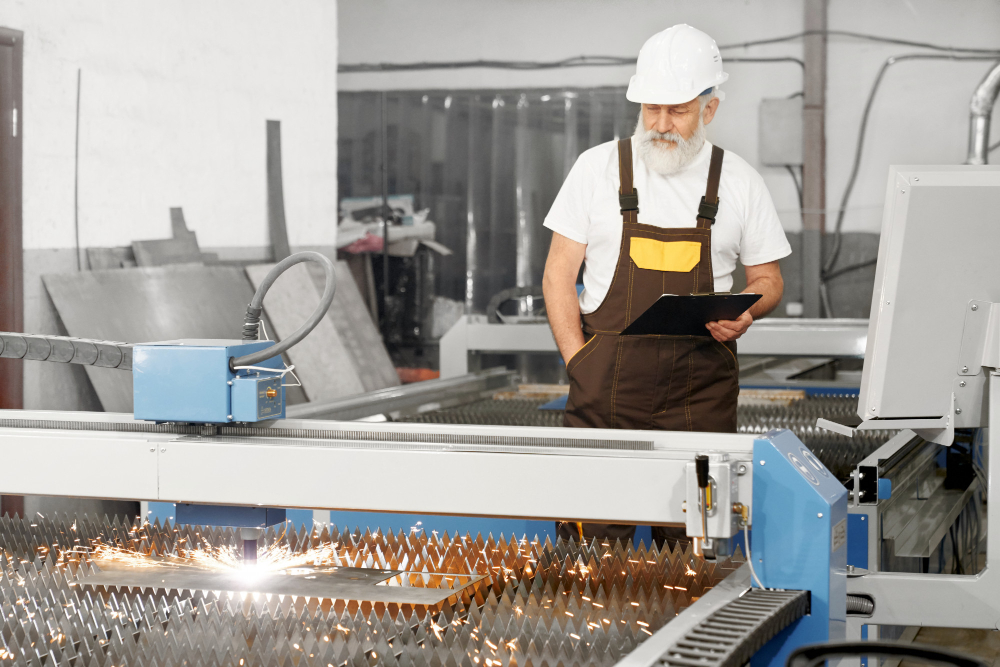
Laser cutting sidesteps titanium’s stubbornness entirely by avoiding physical contact altogether. A focused laser beam heats a narrow path until the material melts or vaporizes, and an assist gas blows the molten material away, leaving a clean kerf behind. No blade wear, no mechanical resistance, just concentrated energy doing the work.
2. Choosing the Right Assist Gas
For titanium specifically, the choice of assist gas matters more than you’d think. Argon or nitrogen are commonly used because they’re inert and prevent oxidation at the cut edge. Oxygen, while it speeds up cutting on other metals, tends to cause unwanted oxidation and brittleness on titanium, so it’s generally avoided for aerospace-grade work where edge quality can’t be compromised.
Why Aerospace Manufacturers Rely on Laser Cutting for Titanium Parts
1. Clean Edges Without Mechanical Stress
Since there’s no physical tool pressing against the material, laser cutting avoids the work-hardening problem that plagues traditional titanium machining. The result is a clean, consistent edge without the microstructural stress that weakens the surrounding metal.
2. Complex Geometries Made Possible
Aerospace parts aren’t always simple shapes. Brackets, panels, and structural components often require intricate cutouts and tight-radius curves that would be nearly impossible to achieve efficiently with mechanical cutting. Laser systems handle these complex geometries with a level of detail that keeps designers from having to compromise on part complexity just because the material is difficult.
3. Minimal Material Waste
Titanium isn’t cheap, and wasting it isn’t an option most manufacturers can afford. Laser cutting’s narrow kerf width means less material gets vaporized away during the process, which adds up to meaningful savings across large production runs.
Where Titanium Laser Cutting Shows Up in Aircraft and Spacecraft
1. Structural Brackets and Frames
Many internal support structures rely on titanium for its strength-to-weight ratio, and laser-cut brackets fit precisely into assemblies without requiring extensive secondary machining.
2. Heat Shields and Exhaust Components
Titanium’s heat resistance makes it a natural choice for parts near engines and exhaust systems, where laser-cut precision ensures a proper fit under extreme operating conditions.
3. Landing Gear Parts
Landing gear components take a beating on every single takeoff and landing. Titanium’s durability paired with the precision of laser cutting gives these critical parts the strength and dimensional accuracy they need to perform reliably, flight after flight.
Challenges Engineers Still Deal With
1. Heat-Affected Zones and Oxidation
Even with inert assist gases, some heat-affected zone forms around the cut. Engineers manage this by fine-tuning laser power, cutting speed, and gas flow to keep this zone as thin and clean as possible, since any oxidation at the edge can compromise fatigue resistance over time.
2. Edge Quality on Thicker Sections
As titanium sections get thicker, maintaining a clean, square edge becomes trickier. Manufacturers often adjust beam focus position and cutting speed specifically for thicker stock to avoid dross buildup or tapering along the cut edge.
How Titanium Cutting Fits Into the Bigger Aerospace Production Chain
1. Pairing With Aerospace Laser Cutting Services
Titanium cutting rarely happens in isolation. It’s usually one stage in a broader manufacturing workflow that includes forming, welding, and finishing. Many manufacturers turn to specialized aerospace laser cutting services that already have titanium-specific parameters dialed in, saving significant trial and error compared to figuring it out in-house. Choosing experienced aerospace laser cutting services also means better consistency across large batches, since these providers have already solved the heat management and edge quality issues that trip up less specialized shops.
2. Adding Aerospace Laser Marking for Traceability
Once a titanium part is cut to spec, it typically needs permanent identification before it moves further down the production line. This is where aerospace laser marking comes in, stamping serial numbers, lot codes, or certification data directly onto the surface without affecting structural integrity. Pairing precision cutting with reliable aerospace laser marking creates a fully traceable part history from raw titanium stock to finished component. Facilities offering both aerospace laser cutting services and aerospace laser marking under one roof tend to simplify logistics considerably for manufacturers juggling tight production schedules.
Conclusion
Titanium earns its reputation as a demanding material, but laser cutting has essentially neutralized most of the headaches that used to come with working it. Clean edges, complex shapes, minimal waste, and none of the tool wear that plagues conventional methods, it’s easy to see why this pairing has become so standard in aerospace manufacturing. As designs keep pushing toward lighter, stronger components, titanium isn’t going anywhere, and laser cutting will keep being the tool that makes working with it actually manageable.
FAQs
Why is titanium hard to cut with traditional tools? Its low thermal conductivity and tendency to work-harden wear down conventional cutting tools quickly.
What assist gas works best for cutting titanium? Argon or nitrogen, since they prevent oxidation at the cut edge better than oxygen.
Does laser cutting weaken titanium parts? Not significantly, as long as heat-affected zones are properly controlled during the process.
Can laser cutting handle thick titanium sections? Yes, though it requires adjusted focus and speed settings to maintain clean edges.
Is laser-cut titanium more expensive than other cutting methods? It can cost more upfront, but reduced waste and tool wear often balance that out.
