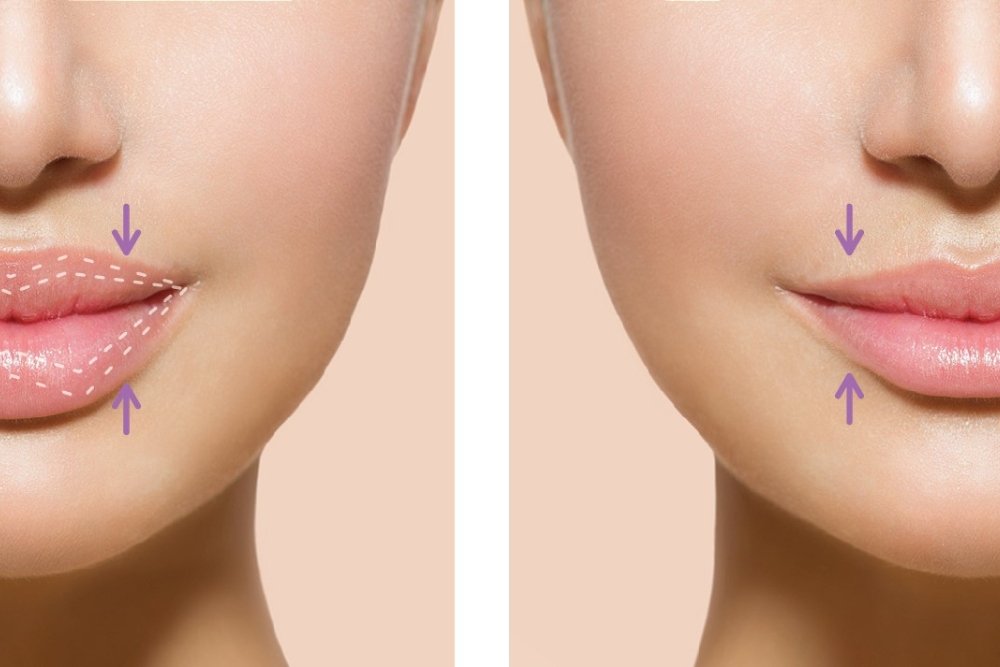
A balanced face is not necessarily about having smaller or fuller features. It is about how different features relate to one another. Because the lips sit at the center of the lower face, their size, shape, projection, and symmetry can influence the overall appearance of facial harmony. When the lips appear disproportionately large or uneven, some people may consider surgical reshaping to create a more balanced appearance.
Lip Reduction Surgery is a cosmetic procedure, also known as cheiloplasty, that removes a carefully planned amount of excess tissue from the upper lip, lower lip, or both. The goal is not simply to make the lips smaller. A thoughtful approach considers the natural lip shape, facial proportions, smile, and the relationship between the lips, nose, chin, and cheeks.
Lip reshaping can sometimes improve the perception of facial symmetry, particularly when lip size is noticeably disproportionate or one lip is larger than the other. However, symmetry does not mean creating two perfectly identical sides. Natural faces have small differences, and an experienced surgeon aims for harmony rather than an artificial appearance.
The consultation is therefore one of the most important parts of the process. The surgeon evaluates facial structure, lip anatomy, previous cosmetic treatments, and the patient’s desired outcome before deciding how much tissue should be removed. This individualized planning can help preserve natural movement and expression while refining the lip contour.
Several Dubai-based cosmetic surgery providers offer consultations and facial aesthetic procedures. Among the names patients may research are Dynamic Life Clinic, Tajmeels Clinic, Enfield Royal Clinic, Skinzest, and Dr Rami Hamed Center. Their available services and suitability for a particular lip procedure should always be confirmed directly during consultation.
Tajmeels Clinic
Tajmeels Clinic specifically describes lip reduction surgery as a procedure designed to reduce lip size and improve shape and proportion. Its published information highlights individualized planning based on facial harmony and lip characteristics.
For someone considering reshaping rather than simply reducing volume, the consultation should focus on how the lips fit into the entire face. Important questions include whether the upper or lower lip needs adjustment, how much tissue should be removed, and how the proposed shape may look when smiling.
This approach is particularly relevant when facial symmetry is the main concern. A reduction that is too aggressive could make the lips appear overly thin, while insufficient correction may leave the original imbalance noticeable.
Skinzest
Skinzest describes itself as a centre for dermatology, aesthetics, and cosmetic surgery and lists facial procedures such as rhinoplasty, blepharoplasty, facelift, fat grafting, and neck lift among its plastic surgery services. Its published material also emphasizes individualized treatment planning and subtle enhancement of natural features.
For patients exploring lip reshaping, these principles are useful because lip proportions should be considered alongside the rest of the facial structure. A detailed assessment can help determine whether the perceived imbalance is actually related to lip size or whether another facial feature contributes to the overall appearance.
Patients should confirm whether the specific lip reduction procedure they want is currently offered and whether the appropriate plastic surgery specialist is available for consultation.
Dynamic Life Clinic
Dynamic Life Clinic describes lip reduction as a surgical procedure that can be performed on one or both lips. Its published information discusses techniques such as tissue excision and reshaping, with treatment planning based on the patient’s desired lip size and facial appearance.
The important consideration is that lip reshaping should not be approached as a standard-size procedure. The amount of tissue removed needs to correspond with the patient’s anatomy. Upper and lower lips can also require different levels of correction, especially when one appears more prominent than the other.
A proper assessment can therefore help establish whether reducing one lip, both lips, or simply changing the contour would better support facial harmony.
Dr Rami Hamed Center
Dr Rami Hamed Center provides cosmetic and surgical services in Dubai, including a Dubai Healthcare City location. Its current website describes a broad range of surgical and nonsurgical cosmetic treatments and provides consultation and appointment services.
For anyone researching lip reshaping, the most useful step is to discuss the exact concern during a specialist consultation rather than assuming that reduction is automatically the best solution. Facial balance can depend on several features, and an assessment may help clarify whether the lips themselves are creating the perceived disproportion.
Patients should confirm the availability of lip reduction specifically, the qualifications of the relevant surgeon, and the surgical approach offered before making a decision.
Enfield Royal Clinic
Enfield Royal Clinic describes lip reduction surgery as a procedure intended to decrease lip volume while improving facial proportions and harmony. Its published information also notes that the procedure can be customized according to individual facial characteristics.
This individualized element is especially important when the objective is facial symmetry. Lip Reduction should be planned around the patient’s natural anatomy rather than a predetermined lip size. The surgeon may assess the upper and lower lips separately, examine facial proportions, and discuss how the expected contour could affect the smile and overall profile.
The clinic also provides consultation appointments where patients can discuss their concerns, goals, medical history, and possible treatment options before proceeding.
How to Choose the Right Clinic for Lip Reduction
Choosing a suitable provider involves more than looking at before-and-after photographs. The surgeon’s qualifications and experience with facial plastic surgery should be carefully reviewed, particularly because the lips are highly visible and involved in speaking, eating, smiling, and facial expression.
Technology and technique also matter, but they should support sound surgical planning rather than replace it. Ask which technique is recommended for your anatomy and why. The surgeon should be able to explain where the incision will be made, how much tissue may be removed, and how the procedure is expected to affect lip shape.
Safety standards should also be discussed. A proper consultation should include a review of medical history, previous lip procedures, medications, allergies, oral health, and any relevant conditions that could influence surgery or healing.
Patient experience is another useful consideration. A good consultation should give you enough opportunity to ask questions without pressure to proceed immediately. You should understand the expected swelling, healing period, potential risks, and when the final contour is likely to become clearer.
Most importantly, expectations should remain realistic. Lip reduction can refine proportions, but it cannot make the entire face perfectly symmetrical. The strongest result is generally one that looks naturally balanced with the person’s existing facial features.
Frequently Asked Questions
Can Lip Reduction improve facial symmetry?
It can improve the appearance of facial balance when lip size or uneven lip proportions contribute to an obvious imbalance. However, the outcome depends on individual anatomy and the amount of correction required.
Does Lip Reduction make both lips the same size?
Not necessarily. The upper and lower lips naturally have different proportions. The objective is usually to create harmonious proportions rather than make both lips identical.
Can only one lip be reduced?
Yes, in suitable cases, correction may focus on only the upper or lower lip. The decision depends on the patient’s anatomy and the source of the imbalance.
Will Lip Reduction change my smile?
The procedure is planned carefully to preserve natural lip movement and function. However, because the lips contribute to smiling and facial expression, patients should discuss this concern in detail during consultation.
How long does it take to see the final result?
Swelling can temporarily affect the shape of the lips after surgery. The final appearance becomes clearer as the tissues heal, so patients should avoid judging the result too early. The exact healing timeline varies according to the technique and individual recovery.
Conclusion
Facial symmetry is about proportion, harmony, and how individual features work together. When the lips appear excessively prominent or uneven, carefully planned reshaping may help create a more balanced and natural-looking appearance. Lip Reduction is therefore not simply about making the lips smaller. It is about considering the patient’s complete facial anatomy and creating a contour that complements the existing features.
The best treatment plan should always be developed after an in-person assessment with a suitably qualified specialist. A detailed consultation can help determine whether lip reduction is appropriate, what degree of correction may be suitable, and how the proposed changes could influence the overall facial profile.