
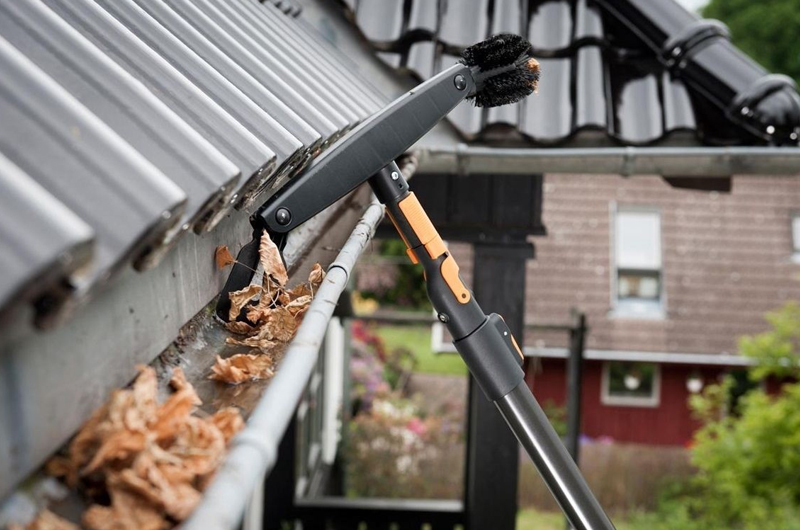
A blocked gutter can look like a minor maintenance issue. A few leaves, some moss and a bit of standing water may not seem worth worrying about.
But when rainwater can’t drain properly, the problem can move beyond the gutter.
For UK homeowners, regular rain, autumn leaf fall, moss and damp conditions can leave gutters struggling to cope. If blockages are ignored, water may overflow against the roofline, fascia or walls and contribute to damp and deterioration.
The good news is that most gutter-related problems are preventable when blockages are identified and dealt with before they cause damage.
How Does a Blocked Gutter Damage a Roof?
Your gutter is designed to collect rainwater from the roof and direct it safely into the downpipe.
When debris blocks that route, water has nowhere to go.
It may overflow over the edge or remain around the roofline. If this happens repeatedly, areas that should normally stay relatively protected can be exposed to excessive moisture.
Over time, this can contribute to problems involving:
- Fascia and soffit boards
- Roof edges
- Eaves
- External walls
- Timber around the roofline
- Existing weak points in the roof
A blocked gutter doesn’t automatically cause a leaking roof, but persistent uncontrolled water increases the risk of moisture-related damage.

Why Are UK Homes Particularly Vulnerable?
The UK’s weather makes gutter maintenance especially important.
During autumn, falling leaves can quickly accumulate in gutters. Moss and small pieces of roof debris can add to the blockage.
Winter then brings frequent rain, colder temperatures and periods of frost.
This creates a familiar cycle:
Leaves and debris → blocked gutter → poor drainage → overflowing water → prolonged dampness → potential deterioration.
Not every property will experience the same problems. A home surrounded by mature trees is likely to need more attention than one with little vegetation nearby.
What Does Roof-Related Gutter Damage Look Like?
You may notice the gutter problem before you notice damage to the roof.
Watch for:
Water overflowing during rain
If water regularly spills over the front of the gutter instead of flowing into the downpipe, investigate the cause.
Damp or stained areas below the gutter
Repeated water overflow can leave visible marks on walls and around the roofline.
Rotting or deteriorating fascia
Persistent moisture can be particularly problematic for timber components.
Moss or plants growing in the gutter
This is a strong indication that debris has been allowed to accumulate and drainage may already be restricted.
Sagging gutters
A gutter that has become heavy with trapped water and debris can lose its correct alignment, making drainage even less effective.
Water collecting around downpipes
The blockage may be further down the drainage system rather than in the visible section of gutter.
These signs don’t prove that the gutter is responsible for every damp problem, but they are good reasons to investigate.
Can a Blocked Gutter Cause a Damp Roof?
It can contribute to dampness, but this needs to be diagnosed carefully.
A leaking roof can also result from damaged tiles, defective flashing, failed seals, poor workmanship, condensation or other issues.
For example, if you have damp appearing inside the property, simply cleaning the gutters may not solve the problem.
A sensible approach is:
Clear the gutters → check that water flows correctly → inspect the roofline → investigate any remaining dampness.
If the damp problem continues after the gutter blockage has been dealt with, the roof itself may need inspection.
This avoids spending money treating the wrong cause.
What Should You Do If Your Gutters Are Blocked?
The first step is to deal with the blockage before another period of heavy rainfall.
A proper gutter clean should remove accumulated:
- Leaves
- Moss
- Mud
- Small twigs
- Roof debris
- Other organic material
But simply removing what you can see isn’t always enough.
Downpipes can also become blocked, preventing water from leaving the gutter even when the gutter itself looks relatively clear.
After cleaning, water flow should be checked where practical.
How Often Should UK Gutters Be Cleaned?
There is no universal number that applies to every home.
For many properties, checking and cleaning gutters once or twice a year is a sensible starting point.
However, you may need more frequent attention if:
- Your home is surrounded by trees
- The roof has significant moss growth
- You regularly find leaves in the gutter
- The property is exposed to heavy rainfall
- Gutters repeatedly overflow
- Previous blockages have occurred
Autumn is particularly important because large amounts of falling leaves can enter the guttering.
Waiting until water starts overflowing is not the best maintenance strategy.
Do You Need Roof and Gutter Cleaning Together?
Not necessarily.
This is an important distinction.
If your gutters are blocked but your roof is clean and in good condition, there may be no reason to arrange roof cleaning.
However, if the roof has substantial moss, lichen, leaves or other loose debris, some of that material may eventually enter the guttering.
In that situation, roof and gutter cleaning may be sensible as part of the same maintenance plan.
The roof and guttering should still be assessed as separate systems with different maintenance requirements.
What If Moss Is Causing the Blockage?
Moss on a roof isn’t automatically a problem, but large amounts of loose moss can contribute to gutter blockages.
If you repeatedly clear moss from the gutters, look at where it is coming from.
If the roof is heavily covered in moss, simply cleaning the gutter may only address the symptom.
A roof assessment can determine whether the roof itself requires attention.
This is where experienced gutter and roof cleaners can be useful: they can look at both the source of the debris and the drainage system rather than treating the blockage in isolation.
Should You Search for a “Gutter Cleaner Service Near Me”?
If your gutters are difficult or unsafe to reach, using a professional service is often the safer option.
When searching for a gutter cleaner service near me, don’t choose solely on price or proximity.
Ask what the service actually includes.
A thorough contractor should be able to tell you whether they:
- Clear the full accessible gutter
- Check downpipes for blockages
- Inspect for obvious leaks or damage
- Remove debris safely
- Identify areas that may need further attention
This matters because removing a pile of leaves from the gutter is not the same as confirming that the drainage system is functioning properly.

Are Affordable Gutter Cleaning Services a False Economy?
Not necessarily.
Affordable gutter cleaning can be perfectly worthwhile when the service is carried out properly.
The problem comes when a very cheap service only clears the most visible debris while leaving blockages elsewhere.
You may then pay again when the gutters overflow during the next heavy rainfall.
When comparing local gutter cleaning services, ask what is included rather than comparing headline prices alone.
A slightly more thorough service may save money if it prevents repeat blockages and identifies a problem early.
When Should You Arrange Professional Cleaning?
Don’t wait for obvious roof damage.
It’s worth arranging professional help if:
- Gutters are overflowing
- You cannot safely access them
- Downpipes appear blocked
- There is persistent moss or debris
- Gutters are sagging
- You can see water damage around the roofline
- The same blockage keeps returning
A professional roof gutter cleaning service can clear the system and identify visible issues that may otherwise be missed from ground level.
If they find damaged guttering or evidence of roof problems, those issues should be addressed separately rather than assuming cleaning alone will solve them.
The Most Practical Way to Prevent Gutter-Related Roof Problems
You don’t need to constantly clean your gutters.
You do need a maintenance routine that matches your property.
A practical approach for a typical UK home is:
Check: Look at the gutters before and after periods of heavy leaf fall.
Clear: Remove accumulated debris before it becomes a serious blockage.
Check the flow: Make sure water can travel through the gutter and downpipe.
Inspect: Look for sagging sections, leaks, damaged joints or deteriorating fascia.
Investigate: If damp or staining remains after cleaning, find the actual source rather than repeatedly clearing the gutter.
This is preventative maintenance, not simply cosmetic cleaning.

The Bottom Line
A blocked gutter is rarely an emergency by itself, but ignoring it can create the conditions for more serious problems.
For UK homes, rain, fallen leaves, moss and prolonged damp weather make regular gutter maintenance particularly important.
If water is overflowing from the gutter, don’t wait for a damp patch or damaged roofline to appear.
Clear the blockage, check the drainage and investigate any signs of moisture damage.
Keep rainwater moving away from the roof and property before a simple blockage becomes an expensive repair.
