
Introduction
Anyone who’s opened the honeycomb grid and stared blankly at seven letters knows the feeling. You’ve got a word forming in your head, you’re pretty sure it’s real, and then the puzzle rejects it anyway.
That’s usually the moment people start searching for nyt spelling bee answers, not because they want to cheat their way to Genius, but because they want to understand what they missed and why. This piece walks through how the puzzle works, why an answers archive is actually useful, and how sites built around daily solutions — like Today Spelling Bee Answers — fit into the whole experience.
What the NYT Spelling Bee Actually Is
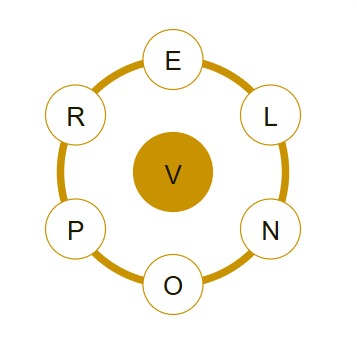
Before getting into archives and past puzzles, it helps to be clear on what you’re archiving in the first place. The New York Times Spelling Bee gives players seven letters arranged in a honeycomb shape, with one center letter that must appear in every word built. It sounds simple until you’re three minutes in and can’t find a fifth word.
Words need to be at least four letters long to count, and letters can be reused as many times as needed within a single word. That reuse rule trips people up constantly — you’d think a seven-letter set limits you more than it does, but repeating letters opens up a surprising number of combinations once you start experimenting.
The puzzle resets every day at 3:00 AM Eastern Time with a completely fresh set of letters, so there’s no coasting on yesterday’s momentum. Every morning is a clean slate, which is honestly part of the appeal.
How Scoring Actually Works (And Why It Matters for Archives)
Here’s where an archive starts to earn its keep. If you don’t know how points are assigned, looking back at old puzzles is just trivia. Once you understand scoring, past puzzles become a genuine learning tool — you can see exactly where you lost points and why.
Four-letter words are worth one point each, while any word five letters or longer earns points equal to its length. So a five-letter word and a five-point word are the same thing, which makes longer answers disproportionately valuable.
Finding the pangram — a word using all seven letters at least once — adds seven bonus points on top of the regular word score, and that single bonus is usually the fastest route from a mediocre ranking up toward Genius or Queen Bee status. If you’re stuck at “Good” or “Great” day after day, there’s a decent chance you’re consistently missing the pangram rather than missing obscure short words.
Why a Past Puzzles Archive Is Worth Bookmarking
People assume an answers archive is only for players who missed a day and want to catch up. That’s part of it, but not the whole story. A proper archive lets you study patterns — which letter combinations tend to produce pangrams, which “obvious” words the puzzle rejects, and how difficulty shifts across the week.
Missing a day happens to everyone, whether it’s a busy Tuesday or a weekend where the puzzle just slips your mind entirely. An archive keeps yesterday’s complete word list and pangram accessible so players can go back, check the words they missed, and understand why certain answers made the official list. That last part is the real value — not just seeing the answer, but seeing why it counted. Some valid words are genuinely obscure, and without a reference you’d never guess they were in the dictionary the puzzle draws from.
There’s also a strategic reason to revisit old puzzles. The New York Times draws from a fairly consistent pool of English vocabulary, so recurring roots, prefixes, and letter patterns show up more than you’d expect. Spend enough time in an archive and you start recognizing shapes — a word ending in “-ain” here, a doubled letter there — before you’ve even consciously worked out the logic.
Reading Today’s Puzzle: A Real Example
It helps to see this in action rather than just talking theory. Take a recent puzzle with the letters D, I, L, N, T, W, A, built around the center letter A. On the surface those seven letters don’t look promising — no vowels beyond A and I, and a cluster of consonants that don’t obviously combine.
Yet that single set produced forty-four valid answers and one pangram, “tailwind,” worth fifteen points on its own. The four-letter tier alone carried twenty-three words, from straightforward ones like “wall” and “want” to trickier entries like “tali” and “nada.” That’s the pattern worth noticing: even letter sets that look barren on first glance tend to hide dozens of legitimate words once you start rearranging.
This is exactly the kind of scenario where a same-day reference earns its usefulness — not to skip the thinking, but to confirm a guess or nudge you toward a category of words you hadn’t considered, like plurals or verb tenses you’d otherwise overlook.
Hints vs. Full Answers: Different Tools for Different Moods
Not everyone wants the full word list dropped in front of them immediately, and that’s a fair instinct. Some days call for a nudge; other days call for total surrender. Knowing which tool fits your mood saves time and keeps the puzzle enjoyable rather than frustrating.
A hint system typically shows you letter counts, first letters, or word categories without spoiling the actual answer — useful when you’re 80% of the way to Genius and just need a push. Full answer lists, on the other hand, make more sense after you’ve genuinely tried and hit a wall, or when you’re revisiting a past puzzle purely to learn rather than compete. Either approach beats getting stuck for twenty minutes on a single missing word and giving up on the whole thing out of frustration.
Is It Free to Access These Puzzles?
This question comes up constantly, and the answer surprises people who assume everything NYT-related sits behind a paywall. Playing the Spelling Bee directly through the New York Times Games platform requires a subscription, which covers their full suite of puzzles including Wordle and Connections. That’s a fair cost if you’re a heavy puzzle user across their whole lineup.
However, third-party reference pages that track daily answers, hints, and pangrams typically remain free to browse, which is exactly why archives built around this content have become so popular. You’re not bypassing the game itself — you’re checking your work or catching up on a day you missed, which is a fundamentally different use case than trying to dodge a subscription fee.
Understanding Rank Titles: Genius, Queen Bee, and Bingo
Rankings add a layer of motivation that keeps people coming back daily, but the terminology confuses newcomers. Queen Bee represents the highest possible status, achieved only when a player finds every single valid word in that day’s puzzle, while Genius is the milestone most players actually aim for first, sitting comfortably below full completion.
Then there’s Bingo, which trips people up because it sounds official but isn’t. A Bingo means finding at least one word starting with each of the seven letters in that day’s puzzle — it’s not an official New York Times rank, just a personal challenge dedicated players set for themselves. It’s the kind of unofficial goal that spreads through word-of-mouth among regular players rather than anything the Times itself promotes, which honestly makes it more fun — nobody’s grading you on it.
Putting an Archive to Practical Use
So how should you actually use a past-puzzles archive instead of just scrolling through it passively? Treat it less like a cheat sheet and more like a study guide. Pull up three or four old puzzles and notice how often certain suffixes appear, or how frequently the pangram includes a doubled letter.
Over time this builds an intuition that speeds up your solving on new puzzles. You’ll start recognizing that a center letter like “A” or “T” tends to open more word combinations than something like “Q” or “X,” and you’ll instinctively try plural forms or verb conjugations before giving up on a stem you thought was a dead end. That’s the real payoff of an archive — it’s not just a lookup tool, it’s a quiet way to get better at the puzzle itself.
Frequently Asked Questions
What exactly is a pangram in the Spelling Bee?
A pangram is a word containing all seven letters of the day’s puzzle at least once, and finding it adds seven bonus points on top of the regular word score. Most puzzles have one pangram, though occasionally there are two.
How does scoring work day to day?
Four-letter words earn one point each, words of five letters or more score points equal to their length, and pangrams add a seven-point bonus. Your overall rank climbs as this total increases.
What does reaching Queen Bee actually require?
Queen Bee means finding every single valid word in that day’s puzzle — full completion, not just a high score. It’s rare, and most players treat Genius as the realistic daily target instead.
When exactly does a new puzzle appear?
A fresh set of seven letters goes live every day at 3:00 AM Eastern Time, and the prior day’s puzzle shifts into the archive for anyone who wants to review it later.
Do you need to pay to see today’s answers?
Playing directly on the official New York Times Games site does require a subscription, but archive and reference pages tracking daily hints and word lists are commonly available at no cost.
What’s the difference between a Bingo and an official rank?
Bingo is an unofficial personal challenge — finding a word starting with each of the seven letters — rather than a rank the New York Times recognizes. Genius and Queen Bee remain the actual official milestones.
Conclusion
At the end of the day, the Spelling Bee is a small daily ritual for a lot of people — a few minutes with coffee, a honeycomb of letters, and a stubborn refusal to give up until the pangram shows itself. An archive doesn’t replace that experience; it supports it.
Whether you’re catching up on a missed puzzle, double-checking a word you weren’t sure about, or just curious how a rough-looking letter set like D-I-L-N-T-W-A managed to produce forty-four answers, having past puzzles on hand turns a one-off game into something you can actually study and improve at over time.

