Managing the financial side of a business can become increasingly demanding as the company grows. Invoices need to be recorded, bank transactions reconciled, suppliers paid and financial reports kept up to date. For many UK businesses, an Accounting Outsourcing Firm can provide a practical way to handle these responsibilities without building a large in-house finance team. The right outsourcing arrangement can reduce administrative pressure while giving business owners access to organised financial information when they need it.
Outsourcing accounting is not simply about passing paperwork to another company. It is about creating a dependable process that fits the way a business operates. Before choosing a provider, it is worth understanding what services are available, what your business actually needs and what qualities separate a reliable provider from an unsuitable one.
What Is an Accounting Outsourcing Firm?
An accounting outsourcing firm is an external provider that manages agreed accounting and finance tasks for a business.
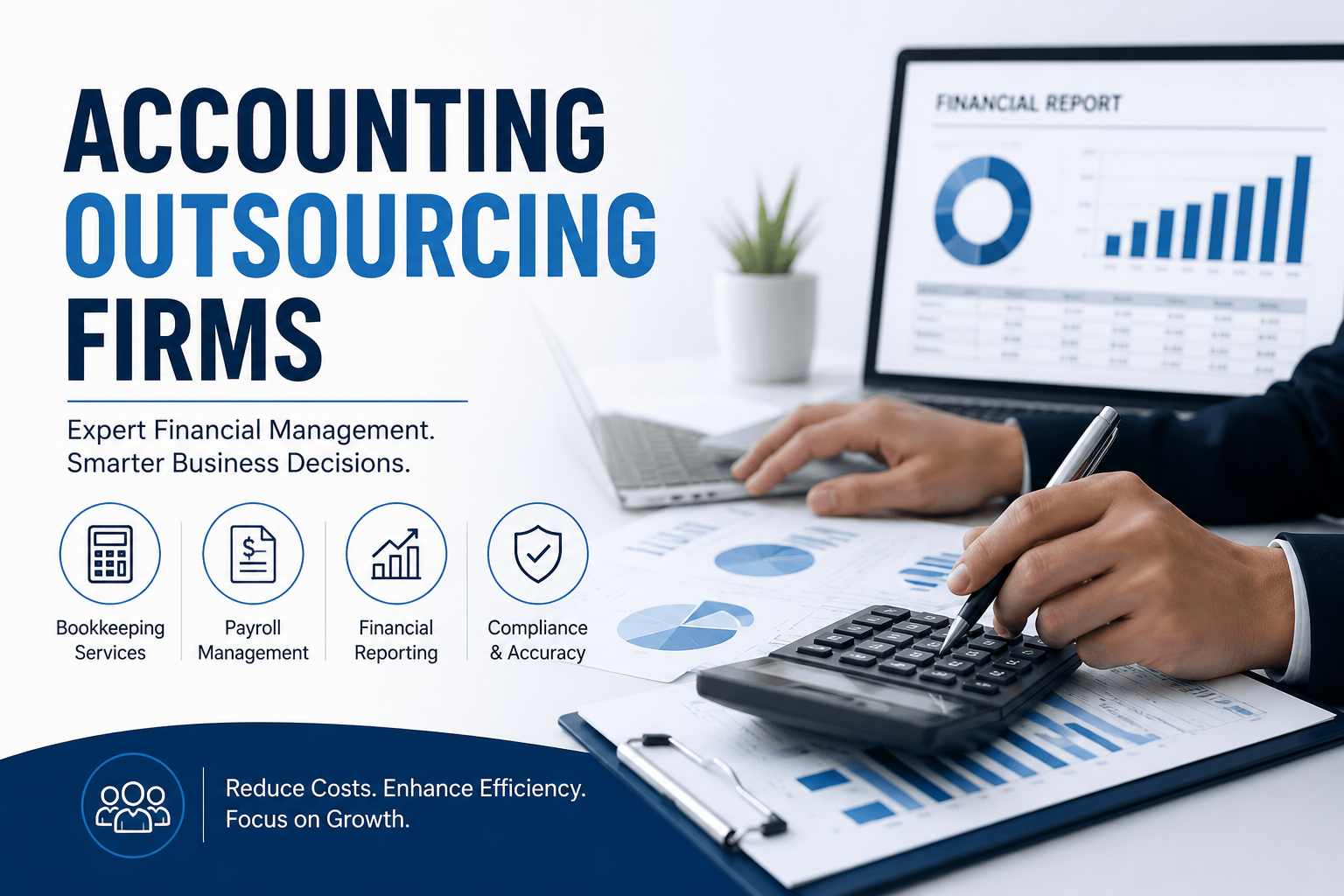
The services can range from basic bookkeeping to more comprehensive financial support. Depending on the provider, businesses may outsource bookkeeping, accounts payable, accounts receivable, payroll processing, management accounts, financial reporting and year-end accounting work.
The arrangement can be flexible. A small business might only need monthly bookkeeping, while a growing company may require weekly transaction processing and regular management reports.
This flexibility means outsourcing can work for businesses with very different financial requirements.
Why Businesses Choose to Outsource Accounting
There are several reasons a UK business may decide to outsource its accounting responsibilities.
The first is often time. Owners and managers have enough responsibilities without spending hours every week entering transactions or checking invoices.
Cost can also be a consideration. Maintaining a full internal finance department may involve salaries, recruitment, training, software and other employment costs.
Outsourcing can give businesses access to professional support without necessarily creating several permanent positions.
Another reason is expertise. An external provider may have experience with different accounting systems and financial processes, which can be useful for businesses without experienced finance staff internally.
Start by Identifying Your Accounting Needs
Before looking for a provider, businesses should establish what they actually want to outsource.
There is little benefit in paying for a large package if the company only requires a few basic services.
Start by reviewing the current finance process. Are bookkeeping records being updated regularly? Are supplier invoices difficult to track? Are customer payments being monitored? Does management receive useful financial reports?
The answers can help identify the areas where external support would have the greatest value.
Some companies may only need bookkeeping, while others may benefit from a wider outsourced finance function.
Bookkeeping Is the Foundation
Accurate bookkeeping is essential because many other accounting activities depend on reliable transaction records.
Bookkeeping involves recording income, expenses, purchases, payments and other financial transactions.
Regular bank reconciliation is also important. It helps confirm that transactions recorded in the accounting system match the business’s actual bank activity.
When bookkeeping is left unfinished for weeks or months, it can become difficult to understand the company’s current financial position.
An outsourced provider can establish a regular schedule, helping prevent financial records from becoming unnecessarily outdated.
Accounts Payable and Supplier Management
Every business has bills to pay.
As the number of suppliers increases, keeping track of invoices and payment dates can become difficult.
Accounts payable processes help businesses maintain accurate records of what they owe.
An outsourced accounting team can record supplier invoices, maintain outstanding balances and provide information about upcoming payment commitments, depending on the agreed service.
This can help business owners avoid losing track of supplier obligations.
It can also make it easier to investigate questions when a supplier queries a payment or outstanding invoice.
Accounts Receivable and Customer Payments
Money coming into the business needs just as much attention as money going out.
Accounts receivable records help businesses track customer invoices and identify outstanding balances.
Delayed payments can create cash flow pressure, even when the business has a healthy level of sales.
Keeping customer records up to date makes it easier to understand which invoices remain unpaid.
Depending on the arrangement, an outsourcing provider may also produce regular reports showing outstanding customer balances.
This information can help management keep a closer eye on the company’s cash position.
Management Accounts and Reporting
Good accounting should provide more than a collection of transaction records.
Management accounts can turn financial information into useful insight for business owners and managers.
Regular reports can show revenue, expenditure, profitability and other measures that are relevant to the company.
For example, if expenses increase noticeably over several months, management can investigate the reason and decide whether any changes are needed.
The exact reports required will vary by business. A small company may need a simple monthly profit and loss statement, while a larger organisation may require more detailed financial information.
The Importance of Cash Flow Visibility
Cash flow is a major consideration for businesses of all sizes.
A company may be profitable but still face financial pressure if customer payments arrive late.
At the same time, supplier bills, wages, rent and other expenses need to be paid on time.
Accurate bookkeeping and accounts receivable records can provide a clearer picture of expected income and upcoming commitments.
An outsourced accounting team can help keep the underlying records current, allowing business owners to make decisions with better information.
Outsourcing does not remove financial risk, but it can make the company’s cash position easier to understand.
Consider the Provider’s Experience
Not every accounting provider will be suitable for every business.
Experience should be one of the factors considered during the selection process.
A business should ask whether the provider has worked with companies of a similar size and complexity.
Industry experience can also be useful. For example, a property business may have different accounting requirements from a professional consultancy or online retailer.
A provider that understands the nature of the business may be better positioned to establish appropriate processes.
Check Qualifications and Professional Standards
Businesses should also investigate the qualifications and professional background of the people who will handle their accounts.
Depending on the services required, the business may need bookkeeping expertise, qualified accounting support or specialist tax advice.
These are not necessarily the same thing.
Ask who will carry out the work and what experience they have. If the provider offers regulated or specialist services, check the relevant professional credentials.
Taking a little time to investigate these areas can provide greater confidence before sensitive financial information is shared.
Technology Should Match Your Business
Modern accounting relies heavily on software.
Many businesses use cloud accounting systems to manage transactions, invoices, expenses and reports.
When choosing an outsourced provider, check whether they support the accounting platform already used by your company.
A provider should also have clear processes for sharing documents and accessing financial information.
Technology can make bookkeeping more efficient, but it should support a sensible process rather than replace proper review and communication.
Data Security Matters
Outsourcing means giving another organisation access to confidential business information.
This can include invoices, bank records, payroll information and financial reports.
Businesses should therefore ask how their information will be stored, transferred and protected.
It is worth understanding who will have access to the accounting system and what happens when employees or contractors leave the provider.
Security should be treated as part of the selection process rather than something considered after the agreement has been signed.
Look for Clear Communication
Accounting can involve complicated subjects, but communication should not be unnecessarily complicated.
A good provider should be able to explain financial information clearly and answer questions in language the business owner understands.
Before signing an agreement, find out who will be the main point of contact.
It is also useful to understand how queries are handled and how quickly the provider normally responds.
Good communication can make the difference between a smooth outsourcing relationship and one that becomes frustrating.
Understand the Pricing Structure
Price is naturally important, but businesses should look beyond the headline monthly fee.
Ask exactly what is included in the package.
For example, does the fee cover bank reconciliation? Are management reports included? Is payroll charged separately? What happens if transaction volumes increase?
A clear pricing structure makes budgeting easier and reduces the chance of unexpected charges.
Businesses should compare providers based on overall value rather than choosing the cheapest option automatically.
Can the Service Grow With You?
A business’s accounting needs may change considerably over time.
A company may start with basic bookkeeping and later require management accounts, payroll support or more frequent reporting.
Ask potential providers whether they can scale their services as the business grows.
This can save the business from having to find a completely new provider every time its requirements change.
A flexible outsourcing relationship can become a useful long-term part of the company’s financial structure.
Questions to Ask Before Choosing a Provider
Before making a final decision, consider asking:
- What accounting services are included?
- How often will the books be updated?
- Who will manage our account?
- What qualifications and experience does the team have?
- Which accounting software do you support?
- Are bank reconciliations included?
- What financial reports will we receive?
- How is confidential information protected?
- Can your service scale with our business?
- Are additional services charged separately?
Clear answers can make it easier to compare different providers.
Is Outsourcing Right for Every Business?
Not necessarily.
Some larger businesses already have established finance departments and may prefer to keep most accounting functions internally.
For smaller companies, however, outsourcing can offer a practical middle ground between doing everything themselves and hiring a complete finance team.
It can be particularly useful when bookkeeping is taking too much management time, records are regularly falling behind or the business needs access to additional financial expertise.
The decision should be based on the company’s actual circumstances rather than simply following what other businesses are doing.
Final Thoughts
Choosing an Accounting Outsourcing Firm is an important decision because financial records are at the centre of many business activities. The right provider can help keep bookkeeping organised, improve financial reporting, support cash flow visibility and reduce the day-to-day administrative burden.
UK businesses should look carefully at experience, qualifications, technology, communication, security and pricing before entering an outsourcing arrangement.
Most importantly, the service should match the company’s needs and be capable of adapting as those needs change.
With a reliable accounting process in place, business owners can spend less time dealing with routine financial administration and more time concentrating on customers, growth and the future of the business.