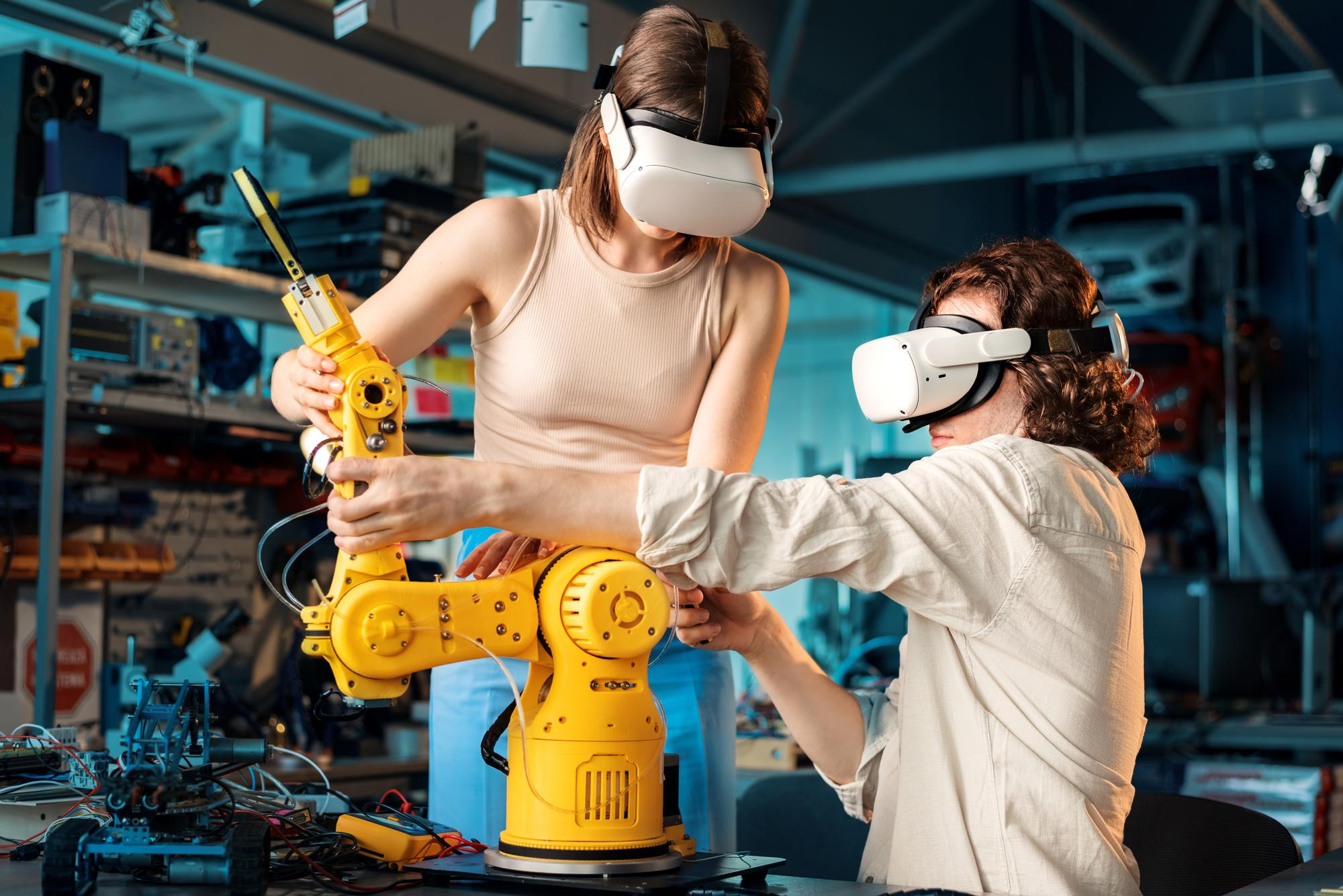
Industrial production is undergoing a major transformation as engineering innovation introduces smarter, faster, and more efficient ways to design and manufacture products. From automated machinery and digital twins to advanced materials and intelligent quality systems, modern engineering is changing how factories operate. Precision manufacturing has become especially important as businesses seek reliable production methods, with services associated with CNC Machining China supporting the creation of accurate and consistent components for demanding industrial applications.
The Shift Toward Smart Manufacturing
Traditional factories often relied heavily on manual processes, fixed production lines, and periodic maintenance. While these methods remain useful in certain applications, they can struggle to meet modern demands for flexibility, speed, and customization.
Engineering innovation has introduced smart manufacturing systems that connect machines, software, sensors, and workers. Industrial equipment can now collect and exchange information in real time, allowing production teams to monitor operations and identify inefficiencies much faster.
The result is a more connected production environment where decisions can be supported by accurate operational data rather than assumptions. Manufacturers can adjust processes, reduce unnecessary downtime, and improve resource utilization.
Automation and Robotics Increase Production Efficiency
Automation is one of the most visible examples of engineering innovation in industrial production. Robots are increasingly used for tasks such as assembly, welding, packaging, material handling, inspection, and repetitive machining operations.
Modern industrial robots can perform highly repetitive tasks with consistent accuracy while working for extended periods. This allows employees to focus on activities that require problem-solving, supervision, design, and technical expertise.
Collaborative robots, often called cobots, have expanded these possibilities further. Unlike traditional industrial robots that typically operate in isolated areas, cobots are designed to work alongside human operators in appropriate environments. Their flexibility makes them particularly useful for manufacturers producing different products or handling smaller production batches.
Digital Twins Improve Industrial Decision-Making
Another important development is the use of digital twin technology. A digital twin is a virtual representation of a physical machine, product, or production system. Engineers can use real-world operational data to understand how its physical counterpart is performing.
For example, a digital model of a manufacturing machine can help engineers identify unusual operating patterns before they result in serious equipment problems. Production teams can also simulate potential changes digitally before applying them to the physical factory.
This reduces the risks associated with experimentation and makes it easier to evaluate production improvements. Digital twins are therefore becoming valuable tools for design optimization, maintenance planning, and process management.
Advanced Materials Are Expanding Manufacturing Possibilities
Engineering innovation is not limited to machines and software. Advances in materials science are also changing industrial production. Engineers are developing materials that combine strength, durability, lightweight properties, corrosion resistance, and thermal performance.
Aluminum is particularly useful in industries where reducing weight without sacrificing structural performance is important. Working with an experienced Aluminum Profile Manufacturer China can provide access to precisely produced aluminum components for applications ranging from industrial equipment and construction systems to transportation and electronics.
Modern manufacturing techniques also allow engineers to create increasingly complex shapes and customized components. This gives product designers greater freedom to develop solutions that were difficult or expensive to produce using older methods.
Artificial Intelligence and Predictive Maintenance
Artificial intelligence is becoming another major force in industrial engineering. AI-powered systems can process large volumes of production data and identify patterns that may not be immediately obvious to human operators.
One practical application is predictive maintenance. Instead of servicing equipment only according to a fixed schedule or waiting until a breakdown occurs, manufacturers can use sensor data to estimate when machinery may require attention.
Temperature, vibration, pressure, energy consumption, and other measurements can provide clues about equipment performance. When unusual patterns are detected, maintenance teams can investigate the issue before it causes a major production interruption.
This approach can reduce unexpected downtime, extend equipment life, and make maintenance operations more efficient.
Additive Manufacturing Enables Greater Design Freedom
Additive manufacturing, commonly associated with 3D printing, has introduced new possibilities for industrial production. Unlike conventional manufacturing processes that remove material or shape standardized components, additive manufacturing builds objects layer by layer.
This makes it possible to produce complex geometries that may be difficult to manufacture through traditional techniques. It is especially useful for prototypes, specialized components, replacement parts, and low-volume production.
Engineers can test multiple designs without committing to expensive tooling for every iteration. As additive manufacturing technologies continue to improve, they are becoming increasingly relevant to industries that require customized and technically complex components.
IoT Connects Machines and Production Systems
The Industrial Internet of Things (IIoT) is helping manufacturers create more connected factories. Sensors installed on machines can continuously collect information about production conditions and equipment performance.
That information can be shared with centralized systems where engineers and managers can analyze it. A connected factory can therefore provide a clearer view of what is happening across different production stages.
For example, if one machine begins consuming more energy than usual, the system may flag the change for investigation. Similarly, production data can reveal bottlenecks and help managers determine where improvements are needed.
Engineering Innovation Is Supporting Sustainability
Industrial innovation is also playing an important role in reducing environmental impact. More efficient machines can consume less energy, while automated systems can reduce material waste by improving production accuracy.
Engineers are also designing manufacturing systems around recycling, material recovery, and longer product lifespans. Lightweight materials can reduce energy consumption in transportation, while optimized production processes can minimize unnecessary resource use.
Energy monitoring systems provide manufacturers with better information about where electricity and other resources are being consumed. This makes it easier to identify opportunities for efficiency improvements.
The Growing Importance of Human Expertise
Although automation and artificial intelligence are transforming industrial production, human expertise remains essential. Engineers are responsible for designing systems, interpreting complex information, solving unexpected problems, and determining how new technologies should be integrated into existing operations.
The industrial workforce is therefore evolving rather than simply disappearing. Employees increasingly need skills related to robotics, data analysis, software, automation, system integration, and advanced manufacturing.
Companies that invest in training can help their employees adapt to changing production environments while gaining greater value from new technologies.
The Future of Industrial Production
Engineering innovation is creating factories that are more connected, adaptable, precise, and efficient than traditional production environments. Automation, artificial intelligence, digital twins, advanced materials, additive manufacturing, and industrial connectivity are working together to change how products are designed and manufactured.
The future will likely involve even greater integration between engineering disciplines and digital technologies. Manufacturers that embrace these developments can respond more effectively to changing customer expectations while improving productivity and controlling operational costs.
Ultimately, the biggest impact of engineering innovation is not a single machine or technology. It is the creation of a more intelligent approach to production, one where data, engineering expertise, automation, and advanced materials work together to build better products and more capable industrial systems.