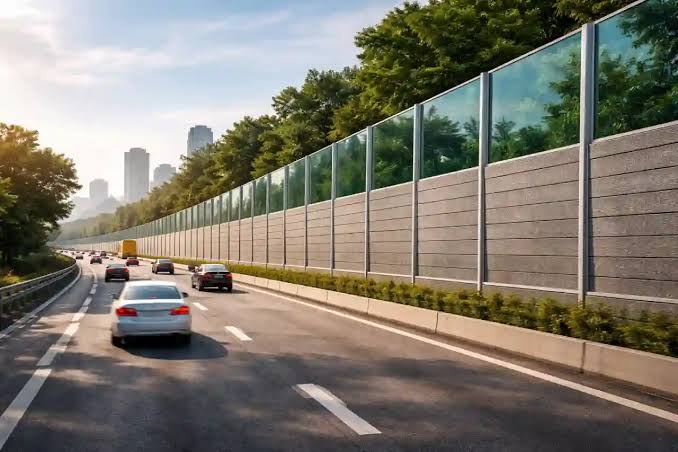
Anyone who’s lived near a busy highway knows the sound never really stops. Trucks, tyres on asphalt, horns, the constant hum of traffic, it all adds up over time. This is why transport authorities and infrastructure developers increasingly turn to a well-designed highway noise barrier as a practical, long-term fix rather than a temporary patch.
How a Highway Noise Barrier Actually Reduces Sound
A highway noise barrier works by blocking the direct path of sound waves between the road and nearby homes or buildings. Depending on the material and design, it can reflect sound back toward the source, absorb it, or diffract it so less energy reaches the other side. The effectiveness depends heavily on height, length, material density, and how close the barrier sits to either the traffic or the receiving community. A barrier that’s too short or has gaps will let sound leak around it, undoing much of the benefit.
Common Materials Used in These Barriers
Not all barriers are built the same way, and the material choice affects both performance and appearance:
- Metallic panels, often chosen for durability and strength along highway corridors
- Polycarbonate or PMMA panels, used where visibility and light transmission matter
- Concrete barrier walls, common for very high-traffic stretches
- Combination barriers with transparent elements for scenic or urban areas
Each option suits a different setting, and the right highway noise barrier for a rural stretch may not be right for an urban flyover.
Why Engineering Expertise Matters Here
Installing a highway noise barrier isn’t just about putting up a wall. It requires acoustic modelling to predict actual noise reduction, structural calculations for wind load, and compliance with environmental noise standards. Ecotone Systems has spent years refining this process, working on real highway and railway corridor projects where measurable noise reduction was the deciding factor for success. Choosing a partner like Ecotone Systems means the barrier isn’t a guess, it’s backed by data and prior field results.
What to Look for When Planning a Noise Barrier Project
Before committing to a design, project planners should consider:
- Independent noise modelling specific to the site
- Material warranty and expected lifespan under weather exposure
- Ease of maintenance and panel replacement
- Compliance with CPCB or relevant environmental regulations
- Experience installing similar barriers in comparable traffic conditions
Ecotone Systems brings this kind of structured approach to every highway noise barrier project, drawing on decades of acoustic engineering work across different terrains and traffic densities.
Final Thoughts
A quieter roadside isn’t just about comfort, it’s about public health, property value, and regulatory compliance. A properly engineered highway noise barrier, built by a team that understands both acoustics and civil construction, can make a measurable difference for the communities living alongside busy roads. Getting the design right the first time saves both money and frustration down the line.