Few household problems are as stressful as a boiler suddenly stopping working. Whether it happens on a cold winter morning or late at night, losing heating and hot water can quickly disrupt your daily routine. While some boiler issues develop gradually, others can occur without much warning, leaving homeowners wondering what to do next.
The good news is that knowing how to respond during a boiler breakdown emergency can help you stay safe, reduce potential damage, and get your heating system back up and running as quickly as possible.
What Is Considered a Boiler Breakdown Emergency?
Not every boiler fault is an emergency, but some situations require immediate attention.
A boiler breakdown may be considered urgent if:
- Your heating and hot water have completely stopped.
- You suspect a gas leak.
- The boiler is leaking large amounts of water.
- There are unusual burning smells coming from the appliance.
- The boiler repeatedly shuts down without warning.
- You believe carbon monoxide could be present.
Common Reasons Boilers Break Down
Even well-maintained boilers can develop faults over time. Worn components cause some problems, while others result from a lack of regular servicing.
Here are some of the most common causes.
Low Boiler Pressure
Boilers rely on the correct system pressure to operate efficiently. If pressure drops too low, the boiler may stop working or display an error code.
Pressure loss can sometimes be linked to small leaks or recently bled radiators, so it’s worth checking the pressure gauge before assuming the worst.
Frozen Condensate Pipe
During periods of freezing weather, the condensate pipe can become blocked with ice. When this happens, the boiler may automatically shut down to protect itself.
This issue is relatively common during UK winters and often requires professional advice if you’re unsure how to resolve it safely.
Faulty Thermostat
Sometimes the boiler itself isn’t the problem. A malfunctioning thermostat may fail to communicate with the heating system, preventing it from switching on or maintaining the correct temperature.
Checking thermostat settings and replacing batteries, if applicable, can help rule out simple issues.
Worn Internal Components
Like any mechanical system, boiler parts naturally wear over time. Components such as pumps, valves, fans, and heat exchangers can eventually fail, especially in older boilers.
Regular servicing helps identify ageing parts before they lead to a complete breakdown.
What You Should Do First
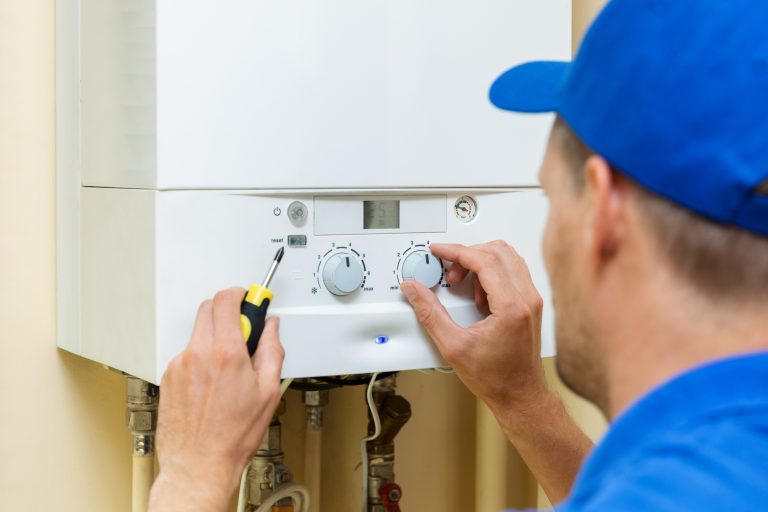
If your boiler suddenly stops working, try not to panic. A few simple checks may help identify the issue before calling an engineer.
Start by:
- Checking whether the thermostat is set correctly.
- Looking for error codes on the boiler display.
- Confirming the boiler has power.
- Checking the system pressure.
- Resetting the boiler if the manufacturer’s instructions recommend it.
What You Should Never Do
When dealing with gas appliances, safety is always the priority.
Avoid:
- Attempting DIY repairs.
- Opening sealed boiler components.
- Ignoring unusual smells.
- Continuing to use a leaking boiler.
- Covering warning signs with temporary fixes.
Gas appliances should only be repaired by qualified professionals who are authorised to work on them safely.
Preventing Future Boiler Breakdowns
Although no boiler lasts forever, regular maintenance can significantly reduce the likelihood of unexpected failures.
Simple preventative measures include:
- Booking an annual boiler service.
- Monitoring boiler pressure.
- Bleeding radiators when necessary.
- Listening for unusual noises.
- Addressing small faults before they become major repairs.
- Keeping the area around the boiler clear and well ventilated.
Routine maintenance is often far less expensive than dealing with emergency repairs during the middle of winter.
When Replacement May Be the Better Option
If your boiler is more than 10 to 15 years old and has required several repairs recently, replacing it may be more cost-effective than continuing to fix recurring issues.
Modern boilers offer:
- Improved energy efficiency
- Lower heating costs
- Greater reliability
- Quieter operation
- Better compatibility with smart heating controls
An experienced heating engineer can assess whether repairing or replacing your boiler makes the most financial sense.
Choosing the Right Heating Professional
During an emergency, it’s tempting to hire the first available company. However, taking a few moments to choose a qualified professional can make all the difference.
Look for:
- Gas Safe registration
- Experience with your boiler brand
- Transparent pricing
- Positive customer reviews
- Clear communication
- Reliable emergency response
A skilled engineer will not only fix the immediate issue but also identify any underlying problems that could lead to future breakdowns.
Conclusion
A boiler breakdown emergency can be frustrating, especially during colder months, but knowing how to respond helps minimise disruption and keeps your household safe. Regular servicing, prompt attention to warning signs, and professional maintenance are the best ways to reduce the risk of unexpected failures.
For homeowners in Brinsworth looking for dependable heating support, Homeglow Plumbing & Gas Services Ltd. provides professional boiler servicing, repairs, and installation services, helping customers stay warm and comfortable throughout the year.