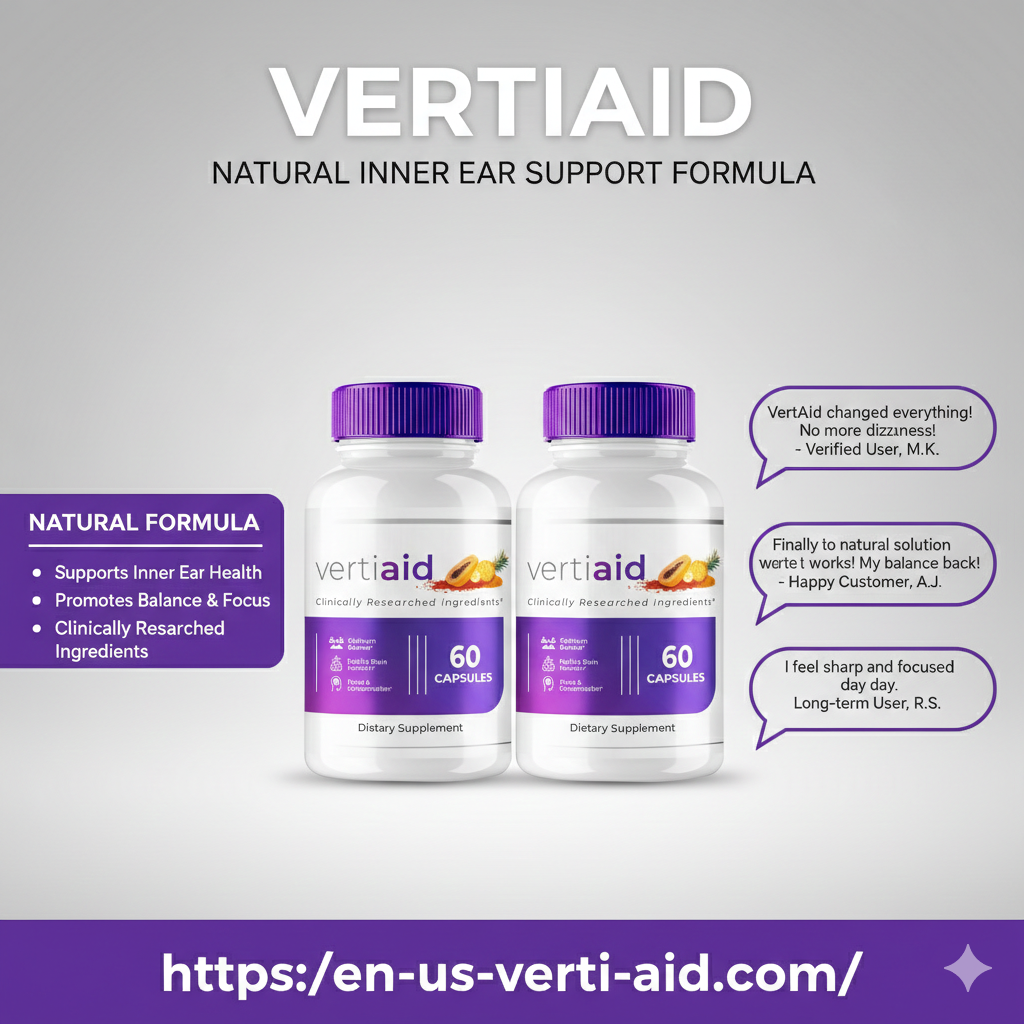
Vertiaid is an advanced health supplement specially formulated to support nerve health and overall neurological well-being. Designed with a powerful blend of essential nutrients, antioxidants, and neuro-supportive ingredients, Vertiaid helps nourish damaged nerves, promote nerve regeneration, and improve nerve function. It is beneficial for individuals experiencing nerve-related discomfort, weakness, tingling, or numbness caused by lifestyle, aging, or medical conditions.
Vertiaid Health Supplement is positioned as a wellness-focused approach for people who want natural support for balance and stability. In this article, we’ll explore what balance really involves, common reasons people experience dizziness and vertigo, what evidence says about popular supplement ingredients used for balance support, and how to use a supplement responsibly—without overpromising or resorting to keyword stuffing. We’ll also cover lifestyle strategies like hydration, sleep, vestibular exercises, and when it’s important to seek medical evaluation.
Understanding balance: why you feel steady (or don’t)
Balance isn’t just “strong legs” or “good posture.” Your stability is a coordinated effort between multiple systems:
- Vestibular system (inner ear): Sensors in your inner ear detect head motion and position. When something disrupts vestibular function, you may experience vertigo, imbalance, or a sensation of floating.
- Vision: Your eyes provide crucial orientation feedback, especially in low light or uneven terrain.
- Proprioception: Nerves in your feet, ankles, knees, hips, and spine communicate where your body is in space.
- Brain integration: Your brain blends these signals. If one input is unreliable (like vestibular disruption), you can feel unstable, nauseated, or “off.”
When people say “I’m dizzy,” they may mean different things: lightheadedness, vertigo (spinning), or imbalance. That distinction matters, because causes and solutions differ. Major medical resources emphasize that dizziness is a symptom with many potential causes, including inner ear conditions and medication effects.
Common reasons for vertigo and dizziness
1) Benign Paroxysmal Positional Vertigo (BPPV)
BPPV is one of the most common causes of vertigo. It often occurs when tiny calcium crystals in the inner ear shift into the wrong place, triggering brief episodes of spinning with head movements (like rolling over in bed).
2) Vestibular neuritis or labyrinthitis
Inflammation of the vestibular nerve or inner ear can cause prolonged vertigo and imbalance.
3) Ménière’s disease
Typically involves episodes of vertigo with hearing-related symptoms (ringing, fullness, fluctuating hearing).
4) Migraine-related dizziness
Some people experience vestibular migraine—dizziness/vertigo linked to migraine patterns.
5) Non-vestibular causes
Low blood pressure, dehydration, anxiety, medication side effects, blood sugar issues, and neurological conditions may all contribute.
Because there are many possibilities, a responsible approach to “natural balance support” starts with not guessing—especially if symptoms persist.
Where Vertiaid fits: the role of a balance-support supplement
A supplement like Vertiaid is best thought of as supportive, not corrective. It may be intended to help with:
- Everyday steadiness and confidence in movement
- Occasional dizziness related to lifestyle factors (fatigue, dehydration, motion sensitivity)
- Nutritional support that complements a broader plan (sleep, hydration, vestibular rehab, stress management)
This is the most realistic way to evaluate any “vertigo supplement” or “balance supplement”: does it support foundational systems (circulation, nerve function, stress response, inner-ear wellness, nausea control) while you address root causes with proper care?
Ingredients commonly used for balance support (and what evidence suggests)
Because you didn’t specify the exact label/ingredients of Vertiaid, the sections below focus on widely used, research-discussed ingredients found in many balance and dizziness support formulas. If you share Vertiaid’s supplement facts panel later, I can tailor this to the exact formula without guessing.
1) Ginkgo biloba (often researched for dizziness/vertigo)
Ginkgo biloba is frequently discussed in the context of circulation and neurological support. Some studies and reviews report benefits for certain vertigo/dizziness syndromes (though results vary by cause and study quality).
Practical takeaway: If a balance-support supplement includes ginkgo, it’s usually there to support blood flow and vestibular-related dizziness pathways.
Safety note: Ginkgo may interact with blood thinners and other medications. Always check with a clinician if you take anticoagulants/antiplatelets or have surgery planned.
2) Ginger (common for nausea and motion-related discomfort)
Ginger is one of the most researched natural options for nausea and vomiting and is widely used for motion sensitivity—an issue many people experience alongside vertigo or dizziness. Evidence from randomized trials and systematic reviews suggests ginger can help nausea, though outcomes can depend on context and dose.
Practical takeaway: Ginger won’t “fix” BPPV, but it may help manage the stomach-turning component that often comes with dizziness.
3) Vitamin D (particularly in BPPV discussions)
Vitamin D status has been studied in relation to BPPV incidence and recurrence. Recent systematic reviews and meta-analyses report associations between low vitamin D and BPPV, and some analyses suggest supplementation may reduce recurrence in certain contexts—though research quality varies and it’s not a standalone solution.
Practical takeaway: If someone has frequent BPPV episodes, checking vitamin D with a clinician may be part of a well-rounded plan.
4) B vitamins (especially B12) for nerve support
Vitamin B12 is often included in “nerve health” and “energy support” formulas because deficiency can contribute to neurological symptoms, including balance issues in some cases. If you suspect deficiency (fatigue, tingling, anemia risk), it’s worth testing rather than guessing.
5) Magnesium (calm + neuromuscular support)
Magnesium is commonly used for muscle relaxation, sleep quality, and nervous system support. While not specific to vertigo, it may help people whose dizziness is worsened by stress, poor sleep, or migraine patterns.
6) Antioxidants and circulation-support nutrients
Some formulas include antioxidants (like vitamin C, E) and plant compounds to support general cellular health. These are typically “whole-body support” ingredients rather than targeted vertigo fixes.
Bottom line: Ingredients may support contributors to imbalance—like nausea, stress response, nutrient gaps, or circulation—while medical diagnosis and targeted therapies address underlying vestibular causes.
What to look for in a quality balance-support supplement
If you’re evaluating Vertiaid (or any supplement marketed for balance), use these criteria:
Transparent labeling
- Clearly listed ingredient amounts (not just “proprietary blend”)
- Standardized extracts when relevant (common in ginkgo research, for example)
Reasonable claims
Be cautious of products promising:
- “Instant vertigo cure”
- “Eliminates Ménière’s disease”
- “Fixes BPPV permanently”
These conditions have specific medical pathways and proven clinical maneuvers/therapies; supplements should not claim to replace them.
Third-party testing and GMP manufacturing
Look for signs of quality practices (Good Manufacturing Practices) and third-party testing where available.
Safety compatibility
Consider:
- Medications (blood thinners, BP meds, diabetes meds)
- Pregnancy/breastfeeding
- Bleeding risk, surgery plans
- Allergies and sensitivities
How to use Vertiaid responsibly (a realistic routine)
A supplement is most helpful when it’s part of a consistent plan. Here’s a practical framework:
Step 1: Track triggers for 7–14 days
Use a simple note:
- When dizziness occurs (morning/night, after screens, after skipping meals, after coffee/alcohol)
- What it felt like (spinning vs lightheadedness vs imbalance)
- Duration and associated symptoms (nausea, ringing ears, headache)
This helps you and your healthcare provider narrow down possibilities.
Step 2: Pair supplementation with foundational habits
Even the best formula can’t overcome basics like dehydration and poor sleep. Prioritize:
- Hydration + electrolytes (especially if you sweat, fast, or consume caffeine)
- Regular meals (blood sugar dips can feel like dizziness)
- Sleep consistency (vestibular sensitivity often worsens with fatigue)
- Gentle movement (walking, light strength training, balance drills)
Step 3: Start low, monitor response
If the label allows:
- Start at the lower suggested serving for a few days
- Note any changes in nausea, steadiness, focus, or sleep
- If you experience headaches, palpitations, GI upset, or worsened dizziness, stop and consult a professional
Step 4: Combine with vestibular strategies if appropriate
For certain vertigo types (like BPPV), repositioning maneuvers and vestibular rehab are key. A supplement can be supportive, but it’s not the primary fix.
Lifestyle tips that amplify “balance support”
If your goal is steadier days, these often make the biggest difference:
1) Reduce “sensory overload”
Long screen time, bright scrolling, and rapid head movements can worsen dizziness in sensitive individuals. Try:
- 20–20–20 breaks (every 20 minutes, look 20 feet away for 20 seconds)
- Lower brightness and reduce rapid scrolling
- Keep your head/neck neutral at your workstation
2) Practice simple balance drills
Examples (do these near a wall or stable surface):
- Stand with feet together, then semi-tandem (one foot slightly ahead)
- Single-leg stance for a few seconds per side
- Heel-to-toe walking slowly
3) Train the vestibular system gently
If dizziness is vestibular-related, gradual exposure through vestibular rehab can help the brain recalibrate. A clinician or physical therapist can guide this safely.
4) Support circulation
Standing up too fast, hot showers, and dehydration can contribute to lightheadedness. Small changes help:
- Rise slowly from bed
- Add hydration before caffeine
- Consider compression socks if recommended by a clinician
5) Lower the “stress signal”
Anxiety and hyperventilation can cause lightheadedness and dizziness. Mayo Clinic notes psychiatric factors can contribute to dizziness in some cases.
Try:
- Slow breathing (4 seconds in, 6 seconds out)
- A short walk outside
- Limiting late-night caffeine
Who should be extra cautious with Vertiaid or similar supplements?
Always consult a healthcare professional first if you:
- Take blood thinners/antiplatelet drugs (potential interactions with ginkgo and other botanicals)
- Are pregnant or breastfeeding
- Have a bleeding disorder or upcoming surgery
- Have uncontrolled blood pressure issues
- Experience dizziness with neurological red flags (weakness, slurred speech, severe headache, fainting)
And again: if vertigo is severe, persistent, or new, get evaluated—because vertigo can sometimes be linked to serious causes even though inner-ear causes are most common.
What results should you realistically expect?
A grounded expectation is the difference between “support” and “false hope.”
A supplement may help with:
- Milder, occasional dizziness tied to fatigue, stress, motion sensitivity, or mild nutrient gaps
- Nausea management (especially with ginger)
- General steadiness when paired with balance training and healthy routines
A supplement is unlikely to:
- Instantly stop BPPV episodes (maneuvers are typically the core strategy)
- Resolve Ménière’s disease
- Replace vestibular rehab
- Diagnose the cause of dizziness
FAQ: Vertiaid, balance supplements, and dizziness support
Is Vertiaid a “vertigo cure”?
No supplement should be presented as a cure for vertigo. Vertigo is a symptom with many causes, and effective treatment depends on identifying the cause (for example, BPPV has specific repositioning maneuvers).
What are the most common “high-intent” topics people search for?
People commonly search for terms like vertigo, dizziness, balance problems, inner ear, BPPV, motion sickness, nausea relief, vestibular migraine, and natural remedies for vertigo—because they map to real day-to-day experiences and concerns.
Can I take a balance supplement with vestibular exercises?
Often, yes—many people use supplements as supportive while doing vestibular rehab or balance training. Research on certain ingredients (like ginkgo in some contexts) has even been explored alongside balance training.
But always check compatibility with your personal health situation and medications.
How long before I notice anything?
This varies. Some people notice nausea support sooner (especially with ginger), while steadiness and resilience may take consistent use plus lifestyle changes. If symptoms worsen, stop and consult a clinician.
Should I test vitamin D or B12 first?
If you have frequent episodes, fatigue, or risk factors for deficiency, testing can be smarter than guessing. Vitamin D has been studied in connection with BPPV risk and recurrence patterns, though it’s not the only factor.
The smart way to decide if Vertiaid is right for you
If you want “natural support for balance and stability,” here’s a simple decision filter:
Consider trying a supplement like Vertiaid if:
- Your symptoms are mild/occasional and you’re also improving sleep, hydration, and movement
- You’re looking for supportive nutrition (not a cure)
- You’ve ruled out urgent or serious causes
- You’re willing to track results and stop if it doesn’t help
Prioritize medical evaluation first if:
- You have spinning vertigo repeatedly or it’s getting worse
- There are hearing changes, severe headaches, fainting, or neurological symptoms
- Dizziness started after a head injury
- You’re on multiple medications that could contribute
Closing thoughts: steadiness is usually a “stack,” not one solution
Balance is a complex system, and lasting improvement usually comes from stacking smart supports: hydration, nutrient sufficiency, gentle balance training, stress regulation, and—when needed—vestibular therapy or targeted medical treatment. A supplement like Vertiaid Health Supplement may play a helpful supporting role, especially if it includes well-studied wellness ingredients like ginger for nausea support and carefully standardized botanicals such as ginkgo biloba (where appropriate), along with foundational nutrients that support nervous system and musculoskeletal function.