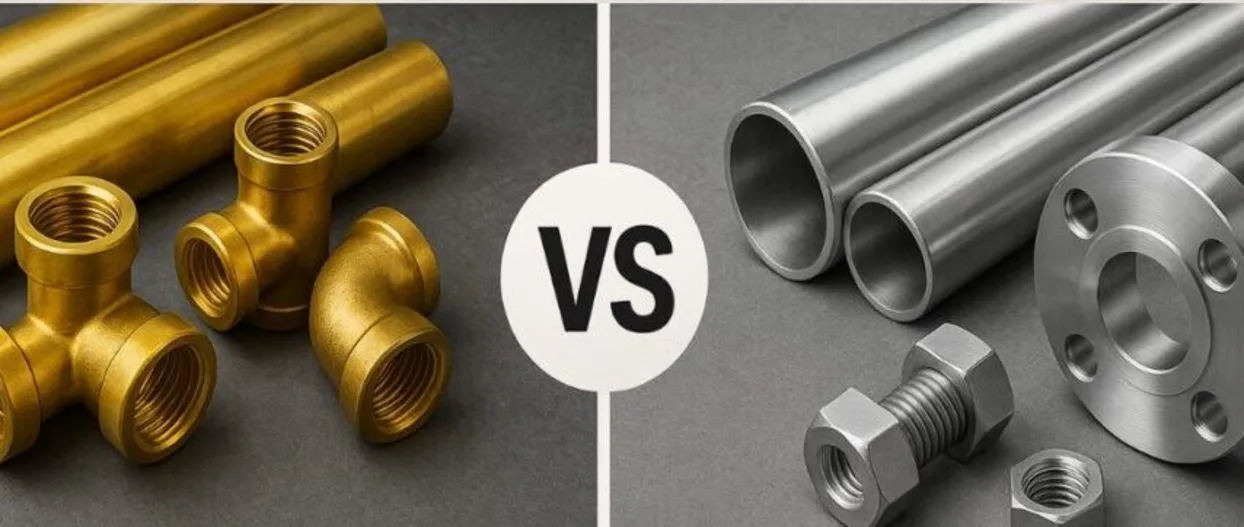
When engineers, manufacturers, or procurement teams evaluate materials, Brass and Stainless Steel often rise to the top of the list. Both are durable, versatile metals with long records of performance across industrial, commercial, and consumer applications. Yet they offer very different strengths. Choosing between them affects cost, longevity, safety, and product performance.
This overview breaks down the essential differences, highlights where each material performs best, and offers practical guidance for selecting the right option for your next project.
What Brass Is Known For
Brass is an alloy made mainly from copper and zinc. Adjusting these two elements changes the alloy’s color, strength, workability, and corrosion resistance. This is why you’ll find dozens of brass grades in circulation.
Key characteristics:
Easy to machine and form. Brass cuts cleanly, resists tool wear, and holds tight tolerances. Many manufacturers choose it for components that demand precise shaping.
Excellent electrical and thermal conductivity. While not as conductive as pure copper, brass still performs well in electrical and heat-transfer applications.
Naturally antimicrobial. Brass surfaces can reduce bacterial growth, which is helpful in healthcare, plumbing, and food-contact uses.
Corrosion resistant in many environments. Brass stands up well to water and mild chemicals, though it can dezincify in aggressive or high-chloride conditions.
Common uses: valve fittings, plumbing fixtures, precision turned parts, bearings, decorative hardware, musical instruments, and electrical connectors.
For industries that need a mix of machinability, reliability, and appearance, brass remains a preferred choice. Its warm gold tone also makes it attractive for architectural and consumer products.
What Stainless Steel Offers
Stainless steel is an iron-based alloy containing at least 10.5% chromium. The chromium forms a protective oxide film that makes the metal resistant to rust and staining. Nickel, molybdenum, and other elements may be added to improve strength and corrosion performance.
Key characteristics:
Superior strength and toughness. Stainless steel maintains its mechanical properties across a wide temperature range and holds up under heavy loads.
Outstanding corrosion resistance. Grades such as 304 and 316 handle moisture, chemicals, and even marine environments with minimal degradation.
Low maintenance and long lifespan. Stainless steel parts often outlast alternatives, especially in harsh or hygiene-sensitive settings.
High heat resistance. It performs well in applications exposed to high temperatures or thermal cycling.
Common uses: industrial equipment, automotive components, food-processing machinery, medical devices, fasteners, kitchenware, and structural elements.
Where safety, hygiene, or structural integrity matter most, stainless steel is the standard.
Brass and Stainless Steel: Side-by-Side Comparison
Strength and Durability
If you need a material that can take heavy mechanical loads or withstand high pressure, stainless steel is usually the safer choice. It offers higher tensile strength and better fatigue resistance than brass. Brass, while durable in its own right, is chosen more for precision, formability, and moderate strength applications.
Corrosion Resistance
Both metals resist corrosion, but in different ways. Brass performs well in freshwater and low-stress environments, and specialized brass alloys can resist seawater. Stainless steel, especially 316, handles corrosive chemicals and saltwater far better. In industrial settings with aggressive agents, stainless steel maintains structural integrity longer.
Machinability and Fabrication
Brass is one of the easiest metals to machine. It cuts smoothly, requires less power, and extends tool life. This leads to faster production times and lower machining costs. Stainless steel is workable, but it is harder, generates more heat, and demands more robust tooling.
Appearance and Finish
Brass offers a warm, gold-like color that is popular for decorative fittings, luxury hardware, and architectural elements. Stainless steel provides a clean, modern look with polished or brushed finishes. Its appearance suits industries that prioritize hygiene or a “clean metal” aesthetic.
Electrical and Thermal Conductivity
Brass outperforms stainless steel in both electrical and thermal conductivity. This makes it the preferred material for electrical connectors, heat-transfer components, and parts that depend on efficient energy flow. Stainless steel is generally avoided in these roles because of its lower conductivity.
Weight
Brass is typically heavier than stainless steel. In applications where weight reduction matters—such as automotive or aerospace components—stainless steel may be the more efficient option.
Cost Considerations
Costs vary by grade, region, and market conditions. Brass is usually more expensive per kilogram due to its copper content, but lower machining costs can offset this in some projects. Stainless steel tends to deliver better long-term value in corrosive or high-load applications because of its longevity and low maintenance requirements.
Choosing the Right Material for Your Application
When deciding between Brass and Stainless Steel, start with the demands of the environment and the expectations for the part.
Choose Brass when you need:
- High machinability and tight tolerances
- Moderate corrosion resistance
- Good electrical or thermal conductivity
- Attractive color or decorative appeal
- Choose Stainless Steel when you need:
- Maximum strength and structural reliability
- Excellent corrosion and heat resistance
- Long service life with minimal maintenance
- High hygiene standards
A simple rule of thumb: use brass for precision components and conductivity needs; choose stainless steel for strength, durability, and tough environments.
Final Thoughts
Brass and stainless steel each bring unique advantages to industrial and commercial products. Understanding their differences helps you match the right material to your performance goals, manufacturing process, and operating conditions. Whether you’re designing plumbing fittings, food-grade machinery, or architectural hardware, selecting the correct alloy ensures better reliability, better value, and better results.
Article about ” Comparing Brass and Stainless Steel: Essential Differences Explained ” post by toko baut dan mur – tokohasil.com