
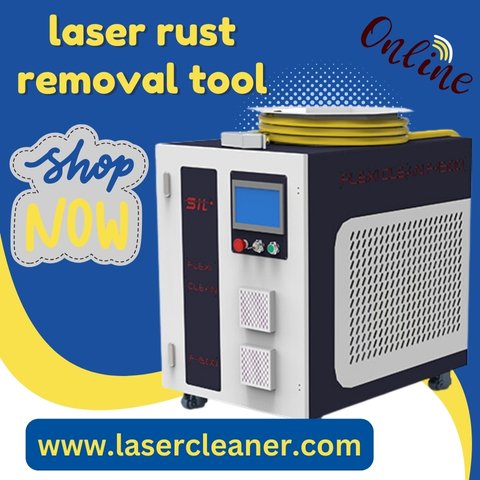
The laser rust removal tool has emerged as an essential solution for restoring metal surfaces that have succumbed to corrosion over time. Rust, a common enemy of metal objects, can significantly reduce the lifespan and aesthetic appeal of tools, vehicles, machinery, and industrial equipment. This tool offers a transformative way to handle rust without the labor-intensive methods traditionally used, providing precision, control, and speed for all types of metal restoration projects.
Metal surfaces exposed to moisture, oxygen, and other environmental factors often undergo oxidation, resulting in the formation of rust. The accumulation of rust weakens the structural integrity of the metal, causing deterioration that, if left untreated, can lead to extensive damage. Historically, removing rust involved abrasive techniques such as sanding, wire brushing, or chemical treatments, each requiring considerable effort and time. The laser rust removal tool offers a modern alternative that combines advanced technology with practical application, making the rust removal process faster, cleaner, and more precise.
A laser rust removal tool operates by emitting a highly concentrated beam of light that interacts with the rusted layer of metal. The process involves targeting the oxidation on the surface, breaking it down at a molecular level. The laser energy precisely focuses on rust particles without affecting the underlying metal structure, ensuring the original surface remains intact. This capability is particularly important when working with delicate or intricate metal components that could be damaged by traditional rust removal methods.
Industries that rely heavily on metal components, such as automotive, manufacturing, aerospace, and construction, have increasingly adopted the laser rust removal tool for maintenance and restoration. In automotive restoration, for instance, body panels, frames, and engine components often accumulate rust due to prolonged exposure to moisture and road salts. Using a laser rust removal tool, technicians can clean and restore these metal parts with minimal effort while preserving the structural quality. Likewise, in manufacturing and heavy machinery maintenance, rust removal is critical for ensuring equipment functions efficiently and safely. The laser tool provides a reliable solution to maintain operational standards without the downtime associated with manual cleaning.
The precision of the laser rust removal tool also makes it suitable for fine applications. Antique metal objects, historical artifacts, and intricate machinery parts can be restored without risking damage to their surfaces. The laser can reach small crevices, corners, and areas that are difficult to access with traditional abrasive methods. This precision makes it a preferred choice for restorers who aim to maintain the original details and integrity of metal objects. Additionally, the process is generally clean, producing minimal residue compared to mechanical scraping or chemical treatments. The removed rust often turns into fine dust that can be easily collected, reducing environmental impact and workplace mess.
Efficiency is another notable aspect of the laser rust removal tool. Traditional rust removal methods can be time-consuming, requiring repeated applications and extensive manual labor. In contrast, the laser tool accelerates the rust removal process, allowing larger areas to be treated in less time. For industries and workshops that handle a high volume of metal components, this time-saving feature is particularly valuable. Operators can achieve uniform results consistently, enhancing productivity and workflow efficiency.
Safety considerations also play a role in the growing adoption of laser rust removal technology. Many chemical rust removers involve harsh substances that pose health risks or require specialized handling and disposal. Abrasive techniques can release metal particles into the air, creating potential hazards for workers. The laser method, on the other hand, offers a more controlled process, reducing direct contact with hazardous substances and limiting the risk of accidental damage to surrounding materials.
The versatility of the laser rust removal tool further extends to different types of metals. Steel, iron, aluminum, and other metal alloys can all undergo laser treatment for rust removal. Each metal responds differently to laser energy, and modern tools are designed to allow adjustments in power, pulse frequency, and beam focus to optimize results for various materials. This adaptability makes the tool useful across a wide range of applications, from heavy industrial machinery to delicate metal artwork.
Maintaining the laser rust removal tool involves basic care to ensure consistent performance. Regular cleaning of the laser head, proper calibration, and following operational guidelines help prolong the lifespan of the tool. Many devices also come with user-friendly controls, allowing operators to adjust settings according to the thickness of the rust layer and the type of metal being treated. As technology continues to evolve, laser rust removal tools are becoming more compact, portable, and affordable, opening up possibilities for small workshops, DIY enthusiasts, and mobile service providers.
The role of the laser rust removal tool in modern metal maintenance is transforming the way rust is addressed. By combining precision, efficiency, and safety, it offers an advanced alternative to conventional methods. Industries, restorers, and metalworking professionals benefit from its ability to deliver clean, controlled, and consistent results, preserving the quality of metal surfaces while eliminating corrosion effectively.
As metal objects continue to play a central role in industrial processes, construction, transportation, and daily life, the importance of maintaining their longevity cannot be overstated. Rust removal is not merely a cosmetic concern but a practical necessity for ensuring reliability, performance, and safety. The laser rust removal tool represents a modern solution that meets these demands, leveraging technological advancements to improve traditional maintenance practices.
With ongoing innovation, laser rust removal tools are becoming increasingly efficient, versatile, and accessible. They represent a fusion of technology and practicality, empowering users to restore and preserve metal surfaces with unprecedented accuracy. Whether used in large-scale industrial settings or for individual restoration projects, the tool has established itself as a valuable asset in the fight against rust.
In summary, the laser rust removal tool is redefining metal restoration and maintenance. Its precision, efficiency, adaptability, and cleaner operational process offer a modern approach to addressing corrosion challenges. As industries and individuals seek effective methods to preserve the integrity of metal surfaces, this tool stands out as a reliable, high-performance solution capable of meeting diverse rust removal needs.

