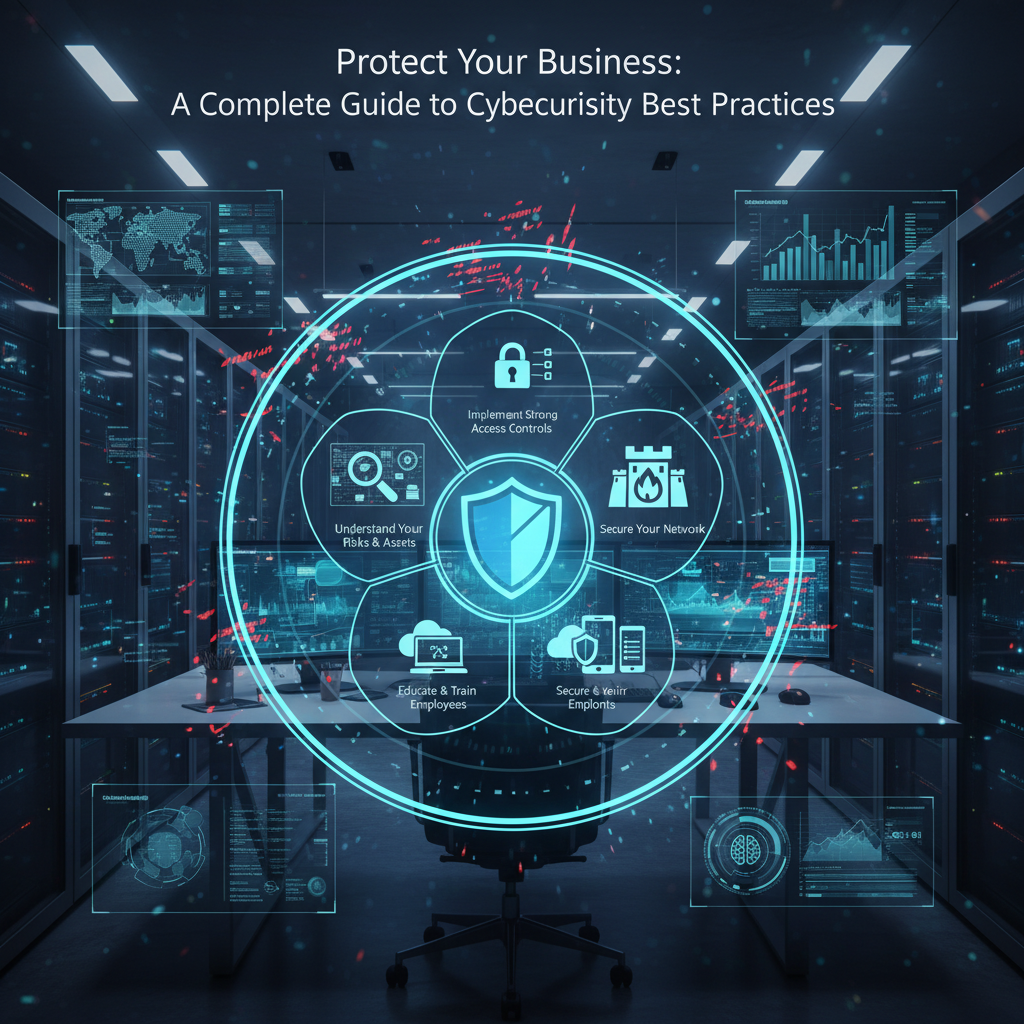
In today’s digital age, cybersecurity has become a crucial component for businesses of all sizes. With the increasing number of cyberattacks and data breaches, safeguarding your business’s sensitive information is more important than ever. Cybersecurity isn’t just about installing antivirus software; it’s about creating a comprehensive strategy to protect your digital assets from evolving threats. This guide will walk you through the best practices in cybersecurity to ensure your business remains secure in an increasingly hostile online environment.
Understanding Cybersecurity: The Foundation of Protection
Cybersecurity refers to the measures taken to protect computers, servers, networks, and data from malicious attacks, damage, or unauthorized access. According to a report by Cybersecurity Ventures, cybercrime damages are expected to cost the world $10.5 trillion annually by 2025. This staggering figure underscores the need for businesses to adopt proactive cybersecurity strategies. Whether you’re a small startup or a large corporation, implementing strong cybersecurity practices can protect your reputation, customer trust, and bottom line.
One of the most common types of cyber threats businesses face is phishing. Phishing attacks involve tricking employees into revealing confidential information like usernames and passwords, often by disguising the attacker as a trusted entity. In fact, phishing accounted for 32% of all data breaches in 2020, according to Verizon’s Data Breach Investigations Report. Understanding the risks associated with phishing and other cyber threats is the first step toward building a robust defense system.
Best Practices for Strengthening Cybersecurity
1. Implement Multi-Factor Authentication (MFA)
One of the simplest yet most effective ways to enhance cybersecurity is by implementing Multi-Factor Authentication (MFA). MFA adds an extra layer of security by requiring users to provide two or more verification factors before gaining access to a system. These factors typically include something you know (a password), something you have (a smartphone), or something you are (fingerprints or facial recognition).
According to Microsoft, MFA can block 99.9% of account compromise attacks. By requiring additional forms of verification, you reduce the risk of unauthorized access, even if an attacker has your password.
2. Educate and Train Employees
Human error is often the weakest link in the cybersecurity chain. According to a report by the Ponemon Institute, 62% of all data breaches are due to employees’ mistakes or negligence. Whether it’s opening a malicious email attachment or using weak passwords, employees need to be properly trained to identify potential risks.
Regular cybersecurity training should be mandatory for all staff, from top executives to entry-level employees. This training should cover key topics like identifying phishing attempts, practicing good password hygiene, and understanding how to safely handle sensitive data. By building a culture of cybersecurity awareness, you can greatly reduce the likelihood of a successful cyberattack.
3. Use Strong, Unique Passwords
Password management is one of the most basic, yet essential, components of cybersecurity. According to a 2021 report by LastPass, 59% of users reuse passwords across multiple accounts. Reusing passwords across platforms increases the chances of a breach if one of your accounts is compromised.
Ensure that your employees use strong, unique passwords for each system they access. Passwords should be at least 12 characters long and contain a mix of upper and lowercase letters, numbers, and symbols. Additionally, consider implementing a password manager to securely store and manage login credentials.
4. Regularly Update Software and Patches
Cybercriminals often target software vulnerabilities to gain access to your systems. These vulnerabilities are frequently addressed by developers in the form of software updates and patches. According to a study by IBM, 60% of data breaches could have been prevented by installing the latest security updates.
Ensure that all software, including operating systems, applications, and security tools, is regularly updated to protect against the latest threats. Automating software updates can help ensure timely installation of critical patches and minimize the window of vulnerability.
5. Backup Data Regularly
Data loss can be catastrophic for a business, especially in the event of a ransomware attack or system failure. Ransomware attacks, where cybercriminals demand payment in exchange for decrypting your files, have been on the rise in recent years. According to a report by Emsisoft, global ransomware attacks increased by 150% from 2019 to 2020.
To mitigate the damage caused by data loss, businesses should implement regular backups of critical data. Backups should be stored securely, preferably in an off-site location or cloud service, and should be tested regularly to ensure they can be restored when needed.
Building a Cybersecurity Strategy: A Continuous Process
Cybersecurity is not a one-time fix but an ongoing process. As cyber threats continue to evolve, businesses must adapt their strategies to stay ahead of attackers. Regular risk assessments, security audits, and threat intelligence can help identify new vulnerabilities and reinforce your defenses.
According to a survey by Accenture, 83% of businesses believe that cybersecurity is critical to their growth strategy. By investing in cybersecurity best practices and continuously improving your defense mechanisms, you can build resilience against cyber threats and ensure the long-term success of your business.
Conclusion:
In conclusion, cybersecurity is an essential part of modern business operations. By following the best practices outlined in this guide, you can significantly reduce the risk of a cyberattack and protect your valuable digital assets. From implementing multi-factor authentication to training employees and regularly updating software, there are many steps you can take to enhance your cybersecurity posture.
The cost of ignoring cybersecurity is far too high, with data breaches leading to financial losses, reputational damage, and legal consequences. As threats continue to grow, businesses must take proactive steps to safeguard their digital environment. Start implementing these cybersecurity best practices today to protect your business tomorrow.