
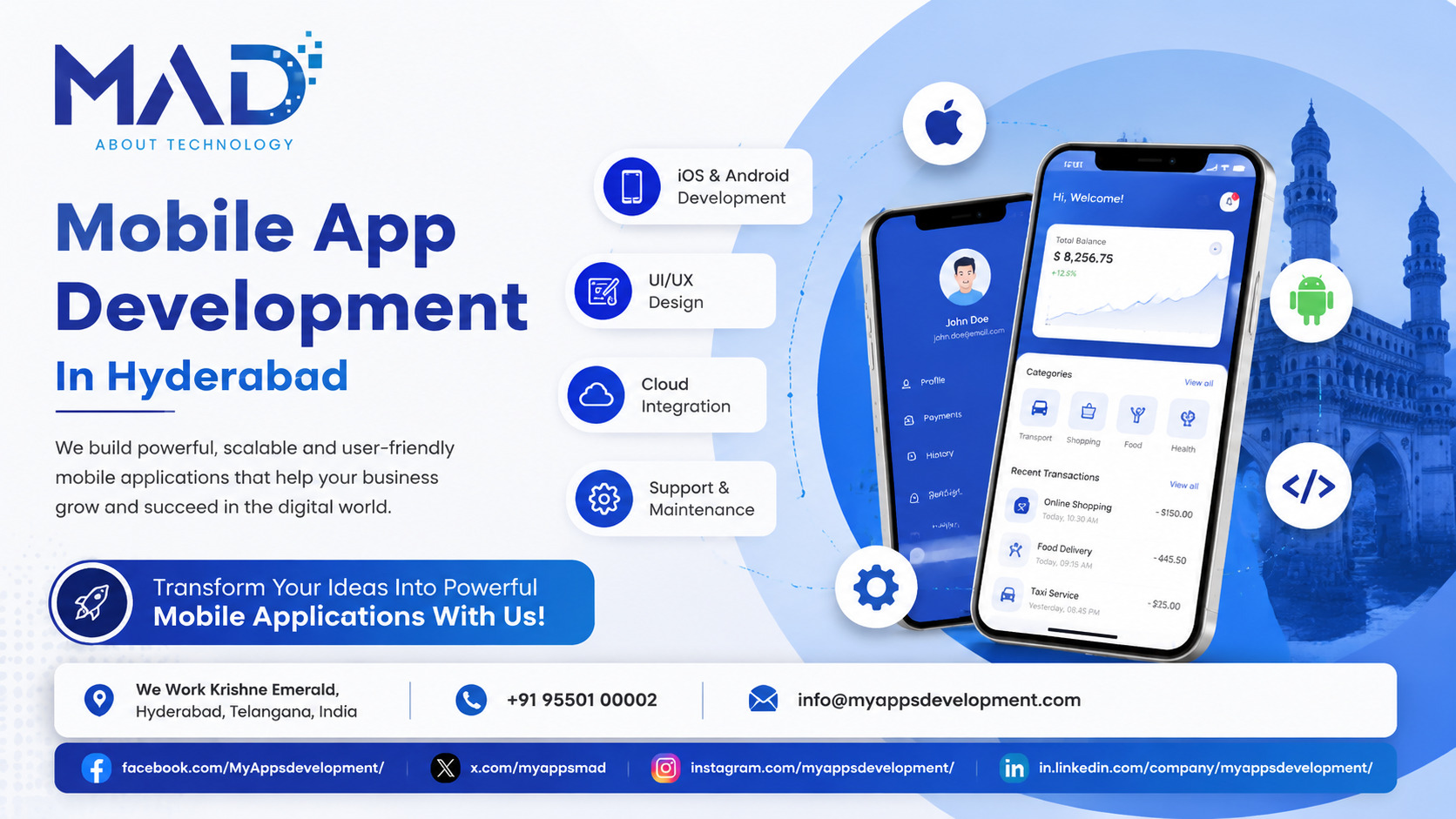
In today’s smartphone-driven world, mobile application development services have become the backbone of digital business success. Whether you run a startup or an established enterprise, investing in professional mobile application development services can help you reach customers, boost engagement, and increase revenue. This article explains everything you need to know about these services, their benefits, the development process, and how to choose the right partner for your project.
What Are Mobile Application Development Services?
Mobile application development services refer to the complete range of professional solutions offered to design, build, test, launch, and maintain applications for smartphones and tablets. These services cover everything from initial planning and wireframing to coding, quality assurance, and post-launch support. Businesses use these services to create apps for e-commerce, banking, healthcare, education, entertainment, and much more.
Types of Mobile Application Development Services
A reliable development provider typically offers multiple service categories to suit different business needs:
Native App Development – Applications built specifically for a single platform, such as Android or iOS, delivering high performance and smooth user experience.
Cross-Platform Development – A single codebase used to build apps that work on both Android and iOS, reducing cost and development time.
Hybrid App Development – A combination of web technologies and native features, ideal for budget-conscious projects.
Progressive Web Apps (PWAs) – Web-based applications that behave like native apps without requiring installation from an app store.
App UI/UX Design – Creating intuitive, attractive, and user-friendly interfaces that keep users engaged.
App Maintenance and Support – Regular updates, bug fixes, and performance improvements after launch.
App Modernization – Upgrading outdated applications to meet current technology standards.
Key Benefits of Hiring Professional Development Services
Choosing expert services instead of in-house or DIY solutions offers several advantages:
Faster Time to Market – Experienced teams follow streamlined workflows that speed up delivery.
High-Quality Code – Skilled developers write clean, secure, and scalable code.
Cost Efficiency – Avoiding costly mistakes during development saves money in the long run.
Access to Latest Technology – Professionals stay updated with modern frameworks, tools, and industry trends.
Better Security – Strong data protection measures safeguard user information and business data.
Post-Launch Support – Continuous monitoring and maintenance keep your app running smoothly.
The Mobile Application Development Process
Understanding the development journey helps you plan your project effectively. A standard process includes the following stages:
1. Discovery and Planning
This phase involves understanding your business goals, target audience, competitors, and core app features. A detailed project roadmap is created here.
2. UI/UX Design
Designers create wireframes and prototypes that define how the app will look and function. A smooth user experience is critical for app success.
3. Development
Developers write the actual code using suitable technologies. This stage is often divided into:
- Front-end development (user-facing components)
- Back-end development (servers, databases, and logic)
- API integration (connecting third-party services)
4. Testing and Quality Assurance
The app undergoes multiple tests, including:
- Functional testing
- Performance testing
- Security testing
- Compatibility testing across devices
5. Deployment
Once approved, the application is published on platforms such as the Google Play Store and Apple App Store.
6. Maintenance and Updates
After launch, regular updates, feature additions, and bug fixes ensure long-term success.
How to Choose the Right Mobile App Development Partner
Selecting the right team is one of the most important decisions for your project. Consider the following factors:
Portfolio and Experience – Review previous projects and industry expertise.
Client Reviews and Ratings – Check feedback on trusted platforms.
Technical Skills – Confirm knowledge of frameworks like Flutter, React Native, Swift, and Kotlin.
Communication – Choose a team that offers transparent and regular updates.
Budget and Timeline – Ensure pricing and delivery schedules align with your expectations.
Post-Launch Support – Verify that ongoing maintenance services are included.
Latest Trends in Mobile App Development
Staying ahead of trends gives your application a competitive edge. Some leading trends include:
Artificial Intelligence and Machine Learning – Personalized recommendations, chatbots, and smart automation.
Augmented Reality (AR) and Virtual Reality (VR) – Interactive shopping, gaming, and training experiences.
Internet of Things (IoT) Integration – Connecting apps with smart devices and wearables.
5G Technology – Faster speeds enabling richer app experiences.
Enhanced App Security – Biometric authentication and advanced encryption.
On-Demand Apps – Growing demand for delivery, healthcare, and service-based applications.
Frequently Asked Questions (FAQ)
Q1: How much does mobile app development cost?
The cost depends on app complexity, features, platform, design requirements, and development location. A simple app may cost a few thousand dollars, while a complex enterprise solution can cost significantly more.
Q2: How long does it take to develop a mobile application?
A basic app typically takes 2 to 4 months, while a feature-rich application can take 6 to 12 months or longer.
Q3: Should I build a native or cross-platform app?
Native apps offer better performance, while cross-platform apps save time and money. The right choice depends on your budget, audience, and feature requirements.
Q4: Do I need to publish my app on both Android and iOS?
If your target audience uses both platforms, launching on both stores maximizes reach. Cross-platform development makes this easier and more affordable.
Q5: What happens after the app is launched?
Post-launch services include monitoring performance, fixing bugs, releasing updates, adding new features, and ensuring compatibility with new operating system versions.
Q6: Can I update my app after release?
Yes, apps can be updated regularly to improve performance, add features, and fix issues. Most development providers offer ongoing maintenance packages.
Conclusion
Mobile application development services are essential for any business looking to grow in the digital age. From planning and design to development, testing, and maintenance, these services cover every stage of creating a successful app. By understanding the types of services available myappsdevelopment, the development process, and how to choose the right partner, you can make informed decisions that deliver real business results. Start your mobile app journey today and turn your business idea into a powerful digital product.
Please Follow Us On Our Social Media Links:-
Follow Us On Facebook :- https://www.facebook.com/MyAppsdevelopment/
Follow Us On Twitter :- https://x.com/myappsmad
Follow Us On Instagram :- https://www.instagram.com/myappsdevelopment/
Follow Us On Linkedin :- https://in.linkedin.com/company/myappsdevelopment
Call Us :- +91 95501 00002
Email Us :- info@myappsdevelopment.com
Address :- We Work Krishne Emerald, Hyderabad, Telangana, India

