
Artisan chocolate is more than a sweet treat. For many chocolatiers, it is a carefully made product that reflects craftsmanship, quality ingredients, creativity, and attention to detail. Because customers often notice the packaging before they taste the chocolate, wrapping plays an important role in how the product is perceived.
The right wrapping material can protect the chocolate while also creating an attractive presentation. It can help communicate a brand story, highlight a product name, and make individual pieces look more special. This is especially important for small chocolate businesses, boutique confectioners, farmers market vendors, gift shops, and specialty food retailers across the United States.
Vellum is one material that can work particularly well for artisan chocolate packaging. Its smooth appearance, lightweight structure, and slightly translucent character can create a refined look without making the package feel overly complicated. When combined with thoughtful printing and suitable food-contact packaging layers, it can become part of a memorable chocolate presentation.
Why Is Vellum a Good Choice for Artisan Chocolate Wrapping?
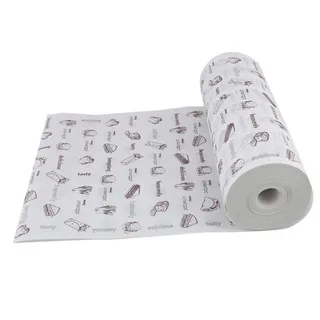
Custom printed vellum paper can give artisan chocolate products a distinctive visual identity while keeping the packaging lightweight and elegant.
Vellum is traditionally known for its smooth surface and semi-transparent appearance. In modern packaging, the term can refer to papers designed to provide a translucent or frosted visual effect. This appearance can be especially useful for premium chocolate because it allows packaging designers to create layers of color, texture, and visual depth.
Artisan chocolate often has a handcrafted appearance. Packaging that is too plain may fail to communicate that craftsmanship, while packaging that is overly complex can distract from the product. Vellum offers a middle ground.
A chocolatier can use it as an outer wrap, sleeve, band, insert, or decorative layer depending on the packaging design. The material can support simple typography, botanical illustrations, geometric patterns, seasonal artwork, or a minimalist brand logo.
For example, a Brooklyn chocolatier might use a translucent outer wrap around a small chocolate gift box. A craft chocolate company in California could use a printed vellum band around a bar package to create a premium appearance. A boutique confectionery in Chicago might use a decorative wrap for seasonal truffles.
The important point is that the material should be selected according to the intended food-contact application. Not every type of vellum or decorative paper is automatically suitable for direct contact with chocolate. Businesses should verify that the specific material and inks are appropriate for the intended packaging use.
How Does Vellum Compare With Other Chocolate Wrapping Materials?
Printed wax paper for food can provide a different packaging effect, particularly when grease resistance and direct food-contact performance are important considerations.
Chocolate packaging commonly uses several materials, including foil, grease-resistant paper, parchment-style papers, glassine, paperboard, sleeves, labels, and specialty wraps. Each material serves a different purpose.
Foil provides a strong barrier and has long been associated with chocolate packaging. Paper-based wraps can provide a more natural or handcrafted appearance. Glassine offers a smooth, translucent finish and is often used where a clean presentation is desired. Paperboard boxes provide structure and space for branding and product information.
Vellum-style materials are especially useful when visual presentation is a major priority. Their translucent appearance can create a soft layer over printed graphics or product colors.
However, material selection should never be based on appearance alone. Chocolatiers need to consider:
- Direct or indirect food contact
- Grease resistance
- Moisture resistance
- Product temperature
- Storage conditions
- Printing requirements
- Folding and wrapping performance
- Required package strength
- Regulatory and supplier documentation
For products with high cocoa butter content, packaging should be able to handle the natural oils of chocolate without becoming stained or weakened. A decorative outer layer may therefore be combined with a suitable inner food-contact wrap.
This layered approach can offer both functionality and visual appeal.
What Makes Artisan Chocolate Packaging Different?
Artisan chocolate packaging usually needs to communicate craftsmanship and product quality quickly.
Large commercial chocolate brands may rely heavily on recognizable logos, established color systems, and extensive retail presence. Smaller chocolate businesses often need packaging to introduce the brand to customers who may be discovering it for the first time.
A carefully designed wrapper can help answer several questions immediately:
- What brand made this chocolate?
- What type of chocolate is inside?
- Is it dark, milk, or white chocolate?
- Is it flavored or filled?
- Is it handmade or small-batch?
- Is it intended as a gift?
- What makes the product different?
Good packaging does not need to answer every question visually. Instead, it should establish a clear hierarchy.
The brand name should be easy to identify. The chocolate variety should be readable. Supporting information can appear elsewhere on the package or label.
For artisan businesses, this simplicity can make packaging look more premium. A restrained design with plenty of open space may communicate sophistication better than a package filled with competing graphics.
How Can Translucent Packaging Improve Chocolate Presentation?
The semi-transparent quality associated with vellum can create a layered visual effect.
Instead of covering every part of the underlying package, a translucent sheet can allow selected colors or graphics to show through. This creates opportunities for creative packaging designs.
For example, a chocolatier could place a printed translucent band around a white chocolate box. The color of the box can subtly influence the appearance of the printed design.
Another approach is to combine typography with illustrations. A floral pattern may appear softly over the surface while the product name remains clear and prominent.
This technique can be especially effective for:
- Handmade truffles
- Chocolate bars
- Chocolate bonbons
- Seasonal chocolates
- Gift assortments
- Wedding favors
- Corporate chocolate gifts
- Holiday confectionery
- Limited-edition collections
The visual effect can make a relatively simple package feel more carefully designed.
How Does Custom Printing Support Chocolate Branding?
Custom printing allows a chocolate business to make its packaging consistent with its broader brand identity.
Brand consistency matters because customers interact with businesses across multiple touchpoints. A customer may see a chocolate package at a farmers market, visit the company’s website later, and encounter the same business on social media.
Consistent typography, colors, illustrations, and logo placement can help connect these experiences.
For artisan chocolate companies, printing can include:
- Brand logos
- Product names
- Flavor names
- Decorative patterns
- Botanical illustrations
- Seasonal artwork
- Short brand messages
- Website information
- Social media handles
- Product collection names
The design should remain appropriate for the available print area. Fine details may not reproduce well on every paper type, particularly when the material is translucent. A packaging designer or experienced printing supplier can help determine suitable artwork specifications.
Businesses should also request a proof before approving a larger production run. This gives the chocolatier an opportunity to evaluate color, readability, alignment, and overall appearance.
What Should Chocolatiers Consider When Choosing Vellum Packaging?
The first consideration should be the role of the material in the package.
If the paper will directly touch chocolate, the supplier should confirm that the specific product is intended for food-contact use. If it functions only as an outer decorative sleeve, the requirements may be different.
Thickness is another important factor. Very lightweight material can provide an elegant appearance but may require careful handling. A heavier sheet can provide more structure but may not fold in the same way.
Other factors include:
Food Safety
Food packaging should be selected according to its intended use. Businesses should obtain relevant supplier documentation and verify that the material is suitable for the food application.
Grease Resistance
Chocolate contains cocoa butter and other fats. Packaging that is not designed to handle oily foods may develop visible marks or lose its appearance.
Print Quality
The surface should support the desired printing method. Colors, fine lines, and small text should be tested before full production.
Size and Format
The dimensions should match the chocolate product and wrapping method. Oversized sheets can increase material waste, while undersized sheets can make wrapping difficult.
Storage Conditions
Heat and humidity can affect chocolate as well as packaging. Chocolatiers should consider the conditions in which the product will be stored, transported, displayed, and sold.
Sustainability
Many U.S. consumers are interested in packaging waste and recyclable materials. Businesses should ask suppliers about the material composition and available disposal or recycling options rather than making unsupported environmental claims.
How Can Vellum Wrapping Work for Seasonal Chocolate Products?
Seasonal chocolate collections often benefit from packaging that can change without requiring a completely different box design.
A business could create a standard chocolate box and change the outer printed wrap for different occasions.
Examples include:
- Valentine’s Day chocolates
- Easter collections
- Mother’s Day gifts
- Halloween chocolate assortments
- Thanksgiving gift boxes
- Christmas chocolates
- New Year’s gift sets
- Wedding favors
A translucent printed wrap can give each collection its own identity while maintaining the same underlying packaging structure.
For small businesses, this approach may simplify inventory management because the core box or container can remain consistent while seasonal graphics are introduced through an outer layer.
Can Vellum Help Small Chocolate Businesses Look More Premium?
Yes, when it is combined with good design and appropriate packaging construction.
Premium presentation does not necessarily require expensive or complicated packaging. Customers often associate quality with details such as clean printing, accurate folds, consistent branding, readable information, and thoughtful presentation.
A translucent wrap can contribute to this impression because it creates another visual layer around the product.
However, packaging should match the actual product. If a chocolate company promotes itself as handmade and small-batch, a warm and tactile design may be more appropriate than a highly corporate appearance.
The best approach is to create packaging that feels authentic to the brand.
What Printing Details Matter Most for Chocolate Wrappers?
Several design details can affect the final appearance.
Color selection: Colors should complement the chocolate and brand identity. Dark chocolate products may work well with rich, sophisticated tones, while lighter chocolates can support softer palettes.
Typography: Product names should remain easy to read. Decorative fonts can be used for accents, but essential information should use clear type.
Logo placement: The logo should have enough space around it so it does not become visually crowded.
Pattern density: Large, complex patterns may reduce readability. Subtle repeating graphics can create texture without overwhelming the package.
Print consistency: When multiple products are sold as a collection, consistent design elements can make the range look professionally coordinated.
Before ordering, businesses should request a physical sample or proof whenever possible.
How Can Vellum Wrapping Support Gift-Ready Chocolate?
Gift packaging depends heavily on presentation.
Customers buying artisan chocolate as a gift may judge the package before opening it. An attractive outer wrap can make the product feel more complete and intentional.
This is particularly useful for:
- Corporate gifts
- Wedding favors
- Birthday gifts
- Holiday presents
- Thank-you gifts
- Client appreciation packages
- Luxury chocolate assortments
A branded translucent sleeve can also provide an opportunity to add a short message or collection name without covering the entire package.
For corporate orders, businesses can use a consistent design while adding an event name or special message. For weddings, the same concept can be adapted to include initials, dates, or a custom pattern.
What Are the Practical Benefits for U.S. Chocolate Businesses?
For American chocolatiers, packaging needs to work across different sales environments.
A chocolate company selling online needs packaging that can survive handling and shipping. A farmers market vendor may prioritize quick visual recognition. A boutique retailer may need packaging that fits neatly on shelves. A corporate gift supplier may need consistent packaging for larger orders.
A well-planned wrapping system can support several of these channels.
Local businesses in cities such as New York, Los Angeles, Chicago, Boston, Seattle, and Austin can also use packaging to reinforce a local identity. Regional illustrations, neighborhood references, or location-inspired patterns can help a small chocolate brand feel connected to its community.
At the same time, businesses selling nationwide should ensure that the packaging remains clear and professional regardless of where the customer encounters it.
How Should a Chocolatier Order Custom Wrapping Paper?
The process should begin with the product rather than the artwork.
First, determine the chocolate dimensions, shape, weight, and wrapping method. Next, identify whether the material will directly contact the product or serve as an outer decorative layer.
After that, determine the required sheet or roll size, paper thickness, printing requirements, and estimated order volume.
It is also useful to ask the supplier:
- Is the material suitable for the intended food application?
- What printing process is available?
- Can the supplier provide a proof?
- What minimum order quantity applies?
- What sheet or roll sizes are available?
- Can the material be supplied in custom dimensions?
- What documentation is available for food-contact applications?
- How should the finished material be stored?
Ordering samples before a large production run can reduce the risk of choosing a material that looks good on a screen but does not perform as expected during actual wrapping.
FAQs About Vellum for Artisan Chocolate Wrapping
Is vellum suitable for chocolate packaging?
It can be suitable for certain chocolate packaging applications, but suitability depends on the specific paper construction and whether it will directly contact the food. Always confirm food-contact suitability with the supplier.
Can vellum be printed with a chocolate brand logo?
Yes. Depending on the material and printing process, logos, patterns, product names, and other artwork can be printed onto the surface.
Is translucent paper good for premium chocolate?
It can be. Its semi-transparent appearance can create a sophisticated, layered presentation that works well with boutique and artisan product designs.
Can this type of wrapping be used for chocolate gifts?
Yes. Decorative wraps and sleeves can be particularly effective for gift boxes, seasonal collections, wedding favors, and corporate chocolate packages.
Does chocolate require grease-resistant packaging?
Often, yes. Chocolate contains fats that can migrate into unsuitable paper materials. The packaging should be selected according to the product and intended contact conditions.
Should chocolatiers order samples before buying in bulk?
Yes. Samples allow businesses to test the material, printing, wrapping process, appearance, and compatibility with the actual chocolate product.
Can small chocolate businesses use custom printed wrapping?
Absolutely. Custom printing can help smaller brands create a consistent visual identity without requiring highly complicated packaging structures.
Is translucent packaging recyclable?
Recyclability depends on the exact material, coatings, inks, laminations, and local recycling requirements. Businesses should confirm these details with the supplier and local recycling guidance.
Final Words
Artisan chocolate deserves packaging that reflects the care behind the product. Vellum-style wrapping can provide an elegant, lightweight, and visually distinctive layer that helps chocolates stand out in retail displays, gift settings, markets, and online orders.
The strongest packaging decisions balance appearance with practical performance. Food-contact suitability, grease resistance, print quality, size, storage, durability, and sustainability should all be considered before placing a production order.
For U.S. chocolatiers and specialty confectionery businesses, thoughtful custom wrapping can do more than protect a product. It can communicate craftsmanship, strengthen brand recognition, and create a memorable experience before the customer even takes the first bite.

