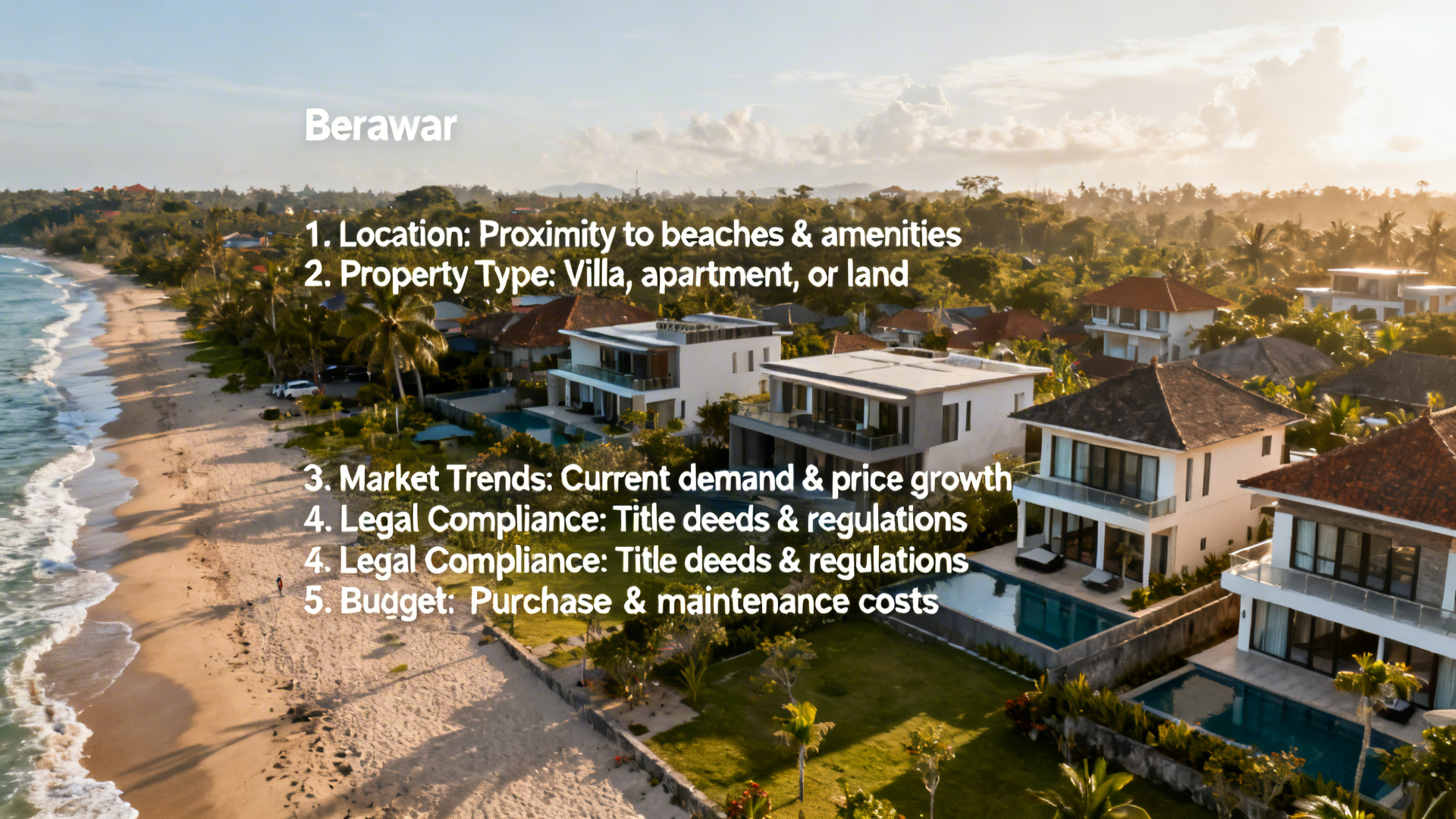
Berawa has emerged as one of Bali’s most compelling real estate destinations over the past several years. What was once a quiet coastal village between Canggu and Seminyak has transformed into a vibrant, high-demand area attracting international investors, digital nomads, boutique hospitality developers, and lifestyle buyers from across the globe. The combination of beachfront access, strong rental yields, growing infrastructure, and a thriving social scene has pushed Berawa firmly onto the radar of serious property investors. But like any investment decision, buying property here requires careful evaluation of multiple factors before you commit your capital. This guide walks you through the key considerations that separate successful Berawa investments from costly mistakes.
Understand the Indonesian Foreign Property Ownership Framework
Indonesia maintains specific legal restrictions on foreign property ownership that every international investor must understand before proceeding. Foreigners cannot directly own freehold land in Indonesia under their personal name. The two primary structures available to foreign buyers are the Hak Pakai title—a right-to-use certificate that grants ownership rights for an initial period of 25 years with renewal options—and the leasehold arrangement, where the buyer purchases the right to use the land for a fixed term negotiated with the landowner, typically between 25 and 50 years.
Each structure carries different risk profiles, renewal certainty levels, and implications for resale value. Some foreign investors also establish Indonesian legal entities—known as PT PMA companies—to hold property under freehold title on their behalf. This structure provides stronger ownership security but requires compliance with Indonesian company law and ongoing administrative obligations. Working with a qualified Indonesian property lawyer before signing any agreement is not optional—it is the foundation of a safe investment.
Research Berawa’s Zoning Regulations. Thoroughly
Zoning regulations in Bali determine what you can build on any given piece of land, how tall your structure can rise, how much of the land area your building can occupy, and whether the land carries commercial, residential, or agricultural classification. Building on agricultural land without proper conversion permits creates serious legal exposure that can result in forced demolition and total loss of investment.
Berawa sits within a zone that has experienced significant development pressure, and local authorities have periodically updated zoning rules in response to rapid growth. Confirm the current zoning classification of any property you consider, verify that the intended use—whether villa rental, boutique hotel, residential occupancy, or mixed commercial use—aligns with that classification, and confirm that all necessary permits are either in place or obtainable before purchase. A due diligence process that skips zoning verification has caused many investors significant financial pain in Bali’s competitive market.
Evaluate the Rental Yield Potential. Honestly,
Berawa’s rental market performs strongly, driven by consistent tourist demand, a growing long-stay digital nomad population, and limited quality villa supply relative to demand. However, rental yield projections vary considerably depending on property type, location within Berawa, build quality, management efficiency, and seasonal occupancy patterns.
Before evaluating any specific property for sale in Berawa, research current rental rates for comparable properties in the immediate area. Speak with established local property managers about realistic occupancy rates across high season, shoulder season, and low season periods. Build your yield calculations on conservative occupancy assumptions—60 to 70 percent annual occupancy represents a realistic baseline for well-managed properties—rather than the optimistic projections that sellers and agents sometimes present. Understanding the honest yield potential of a property allows you to evaluate whether the asking price delivers an acceptable return on your invested capital.
Assess Location Quality Within Berawa Itself
Berawa is not a uniform market. Location quality varies significantly across the area, and the premium attached to specific streets, beach proximity, and surrounding development density reflects these differences clearly. Properties within walking distance of Berawa Beach, Finns Beach Club, and the established restaurant and café strip command higher prices and typically deliver stronger rental performance than properties positioned further inland or adjacent to undeveloped land that carries uncertain future development risk.
When you examine property for sale in Berawa, walk the immediate surroundings at different times of day. Assess road quality and traffic patterns, proximity to noise sources like construction sites or nightlife venues, flooding history during rainy season, and the general trajectory of surrounding development. A property positioned in a section of Berawa that attracts quality neighboring development will appreciate more reliably than one surrounded by uncertainty. Location quality within a suburb matters as much as the suburb’s overall reputation.
Analyse Build Quality and Infrastructure Standards
Bali’s construction industry operates across a wide quality spectrum, from internationally supervised builds using premium materials and engineering oversight to rapidly constructed villas that meet minimum standards but deteriorate quickly in the tropical climate. The difference in long-term maintenance costs, guest satisfaction levels, and resale value between these quality tiers is substantial.
Inspect any existing structure thoroughly before purchase, ideally with an independent building inspector who has no relationship with the seller. Check the quality of concrete work, roof construction, drainage systems, electrical installation, plumbing, and pool engineering. Assess whether the property connects to a reliable water supply—either a municipal connection or a certified deep well—and confirm the capacity and condition of the electrical system. Properties that cut corners on infrastructure create recurring maintenance expenses that erode rental yields and reduce resale attractiveness.
Understand the Total Cost of Ownership
The purchase price represents only one component of the total capital required to own and operate an investment property in Berawa. Transaction costs in Indonesia typically include land and building acquisition duty, notary fees, agent commissions, and legal fees that collectively add between eight and twelve percent to the purchase price. Factor these costs into your investment calculations from the beginning rather than treating them as surprises after negotiation.
Ongoing ownership costs include annual land and building tax, property management fees typically ranging from fifteen to twenty-five percent of gross rental revenue, villa maintenance, pool servicing, garden upkeep, staff wages if you employ on-site team members, and periodic capital expenditure on furniture, appliances, and structural maintenance. Properties that generate strong gross rental revenue can still deliver disappointing net returns when ownership costs are not calculated accurately upfront.
Work With Reputable Local Professionals
Every successful property investment in Berawa relies on a team of qualified local professionals working in your interest. You need an independent Indonesian property lawyer to verify the title, conduct due diligence, and structure your ownership correctly. You need a reputable local agent with genuine market knowledge rather than simply the highest commission motivation. You need an experienced property manager who maintains strong occupancy and protects your asset between stays.
The quality of your professional team directly determines the quality of your investment outcome. Cutting costs on legal and professional fees in a market as legally complex as Indonesian real estate creates risks that far outweigh the savings. Invest in the right team from the beginning, and your Berawa property investment will stand on a genuinely solid foundation.