People who are concerned about prominent or uneven ears often search for ways to improve their appearance without undergoing surgery. While several cosmetic treatments can address different facial concerns, the options for changing the structural shape or position of the external ear are more limited.
Understanding the difference between surgical ear correction and non-surgical approaches can help individuals make informed decisions. Those exploring ear reshaping surgery in Islamabad should understand what each approach can realistically achieve.
What Is Surgical Ear Reshaping?
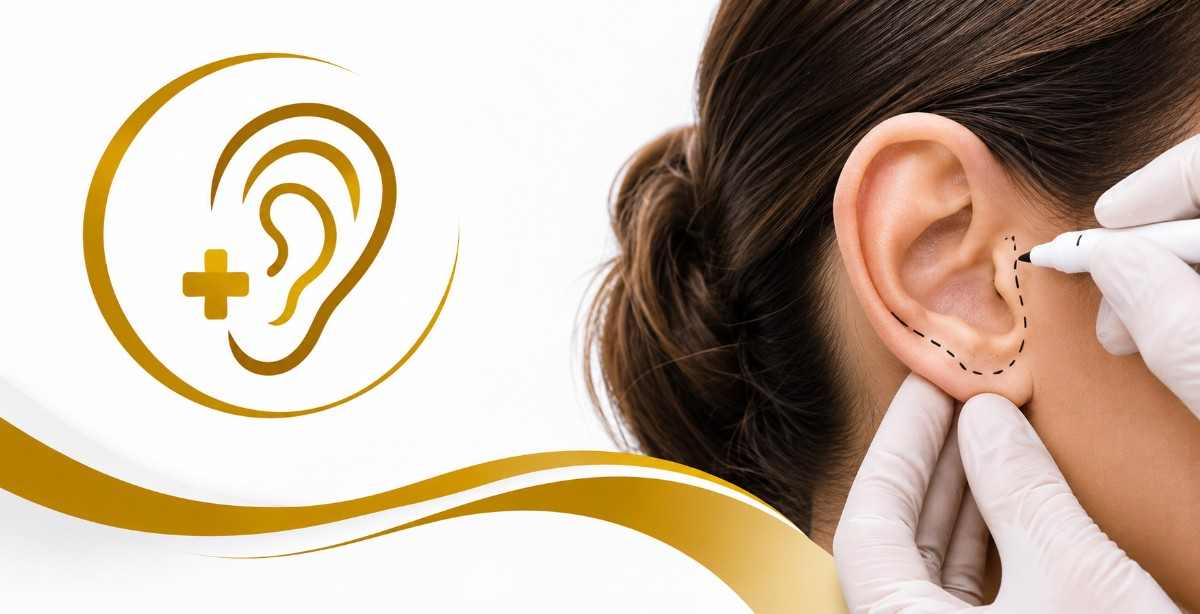
Otoplasty is a surgical procedure that modifies the shape, position or structure of the external ear. It may be considered for prominent ears, certain cartilage-fold concerns or selected structural differences.
During surgery, the surgeon may reshape cartilage, improve the natural folds or reposition the ear closer to the head.
The technique depends on the patient’s anatomy and the specific correction required.
Can Non-Surgical Treatments Change Ear Shape?
Non-surgical cosmetic treatments generally do not offer the same structural changes as otoplasty.
Injectable treatments, skin procedures and other aesthetic treatments are designed for specific concerns involving facial skin, soft tissue or selected structures. They are not substitutes for cartilage reshaping when the objective is to change the structural position or contour of the external ear.
The suitability of any non-surgical approach depends on the concern being treated.
Ear Moulding and Early Intervention
Ear moulding is a non-surgical approach that may be used in selected newborns with certain congenital ear shape differences.
The technique uses specialised moulding devices to guide the shape of the developing ear cartilage during early life. The effectiveness depends on the type of deformity and the timing of intervention.
Ear moulding is not a general treatment for adults with prominent ears and should be assessed by an appropriate medical professional.
Comparing Surgical and Non-Surgical Approaches
| Consideration | Otoplasty | Non-surgical approaches |
|---|---|---|
| Structural cartilage reshaping | Can modify cartilage structure | Generally cannot reshape established ear cartilage |
| Ear positioning | May reposition the external ear | Usually does not change structural ear position |
| Recovery | Requires surgical healing | Depends on the specific treatment |
| Risks | Surgical risks and recovery considerations | Risks depend on the treatment and device |
| Suitability | Determined through surgical assessment | Depends on the specific concern and treatment |
Why a Proper Assessment Matters
Not every ear concern requires surgery, and not every non-surgical treatment is suitable for every individual.
A consultation helps identify the underlying anatomical concern and determine whether surgical correction, another intervention or no treatment may be appropriate.
Patients should avoid choosing a procedure based solely on advertisements, online photographs or claims of guaranteed results.
What Are the Limitations of Otoplasty?
Although otoplasty may improve ear prominence or selected structural concerns, it cannot guarantee perfect symmetry. The final result depends on cartilage characteristics, healing and the surgical technique.
Patients should also consider the recovery period, potential complications and the possibility of additional correction.
Conclusion
Surgical and non-surgical treatments serve different purposes in cosmetic medicine. When the concern involves the structural position or shape of the external ear, otoplasty may be an option that a surgeon can assess.
Understanding the limitations of alternative approaches and discussing individual goals with a qualified surgeon can help patients make a more informed treatment decision.