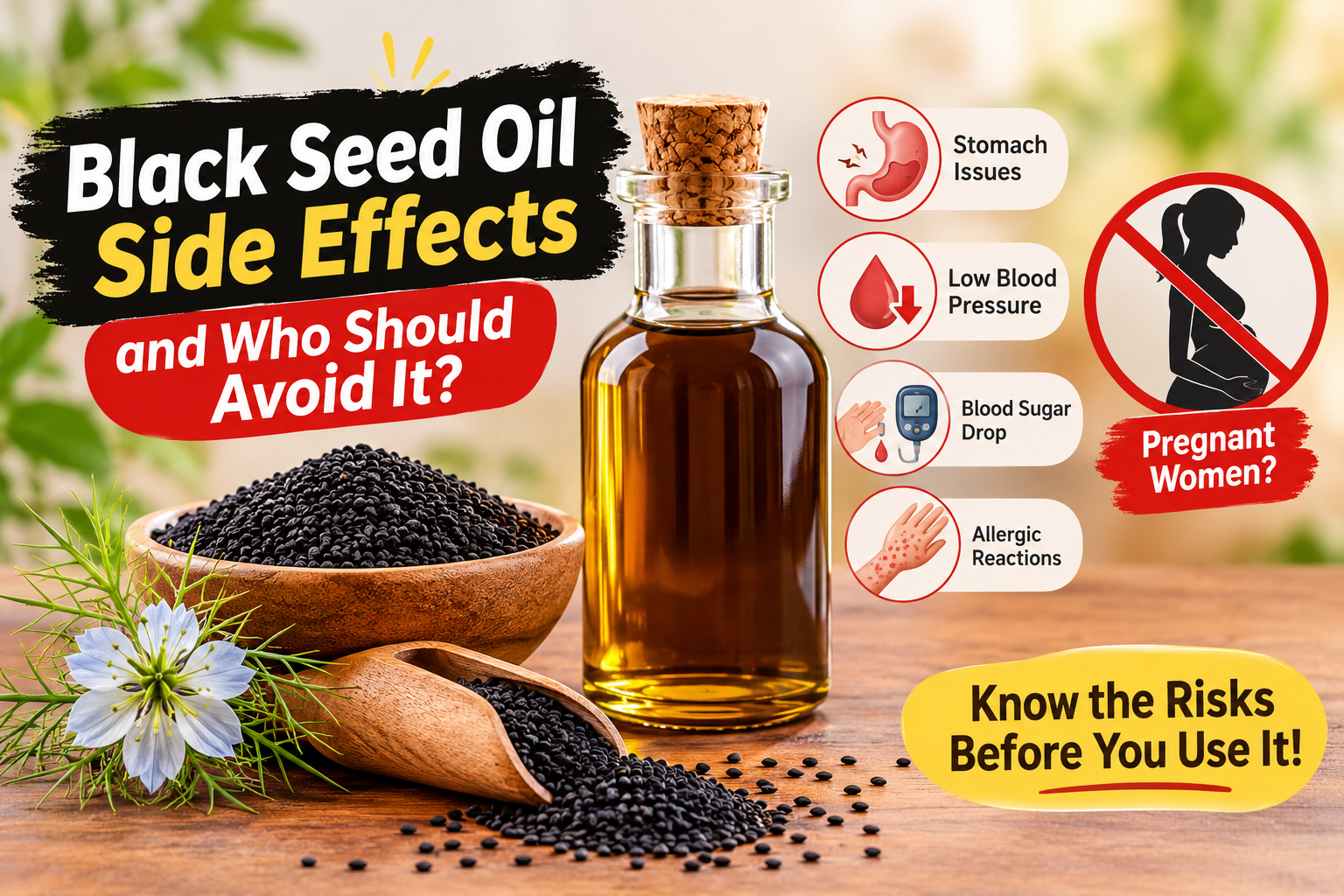
You probably know someone who swears by a spoonful of this stuff every morning. A relative, a neighbor, maybe a coworker who won’t stop talking about it. The tiny black seeds of the Nigella plant have been used in kitchens and home remedies across South Asia, the Middle East, and North Africa for a very long time.
The oil pressed from those seeds has become a daily habit for many people. But Black Seed Oil isn’t harmless just because it’s natural. It can cause trouble for some people, especially in large amounts or when mixed with certain medicines. Here’s what’s worth knowing before you add it to your routine.
What the Oil Actually Is
Black seed oil comes from Nigella sativa, a small flowering plant. It tastes bitter and a little peppery, which is why some people mix it into honey or tea. Its main active compound is thymoquinone, and researchers have looked at it in connection with inflammation, blood sugar, and cholesterol.
Here’s the catch. Most of that research is small or done in labs. We don’t have much long-term data, and we don’t have firm guidance on how much is the right amount. So when a label makes big promises, take them lightly.
Side Effects People Report Most
Most healthy adults do fine with small amounts. When something does go wrong, it’s usually mild:
- Upset stomach. Nausea, gas, bloating, or a burning feeling, mostly when taken on an empty stomach.
- Changes in digestion. Some people get loose stools, others get constipated.
- Heartburn and aftertaste. The flavor tends to hang around for a while.
- Skin irritation. Putting it directly on the skin can cause redness, itching, or a rash in some people.
Cutting back on the amount usually helps. So does taking it with a meal. If the symptoms stick around, stop using it and talk to a doctor.
Blood Pressure and Blood Sugar
A few studies suggest the oil may lower blood pressure and blood sugar a little. That sounds like a bonus until you consider who’s already taking medicine for those things.
If you’re on a blood pressure tablet, the oil might push your numbers lower than your doctor planned. You could feel dizzy, weak, or faint. The same goes for people using diabetes medicine or insulin, since a sudden sugar drop can be dangerous. If you manage either condition, check with your doctor first and keep an eye on your readings.
Who Should Skip It
Some people should avoid the oil or only use it under medical guidance.
Pregnant women. Large amounts may affect the uterus, and there isn’t enough safety research. Most doctors say to stay away during pregnancy.
Breastfeeding mothers. Reliable information is limited, so caution makes sense.
People with bleeding problems or on blood thinners. The oil may slow clotting. With drugs like warfarin or aspirin, that could mean easier bruising or bleeding.
Anyone heading for surgery. Because of the effect on clotting and blood pressure, doctors often suggest stopping about two weeks before a planned procedure.
People with kidney or liver conditions. These organs process everything you take in. There are rare reports of harm from heavy use, so get medical advice first.
Organ transplant patients and people on immune-suppressing drugs. The oil may affect immune activity, which can work against those medicines.
Children. Safe amounts for kids haven’t been well studied, so only give it if a pediatrician agrees.
Medicines That May Clash With It
Your liver uses certain enzymes to break down many medicines, and the oil may interfere with some of them. That can make a drug act stronger or weaker than it should.
Talk to your doctor or pharmacist before combining it with any of these:
- Blood thinners
- Blood pressure medicine
- Diabetes medicine
- Sedatives and sleeping pills
- Immunosuppressants
- Heart rhythm or seizure medicine
If you take any regular prescription, the easiest move is to bring the bottle to your appointment and ask directly.
Allergies and Skin Reactions
Allergy to Nigella seeds is uncommon, but it happens. Watch for itching, hives, or swelling of the lips or face. Trouble breathing is an emergency, so get help right away.
If you plan to use the oil on your skin or hair, do a patch test first. Dab a small drop on your inner forearm, cover it, and wait a day. Redness, itching, or swelling means it’s not for you.
Tips for Using It More Safely
If your doctor is fine with it and you still want to try, a few habits help:
- Start with a small amount. A quarter teaspoon is plenty for the first few days.
- Take it with food. Your stomach will likely thank you.
- Stick to the label. Taking more won’t give you more benefit.
- Read the ingredients. Look for a batch number, an expiry date, and nothing extra added.
- Store it properly. Keep it sealed, in a cool place, away from sunlight.
- Listen to your body. If something feels wrong, stop.
And remember, it’s a supplement. It doesn’t replace any treatment your doctor has prescribed.
When to Talk to a Doctor
Book a visit if you have a long-term condition, take regular medicine, are pregnant or trying to be, or have surgery coming up. Also reach out if you notice a rash, ongoing stomach pain, dizziness, or bruising you can’t explain after you start taking it.
The Bottom Line
Black seed oil has a long history and some interesting research behind it, but it isn’t risk-free. Many healthy adults handle small amounts well, while others need to be more careful. Know your own health picture, start slow, and bring your doctor in whenever medicines or medical conditions are involved. If you do decide to try it, look for cold pressed oils with clear labeling and storage instructions, and think of them as one small part of a balanced routine, not a shortcut to better health.