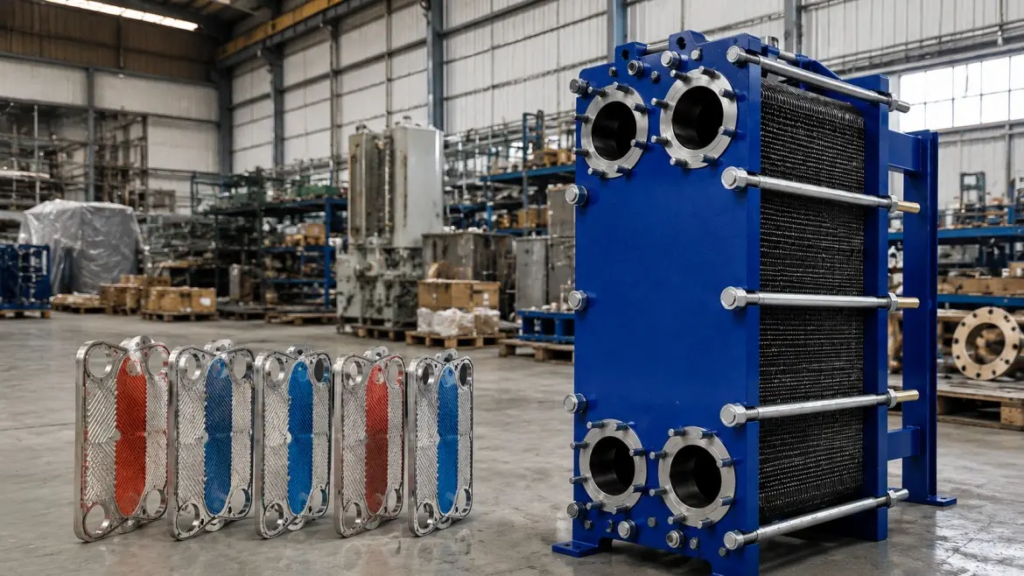
Every plant that heats or cools a liquid faces the same basic question: how do you move heat from one stream to another without wasting energy or floor space? For decades, the answer in many factories has been a compact stack of pressed metal plates that lets two fluids pass close together, trading warmth through thin walls. These units are now a familiar sight in food processing, chemical works, breweries and district heating schemes. This article explains how they work, where they fit best, and what to check before choosing one for your own line. The same basic layout appears in duties from pasteurising milk to cooling engine oil, which is why the design is worth understanding before any purchase.
Why Thin Plates Move Heat So Well
The core idea is simple. A series of thin, corrugated plates is clamped together in a frame, creating narrow channels. One fluid flows through every second channel while the other flows through the channels in between, so the two streams never mix yet stay in close contact. Because the plates are thin and rippled, heat passes quickly and the flow stays turbulent, which improves transfer. An industrial plate heat exchanger built this way can handle a large duty in a fraction of the space a shell-and-tube unit would need, and plates can be added or removed when duties change.
That flexibility is one reason plant engineers like the design. If a process grows, extra plates extend capacity without replacing the frame. If a product changes, a different plate material can be fitted. Gaskets seal each channel, and the whole pack can be opened for inspection, which matters in food and pharmaceutical work where hygiene checks are routine. The trade-off is that gaskets need periodic attention, and very dirty fluids can block narrow channels, so strainers and sensible flow rates are part of good practice. Opening the pack for cleaning is a job for two people on larger frames, and the plates must be lifted straight out to avoid bending the thin metal.
Getting the Size Right
Size starts with duty: how much heat must move, and at what temperatures. Engineers work from inlet and outlet temperatures, flow rates and the properties of both fluids. A small temperature approach — the gap between the two outlet streams — usually means more plate area, so there is a balance between efficiency and cost. Pressure drop matters too; a unit that saves heat but forces pumps to work much harder may cost more over a year than it saves. Good vendors run these numbers through sizing software and share the results. Where duties swing with the seasons, it is worth sizing for the worst case rather than the average, because a unit that copes in summer but struggles in winter will cause trouble twice a year.
Materials deserve the same care. Stainless steel suits most food and water duties, while titanium handles chlorides and seawater. Gasket materials must suit both the temperature and the chemistry: EPDM works for many water-based duties, while nitrile or fluorocarbon options suit oils and aggressive media. Connections, orientation and drainability also affect day-to-day use. A unit that cannot be drained fully can harbour stale product, and one mounted the wrong way can trap air and lose performance.
Care, Cleaning and Long-Term Reliability
Day-to-day care is mostly about watching the numbers. Rising pressure drop or falling outlet temperatures usually signal fouling, and catching it early keeps cleaning short and cheap. Many plants clean in place with a mild detergent or a descaling solution circulated through the unit, which avoids opening the pack. When the pack is opened, plates should be checked for cracks, pitting and gasket wear, and the tightening dimension recorded so the pack is compressed evenly on reassembly. A simple logbook — dates, readings and cleaning notes — turns guesswork into a record that the next engineer can actually use.
With that kind of routine attention, plate units often run for many years, and their modular nature makes repairs straightforward: a damaged plate can be replaced rather than scrapping the whole unit. That is part of their appeal for smaller plants that cannot afford long shutdowns. The key is to treat the unit as a working part of the process, not a fit-and-forget box — log the readings, clean on schedule, and keep a few spare gaskets on the shelf.
Frequently Asked Questions
What fluids can a plate-type unit handle?
Most clean liquids work well: water, glycol mixes, milk, juices, wort and many process chemicals. Very viscous fluids, slurries and streams carrying large solids are harder, because narrow channels can block. In those cases a wider-gap plate or a different exchanger style is usually the better choice. A quick test with the vendor’s sizing team will confirm whether your fluid is suitable before any order is placed.
How often should gaskets be replaced?
It depends on temperature, chemistry and how often the unit is opened. Many plants inspect gaskets at every opening and replace them every few years or when they show compression set, cracking or leaks. Keeping spares on hand avoids downtime.
Can one unit serve both heating and cooling?
Yes, in many layouts the same unit can heat with one service fluid and cool with another at different times, though the two duties need separate sizing checks. Some plants install a dedicated unit for each duty to keep control simple and avoid cross-contamination.
Conclusion
Plate-type heat transfer earns its place by packing a lot of duty into a small footprint, and by letting plants adapt as duties change. The best results come from honest sizing, sensible materials and steady maintenance rather than chasing the lowest purchase price. Choose the unit for the fluids you actually run, keep an eye on pressure and temperature, and it will repay the attention with years of quiet, efficient service. Talk to vendors early, compare their sizing on your real numbers, and keep the maintenance routine simple enough that it actually happens.