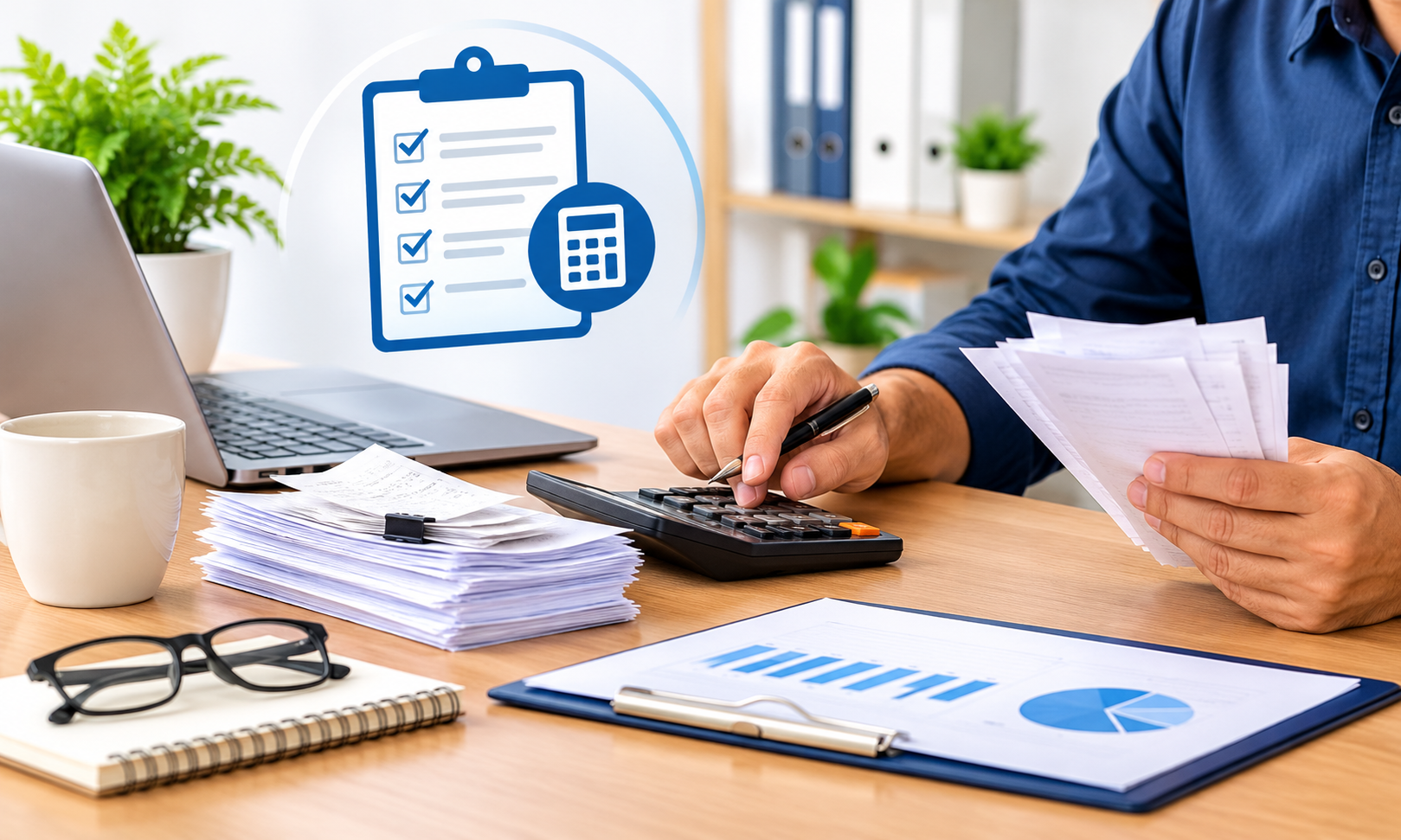
The simplest method of completing the Self Assessment return is to gather all the correct forms prior to starting. Typically, if you experience issues regarding your expenses (e.g., delays, additional charges, or omitting any of your expenses), it will usually be due to at least one of the three reasons below: you lost invoices; your bank statements do not clearly identify which transactions relate to business expenses; and/or you did not document your business expenses. As long as you provide the accountant for self employed tax with clear and comprehensive information, they will produce an accurate return. It may also help to know what types of supporting documentation you should submit along with your Self Assessment return, and to arrange these documents into pairs, so that you can decrease the amount of time required to prepare your return, and reduce the levels of anxiety that often occur as the submission deadline approaches.
Business Expense Evidence
The tax accountant for self employed will need to demonstrate that they have spent money on their business. After demonstrating that they have incurred money on their business, the self-employed taxpayer can deduct the money from their gross income to decrease the amount of income on which they pay taxes. To prove that you have incurred money on your business, you should retain copies of each receipt, supplier invoice, credit card/bank statement, etc., that supports your claim. You should also retain copies of any other business related expenses including professional liability insurance, software, accounting services, marketing, equipment, and office expenses. To show how you calculated your dollar amount for your allowable deductions, you should maintain a log detailing how you arrived at that number. Additionally, if you use a personal vehicle to travel to and from work, you must explain how you came up with the calculation. It is possible to consult with a tax professional who specializes in working with self-employed people to assist you in determining what allowable deductions you qualify for.
A bank statement and financial statements.
You will be able to get a certified copy of your company’s bank statement at the end of each tax year. This will allow you to see if any transactions have been left out of your company’s bank account or if you earned more than you spent. Generally, it will be simpler to do this if your company’s and personal financials are maintained separately. Credit card statements, loan agreements, interest paid/received, etc., along with other possible items related to your business may also be present. Any savings/interest bearing accounts used by your company should include an interest bearing account. The interest generated on these accounts is reported on a separate basis, so it may go undetected.
Get rid of other income or tax forms and paperwork.
The taxpayer’s engagement in self-employment is but one of several activities that the taxpayer could have participated in during a given tax year. If the taxpayer has received income from their self-employment and is also employed by another person (employer), then a document confirming the taxpayer’s employment must be provided by the taxpayer’s employer (i.e., a P60 or P45). In addition to providing a document from the taxpayer’s employer confirming the taxpayer’s employment, the taxpayer may be required to provide documents confirming other types of income received by the taxpayer.
Add past honors and successes to resume. Highlight past awards and merits.
It is essential that there is consistency in the way your taxes are handled. In order to prevent dual taxation and establish consistency with the manner in which the prior years’ tax returns were handled, the accountant will need to view copies of your previous years’ tax returns and any communications with HMRC (such as coding notices and/or payments made on account). If you still have outstanding losses from your last self employed accountant tax return which should be claimed via your accountant, or if you had lost funds in the past year and HMRC has not as of yet addressed these matters; then please indicate this in the initial part of the form.
Creating paperwork for an Accountant
Your digital files should be organized logically and named correctly (i.e., bank statements related to income/expense, etc.). Your self-employed accountant will most likely prefer that you copy and paste the bookkeeping software records directly to the clipboard, rather than having to manually enter the information. Find out from your self-employed accountant what format they want to receive the tax return in (i.e., electronic or online), as well as when they plan to file the tax return, so that you can resolve any problems before the automatic January 31st accountant for self employed tax return.
Conclusion
The process of doing a do-it-yourself tax return can be very easy when you have kept track of the necessary information for your tax return over the course of the year. Accounting sheets are created using financial documents, receipts, expense records, bank statements and other financial data, and the supporting documentation. Accounting sheets give accountants the complete set of data they need to prepare a tax return. Keeping organized records can help lower your fees, can illustrate how much risk exists for your company, and can help you quickly receive any allowable relief. Creating a process to gather documents, and keeping these documents organized on a consistent schedule (at “tax time”), can give taxpayers extra time to work on tax-saving strategies, operate their businesses, and expand their companies.