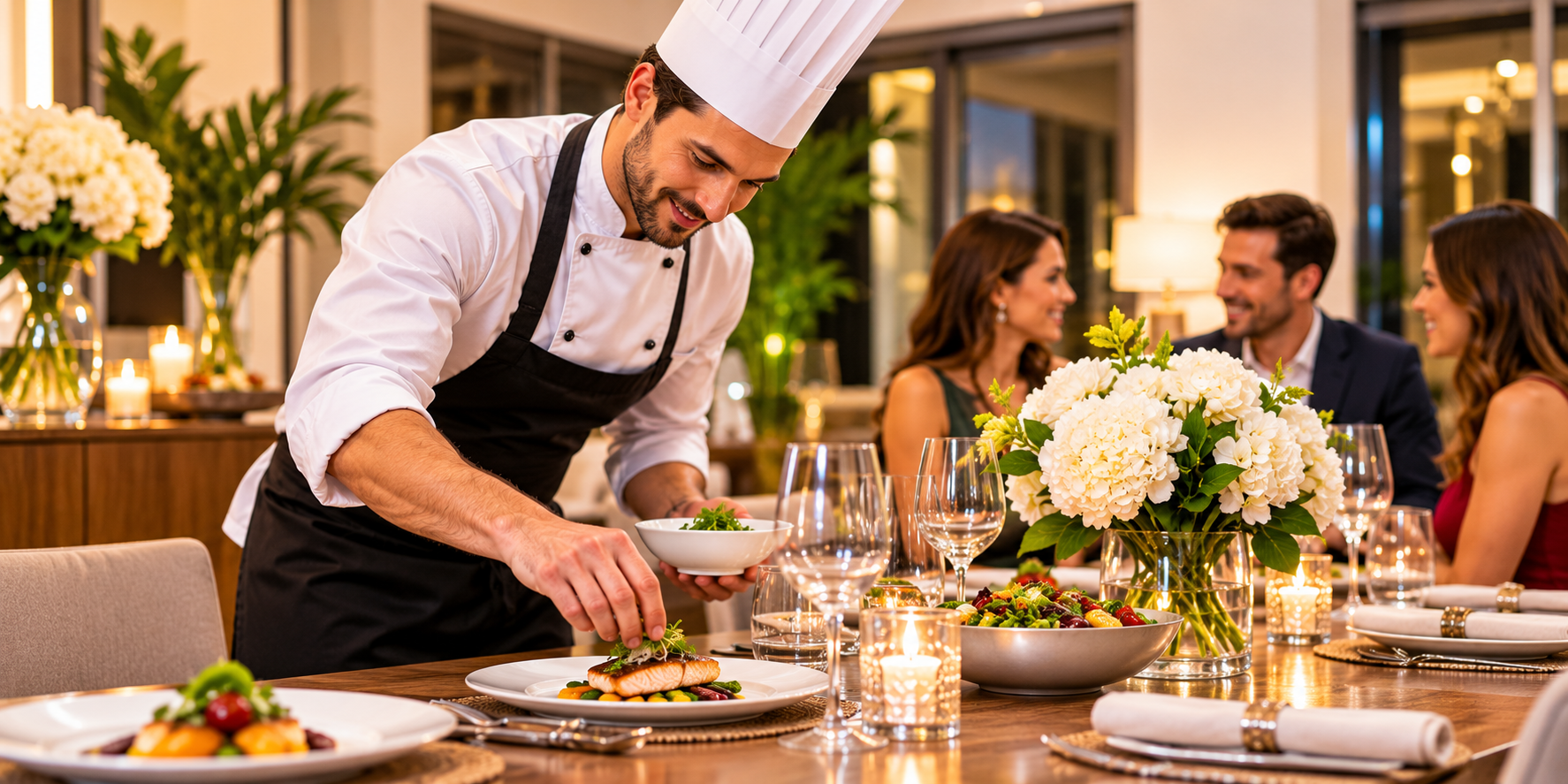
Planning a private chef dinner party involves more than choosing a few dishes and inviting guests. The menu, guest count, kitchen setup, and timing of each course all shape how smoothly the evening unfolds. A little preparation also helps the chef understand your expectations and build the meal around the occasion.
Every detail, including the menu and the guest list, deserves attention before the event. These practical steps make hosting a private dinner more manageable and give your guests a comfortable, enjoyable dining experience.
Start With the Purpose and Style of the Dinner Party
Before discussing dishes or guest numbers, establish the purpose of the gathering. A birthday dinner, anniversary celebration, business meal, and casual evening with friends each call for different arrangements.
· Decide on the Dining Experience
Consider the atmosphere the host wants to create. A formal dinner may include several plated courses with scheduled service, while a relaxed gathering might feature shared appetizers, a main course, and dessert.
The occasion also influences seating, table settings, and the overall length of the evening. Sharing these details with the chef early sets realistic expectations for the food and service.
· Set a Practical Budget
The budget should account for more than the chef’s fee. Ingredients, grocery shopping, preparation time, travel, serving assistance, rentals, and cleanup may affect the final cost.
Discussing your budget beforehand helps the chef shape the menu’s complexity and the level of service.
Plan a Menu That Suits the Occasion and Guests
Food is central to a private dinner party, so menu planning deserves careful attention. The dishes should complement one another, suit the occasion, and remain practical for the available kitchen facilities.
· Share Dietary Requirements and Food Preferences
Before selecting dishes, collect information about allergies, dietary restrictions, and personal preferences. This includes vegetarian or vegan diets, gluten intolerance, food allergies, and ingredients guests prefer to avoid.
Food allergies require particular attention because even small amounts of an allergen can cause serious reactions. Ask guests to share their requirements clearly, and have the chef confirm ingredient choices and preparation methods.
· Build a Balanced Menu
When planning a custom dinner party menu with a chef, consider how each course contributes to the overall meal.
A practical menu might include:
- Appetizers: Small bites, seasonal salads, or chilled seafood.
- First course: Soup, a vegetable dish, or a light pasta.
- Main course: Fish, poultry, beef, or a suitable plant-based alternative.
- Side dishes: Seasonal vegetables, potatoes, rice, or fresh grains.
- Dessert: A fruit-based dessert, chocolate creation, or classic baked treat.
The menu should follow a natural progression. A rich appetizer followed by a heavy main course and an equally rich dessert, for example, can leave guests feeling overly full. Variety in flavors, textures, and portion sizes creates a more comfortable dining experience.
Determine the Right Number of Guests
Guest count influences almost every practical decision, including food quantities, preparation time, seating, serving arrangements, and staffing.
· Consider the Available Space
The dining area should accommodate everyone comfortably, with sufficient room for chairs, table settings, and movement around the table. Kitchen access also matters because the chef may need space to prepare, plate, and serve multiple courses.
When reviewing guest count recommendations for a personal chef, focus on the home’s facilities and the type of service rather than an arbitrary number.
For an intimate dinner, a smaller group makes conversation and coordinated table service easier. Larger gatherings may need additional serving staff, more preparation space, or a simplified menu.
· Confirm the Final Guest List Early
A confirmed guest count helps the chef calculate ingredient quantities and organize preparation. It also cuts unnecessary food purchases and last-minute changes.
For larger parties, set an RSVP deadline and share any changes promptly. The chef can then adjust portions, seating requirements, and service arrangements.
Check Kitchen Equipment and Preparation Space
A private chef generally works with the equipment in the host’s home. Checking the kitchen beforehand reveals any limitations before cooking begins.
· Review Essential Kitchen Equipment
The kitchen equipment needed for a private chef depends on the menu, but commonly includes:
| Equipment | Purpose |
| Oven and stovetop | Cooking and reheating dishes |
| Refrigerator | Storing ingredients safely |
| Sharp knives and cutting boards | Food preparation |
| Pots and pans | Preparing different courses |
| Baking trays and serving dishes | Cooking and presentation |
| Mixing bowls and utensils | Measuring and preparing ingredients |
| Food thermometer | Checking safe cooking temperatures |
Particular dishes may also call for a blender, food processor, stand mixer, or specialty cookware.
· Discuss Equipment Before the Event
The chef should know what equipment is available before arriving. If anything essential is missing, the chef can bring suitable tools or adjust the menu. Check counter space, electrical outlets, refrigeration capacity, and sink access at the same time.
Planning an upcoming gathering? Al Martino Agency connects hosts with experienced chefs, servers, and bartenders for private chef dinner party catering, matched to your occasion, guest list, and service expectations.
Create a Clear Dinner Party Timeline
Good timing lets guests enjoy each course without feeling rushed or waiting too long between dishes. Agree on a schedule with the chef before the event.
· Establish the Preparation Schedule
Preparation usually begins well before guests arrive. The chef can shop for ingredients, wash vegetables, prepare sauces, marinate proteins, and organize serving equipment in advance.
On the event day, the chef can focus on final cooking, plating, and coordinating service.
· Organize Course Timing
A dinner party pacing and service timeline should account for guest arrivals, appetizers, seated dining, individual courses, and dessert.
Allow enough time between courses for guests to finish each dish and enjoy the conversation. Overly long gaps, however, interrupt the flow of the evening, so the chef and host should coordinate to keep service comfortable and consistent.
Prepare the Dining Area Before Guests Arrive
Have the dining space ready before the first guests arrive. Set the table with appropriate plates, flatware, glassware, napkins, and serving accessories.
Check that guests have comfortable seating and enough space for their dishes. Lighting and background music can also contribute to the atmosphere without distracting from conversation.
If the chef will also serve, confirm where plating will happen and how dishes will reach the dining area.
Frequently Asked Questions
How do you plan a dinner party with a private chef?
Confirm the guest count, set a budget, discuss menu preferences, and establish a service timeline.
How far in advance should you plan a private chef dinner party?
Start planning several weeks ahead to finalize menus, guest numbers, dietary needs, and kitchen arrangements.
How many courses should a private chef dinner party include?
For an intimate gathering, three courses typically work well: an appetizer, a main course, and dessert.
Conclusion
Planning a private chef dinner party becomes easier when you settle the menu, guest count, kitchen facilities, and service timeline in advance. Clear communication with the chef prevents unexpected issues and keeps food preparation organized. With practical arrangements in place, hosts can concentrate on welcoming guests and enjoying the occasion.
Love the idea of chef-prepared dinners every week, not just on special occasions? Contact Al Martino Agency for expert support with hiring a household personal chef who fits your family’s tastes, schedule, and culinary needs.