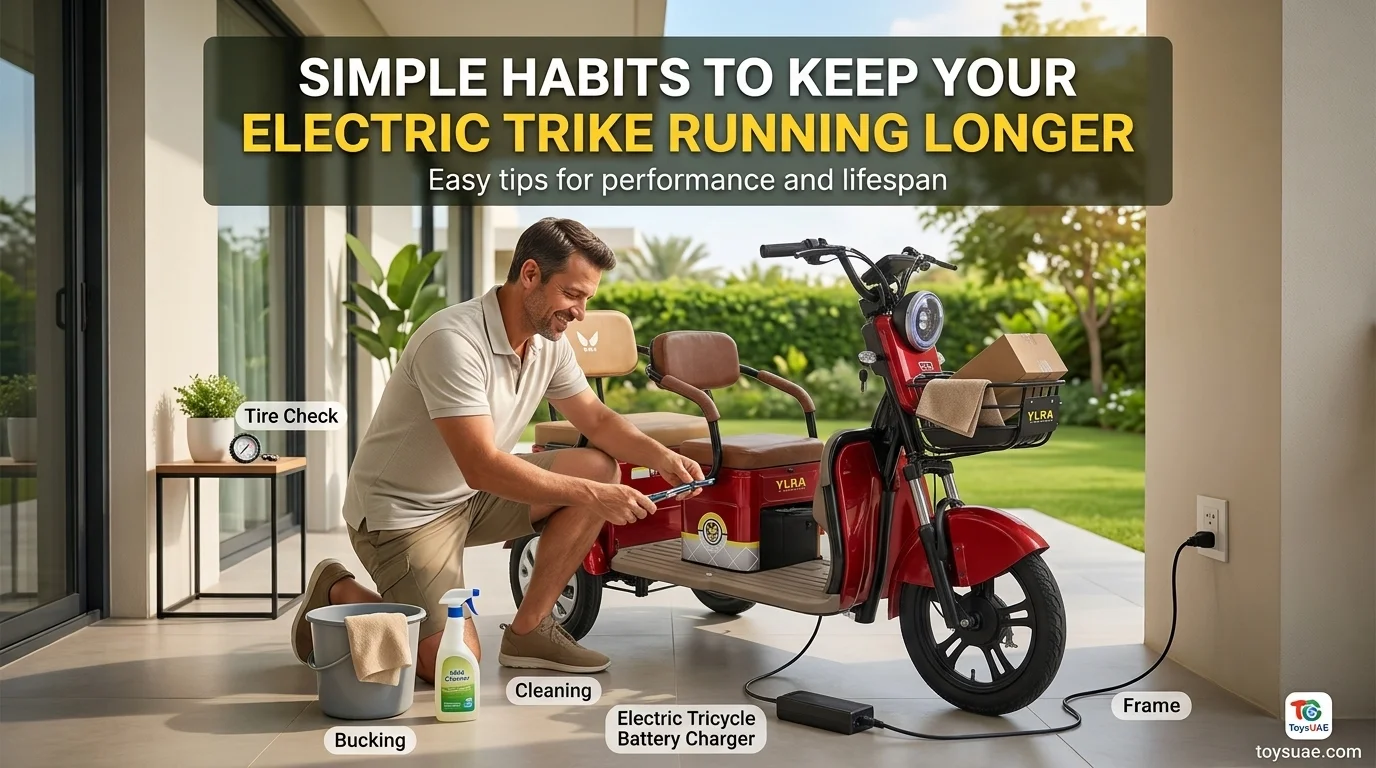
Small Maintenance Habits That Can Help Your Electric Trike Last Longer
Electric trikes are a convenient option for everyday travel, outdoor rides and carrying small loads. Like any other vehicle, they need regular care to stay in good working condition. The good news is that maintenance does not always require expensive tools or professional help. Simple habits such as checking tyre pressure, cleaning the frame and taking care of the battery can help prevent common problems. With a little attention, you can improve performance and enjoy your vehicle for a longer time.
1. Check the Tyres Before Riding
Tyres play an important role in providing a comfortable and stable ride. Low air pressure, cracks or worn rubber can affect handling and make travelling less comfortable.
Before going out, take a few minutes to check their condition.
Look for:
- Low air pressure or flat areas.
- Small cuts or cracks on the rubber.
- Nails, stones or other objects stuck in the tyres.
- Uneven wear on the tyre surface.
Keep the pressure within the range recommended by the manufacturer. If you notice serious damage, replace the tyre before using the vehicle again.
2. Take Proper Care of the Battery
The battery is one of the most important and expensive components. Poor charging habits and extreme temperatures can affect its performance and reduce its lifespan.
Follow these simple tips:
- Always use the recommended charger.
- Avoid regularly allowing the battery to become completely empty.
- Disconnect the charger according to the manufacturer’s instructions.
- Keep the battery away from direct sunlight.
- Avoid charging in wet or humid areas.
- Follow the recommended storage instructions when the vehicle is not in use.
Battery care is especially important in hot climates such as the UAE. High temperatures can affect battery performance, so keep your vehicle in a cool, shaded and dry place whenever possible.
3. Clean the Frame and Wheels Regularly
Dust, mud and dirt can collect on the frame, wheels and other components during regular use. If left for a long time, this dirt can affect moving parts and make it harder to notice damage.
You do not need expensive cleaning products. A soft cloth, a small brush and suitable mild cleaning products are usually enough.
Follow these cleaning steps:
- Wipe the frame to remove dust.
- Clean the wheels and tyres carefully.
- Remove mud from areas around the brakes.
- Keep electrical connections dry.
- Use a soft, dry cloth for the display and control panel.
Avoid spraying water directly onto the motor, battery or electrical connections. High-pressure water can damage sensitive components.
4. Pay Attention to the Brakes
Brakes are essential for safe riding. Over time, brake pads and other braking components can wear down, especially when travelling frequently or using sloped roads.
Check the braking system regularly and notice any changes.
Some warning signs include:
- Squeaking or grinding sounds.
- Longer stopping distances.
- Loose or unresponsive brake levers.
- Unusual movement when applying the brakes.
Never ignore braking problems. If the brakes feel weak or make unusual sounds, arrange a professional inspection.
5. Check Nuts, Bolts and Connections
Regular movement and road vibrations can sometimes loosen nuts, bolts and other fasteners. This can happen more often when travelling on uneven roads.
Pay attention to important connection points, especially around:
- Wheels and axles.
- Handlebars.
- Seat and seat supports.
- Main frame connections.
If something feels loose, follow the manufacturer’s instructions to tighten it. Avoid overtightening, as this can damage the threads or surrounding parts.
If you are unsure how to check these components, ask a qualified technician for help.
6. Protect the Motor and Electrical Parts
The motor helps power your vehicle, so keeping it in good condition is important. Dirt, moisture and damaged wires can affect its performance.
After travelling through dusty or wet areas, inspect the motor area and nearby cables.
Avoid these common mistakes:
- Riding through deep water.
- Exposing electrical parts to heavy rain unnecessarily.
- Pulling or bending cables.
- Ignoring warning lights or error messages.
- Trying to open the motor without proper knowledge.
If you notice unusual sounds, reduced power or electrical problems, arrange a professional inspection rather than attempting complicated repairs yourself.
7. Store Your Vehicle in a Safe Place
Where you keep your vehicle can have a major effect on its condition. Leaving it outside for long periods exposes it to sunlight, rain, dust and moisture.
A covered parking area or dry storage space is a better choice.
For better protection:
- Park away from direct sunlight.
- Keep it in a dry and ventilated area.
- Avoid damp surfaces.
- Use a suitable protective cover.
- Store the battery according to the manufacturer’s instructions.
If you will not use your vehicle for several weeks, check the recommended battery storage and charging conditions.
8. Do Not Ignore Small Problems
Small problems can become expensive if they are ignored. For example, a loose connection may become worse over time, while worn tyres can affect stability.
Make a habit of checking your vehicle after every few rides. Listen for unusual sounds and notice changes in speed, braking or battery performance.
You can also maintain a simple service record containing:
- Date of the last tyre inspection.
- Battery charging issues.
- Brake adjustments.
- Parts replaced.
- Date of the last professional service.
This is particularly useful for people who regularly use an electric tricycle. Keeping a record helps you remember which components need attention.
9. Follow a Simple Maintenance Schedule
You do not need to inspect every component daily. A simple maintenance routine can help you stay organised.
| Frequency | Maintenance Task |
|---|---|
| Before riding | Check tyres and brakes |
| After riding | Look for dirt or visible damage |
| Weekly | Clean the frame and inspect cables |
| Monthly | Check bolts, tyres and battery condition |
| As recommended | Arrange professional servicing |
The exact schedule may vary depending on the model, riding conditions and manufacturer’s recommendations.
Final Thoughts
Taking care of your vehicle does not have to be difficult. Regular cleaning, proper battery charging, tyre inspections and brake checks can help keep it in good condition. These small habits also make it easier to notice problems before they turn into expensive repairs.
If you are exploring different riding options, you can browse the adult electric mobility products available through ToysUAE, an online store offering a selection of ride-on and electric mobility products. Choosing a suitable model and following its maintenance instructions can help you enjoy a more reliable riding experience.
Frequently Asked Questions (FAQs)
1. How often should I maintain my vehicle?
Perform basic checks before riding and inspect important components regularly. A more detailed inspection can be done monthly, while professional servicing should follow the manufacturer’s recommendations.
2. How can I make the battery last longer?
Use the recommended charger, avoid extreme temperatures and follow the manufacturer’s charging instructions. Do not regularly leave the battery completely empty or exposed to excessive heat.
3. Can I wash my vehicle with water?
You can clean the frame and suitable external parts with a damp cloth. However, avoid spraying water directly onto the battery, motor, display and electrical connections.
4. Why should I check the tyres regularly?
Tyre pressure and condition affect stability, comfort and handling. Regular checks help identify low pressure, cracks and other damage before riding.
5. What are the signs that my vehicle needs servicing?
Unusual motor sounds, weak brakes, reduced battery performance, loose connections and unusual vibrations may indicate that servicing is needed.
6. Should I keep my vehicle outside?
It is better to keep it in a covered, dry and shaded place. Long exposure to sunlight, rain and moisture can affect the battery, frame and electrical components.
7. Can regular maintenance reduce repair costs?
Yes. Regular inspections help identify small problems early, which can prevent further damage and reduce the need for expensive repairs.