Businesses are managing increasingly complex operations involving multiple departments, applications, employees, and customer interactions. Tasks such as processing requests, reviewing information, coordinating approvals, updating records, and generating reports often require several steps before completion. When these activities depend entirely on manual coordination, they can slow down operations and make it difficult for teams to manage growing workloads.
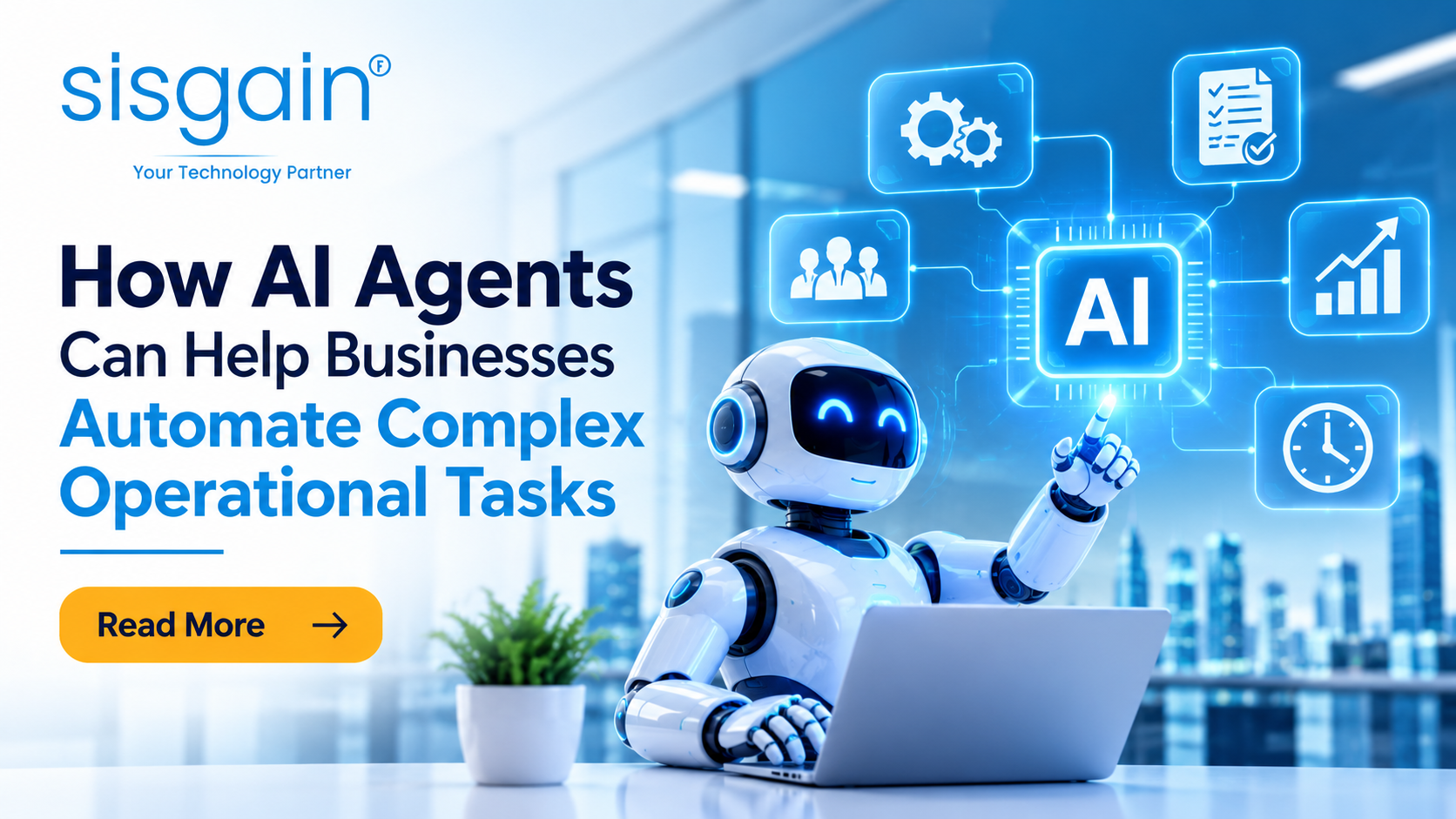
This is where AI Agents for Business Automation can make a difference. AI agents can understand instructions, analyse available information, decide what action is appropriate within defined boundaries, and coordinate multiple steps to complete a task. Unlike basic automation that follows fixed rules, AI agents can use contextual information to handle certain variations and respond to changing situations.
For businesses, this creates opportunities to improve operational coordination, reduce repetitive work, and support employees in managing complex activities. However, successful adoption requires clear objectives, suitable systems, reliable data, and appropriate human oversight.
Understanding How AI Agents Support Business Operations
AI agents are software-based systems designed to perform tasks by interpreting information, making decisions within a defined scope, and taking actions through connected tools or applications.
A traditional automated workflow generally follows predefined instructions. For example, a system may send an email whenever a form is submitted. An AI agent can work with more context. It may interpret the request, identify the relevant category, retrieve information from an approved system, and recommend or initiate the next step based on its instructions and permissions.
An AI agent may perform activities such as:
- Understanding incoming customer or employee requests.
- Retrieving relevant information from connected applications.
- Classifying documents and routing them to the appropriate team.
- Preparing summaries and reports.
- Coordinating tasks across multiple systems.
- Identifying missing information and requesting clarification.
- Recommending the next action based on defined business requirements.
The level of autonomy depends on the system design. Some agents only provide recommendations, while others can perform approved actions. Businesses should define these permissions carefully, especially when tasks involve sensitive information or important operational decisions.
How AI Agents Manage Multi-Step Business Activities
Many business processes involve a sequence of connected activities rather than one independent task. A customer service request, for example, may require identifying the issue, checking account information, reviewing previous communication, assigning the request, and updating its status.
AI Agent Workflow Automation can help coordinate such activities by allowing an agent to interpret the request and work through the relevant steps. It can retrieve information from connected systems, determine which action is appropriate, and pass the task to the next stage.
Consider an employee onboarding process. Once a new employee’s details are submitted, an AI-supported workflow may help organise documentation, identify incomplete information, prepare relevant requests, and notify the responsible departments. Actions involving approvals or sensitive employee records can remain subject to human confirmation.
This approach can make complex workflows easier to coordinate because information does not need to be manually transferred at every stage. It also gives employees more time to focus on activities that require judgement, communication, and specialist knowledge.
Where Businesses Can Apply AI Agents
AI agents can support different departments depending on the organisation’s requirements, existing applications, and process maturity. Their value is strongest when they address clearly defined tasks and operate within suitable controls.
Customer Service and Support
Customer support teams regularly handle enquiries involving order details, service requests, account information, and common troubleshooting questions. AI agents can help classify incoming requests, retrieve relevant information, prepare responses, and direct complex cases to human representatives.
For example, an agent may identify that a customer is asking about an existing service request. It can retrieve the approved status information and prepare an update for the customer support team. If the request involves a complaint or an unusual situation, it can route the case to an employee.
Finance and Administration
Finance departments manage invoices, expense submissions, payment queries, and document verification. AI agents can help extract information from documents, compare details with approved records, and identify missing fields.
An agent may prepare an invoice summary or flag an entry that requires review. Financial approvals and payment authorisation should remain subject to appropriate controls rather than being performed without oversight.
Human Resources
HR teams handle recruitment coordination, employee enquiries, onboarding activities, and internal documentation. AI agents can help organise applications, answer routine policy questions using approved information, and coordinate administrative tasks.
This can reduce repetitive coordination while allowing HR professionals to focus on employee engagement and decisions that require human judgement.
Sales and Marketing
Sales teams often work with customer enquiries, lead information, follow-ups, and reporting. AI agents can help organise incoming leads, summarise customer interactions, and prepare follow-up recommendations.
Marketing teams may also use agents to organise campaign information, review performance data, and prepare initial content summaries for human approval.
Coordinating Complex Processes Across Departments
When a business process involves several departments, delays can occur because each team works with different applications or follows separate procedures. Employees may need to request information, check task status, and manually update records before the next department can continue.
Multi-Step Business Process Automation can help connect these activities through a coordinated sequence of actions. AI agents can interpret task requirements, retrieve relevant information, and coordinate approved steps across connected systems.
For instance, a procurement request may involve an employee, department manager, finance team, and purchasing department. An AI-supported process can help check whether the request contains the required information, prepare the relevant documentation, and notify the appropriate approver.
The system should also recognise situations that require human intervention. Requests that exceed budget limits, contain conflicting information, or fall outside established policies should be escalated instead of being processed automatically.
This makes automation more structured while keeping important business decisions under appropriate supervision.
Businesses exploring business process automation uae can use AI-supported systems to coordinate repetitive activities, manage approval workflows, organise information, and improve communication between departments. The right approach depends on existing processes, integration requirements, and the level of human involvement needed for important decisions.
Improving Task Visibility and Operational Coordination
As organisations grow, managers need a clear understanding of which tasks are pending, which activities require attention, and where delays are occurring. When information is spread across emails, spreadsheets, and separate applications, maintaining visibility can become difficult.
Intelligent Task Management can help organise work by interpreting requests, identifying task categories, assigning priorities based on defined criteria, and presenting relevant updates to employees.
For example, an operations team may receive several service requests with different urgency levels. An AI agent can help classify these requests using approved rules and available context. It can then recommend the appropriate assignment or notify the responsible employee.
Employees and managers should be able to review task details, understand why a recommendation was made, and correct inaccurate classifications. This creates a more transparent approach to managing work rather than relying entirely on automated decisions.
Supporting Better Decisions With Business Information
Business decisions often depend on information collected from different systems. Managers may need to review sales reports, operational updates, customer feedback, and financial information before deciding what action to take.
AI-Powered Decision Making can support this process by helping teams organise relevant information, identify patterns, summarise available data, and present possible options.
For example, an operations manager reviewing service delays may use an AI-supported system to summarise pending requests, highlight recurring issues, and identify departments where additional attention may be required.
However, AI-generated recommendations should not automatically be treated as correct. Their reliability depends on the quality of the underlying data, the instructions provided, and the limitations of the system.
Businesses should maintain human review for decisions involving financial commitments, legal responsibilities, employee matters, or significant customer impact. AI can help decision-makers understand information more efficiently, but accountability should remain clearly assigned.
Building a Controlled Environment for Autonomous Operations
AI agents can perform several connected activities with limited manual involvement when they have suitable permissions, reliable information, and clearly defined objectives.
Autonomous Business Operations refers to the use of connected systems and automated processes to manage selected business activities with reduced human intervention. It does not mean removing employees from every decision or allowing software to operate without restrictions.
A business may allow an agent to categorise incoming requests, retrieve approved records, prepare summaries, and update non-sensitive task statuses. However, actions such as approving large expenses, changing access permissions, or making significant contractual decisions may require employee authorisation.
To establish a controlled environment, organisations should define:
- Which activities an AI agent is permitted to perform.
- Which applications and information it can access.
- Which actions require human approval.
- How errors and unusual situations are escalated.
- How agent activities are recorded and reviewed.
- How access permissions are updated or withdrawn.
These controls help businesses use AI agents responsibly while maintaining visibility over automated activities.
Connecting AI Agents With Existing Business Systems
AI agents become more useful when they can work with the applications employees already use. However, connecting an agent to business software requires careful planning.
Organisations should review application compatibility, available integration methods, data access permissions, and security requirements before implementation. They should also decide which information an agent needs and avoid providing access to unrelated business records.
For businesses evaluating Enterprise automation solutions UAE, it is important to consider how AI agents can work alongside existing enterprise applications, approval systems, customer platforms, and internal databases.
A practical integration plan should begin with a limited set of processes. Businesses can test whether the agent retrieves accurate information, follows the intended workflow, and handles exceptions correctly before expanding its responsibilities.
This gradual approach helps identify technical and operational issues early and makes it easier for employees to adapt to new working methods.
Important Considerations Before Implementing AI Agents

AI agent implementation requires more than selecting a model or connecting an application. Businesses need to understand their processes and establish the conditions in which an agent can operate reliably.
Process Suitability
Not every activity should be automated. Tasks with repetitive steps, clear instructions, and accessible information are generally easier to evaluate for automation. Processes requiring frequent judgement may need human involvement.
Data Quality
AI agents depend on the information available to them. Incomplete, outdated, or inconsistent records can affect the quality of their outputs. Businesses should review data sources before introducing automated decision support.
Security and Permissions
Agents should only access information necessary for their assigned responsibilities. Role-based permissions, secure integrations, and activity monitoring can help protect business systems.
Human Oversight
Employees should be able to review important actions, correct errors, and intervene when an agent encounters an unfamiliar situation. Businesses should define escalation procedures before deployment.
Testing and Performance Review
Before introducing an agent into daily operations, organisations should test its responses, workflow execution, integration reliability, and handling of unusual cases. Performance should continue to be reviewed after deployment.
Selecting the Right Development Partner
Building an AI agent requires an understanding of business processes, software architecture, data requirements, integrations, and security. The solution should be designed around the organisation’s actual operational needs rather than using AI simply because the technology is available.
Businesses considering an AI Development Company Dubai should evaluate its ability to understand requirements, plan integrations, develop suitable software, and explain how the proposed solution will be tested and maintained.
A development partner should also discuss the agent’s responsibilities, access permissions, human approval points, and expected limitations. Clear project scope and practical testing criteria can help businesses make informed decisions before expanding an AI initiative.
How SISGAIN Technologies Supports AI-Based Business Requirements
SISGAIN Technologies operates in the IT solutions and software development space, supporting organisations with their technology requirements. Businesses exploring AI-based automation need solutions that align with their existing systems and operational processes.
The right implementation begins with understanding the tasks, information sources, integrations, and controls involved.
A structured development approach can help organisations evaluate suitable automation opportunities and plan their technical requirements. Companies should define their expected outcomes, project scope, security needs, and support expectations before implementation. This helps create a clearer foundation for adopting AI capabilities in everyday business operations.

Conclusion
AI agents can help businesses coordinate complex operational tasks by interpreting information, managing connected activities, and supporting selected decisions.
They can assist departments such as customer service, finance, HR, sales, and operations with repetitive and multi-step workflows.
Their effectiveness depends on suitable data, reliable integrations, clear permissions, and well-defined processes.
Human oversight remains important for sensitive decisions and activities with significant business impact.
Businesses should begin with practical use cases, test performance, and expand automation gradually.
With the right planning, AI agents can support more organised, adaptable, and efficient business operations.
Frequently Asked Questions
1. What are AI agents in business automation?
AI agents are software systems that can interpret instructions, work with available information, and perform defined tasks through connected applications. Depending on their permissions, they may recommend actions or complete approved activities with limited human involvement.
2. How are AI agents different from traditional automation?
Traditional automation generally follows predefined rules and fixed workflows. AI agents can interpret context, work with less structured information, and adapt their next steps within defined instructions and permissions. Both approaches can be combined to support business processes.
3. Which business operations can AI agents automate?
AI agents can support customer service, document processing, HR administration, invoice information extraction, task coordination, reporting, and sales support. The suitability of each activity depends on process complexity, data availability, and the level of human oversight required.
4. Can AI agents manage multiple business applications?
Yes. AI agents can interact with multiple applications when suitable integrations and permissions are available. Businesses must ensure that connected systems exchange information securely and that the agent only performs authorised actions.
5. Do AI agents eliminate the need for human employees?
No. AI agents are designed to support selected tasks and workflows, not eliminate the need for human judgement. Employees remain important for approvals, complex decisions, exception handling, customer relationships, and accountability.
6. What should businesses consider before implementing AI agents?
Businesses should evaluate process suitability, data quality, system compatibility, security, access permissions, human oversight, and testing requirements. Starting with a clearly defined use case can help organisations understand the benefits and limitations before expanding implementation.