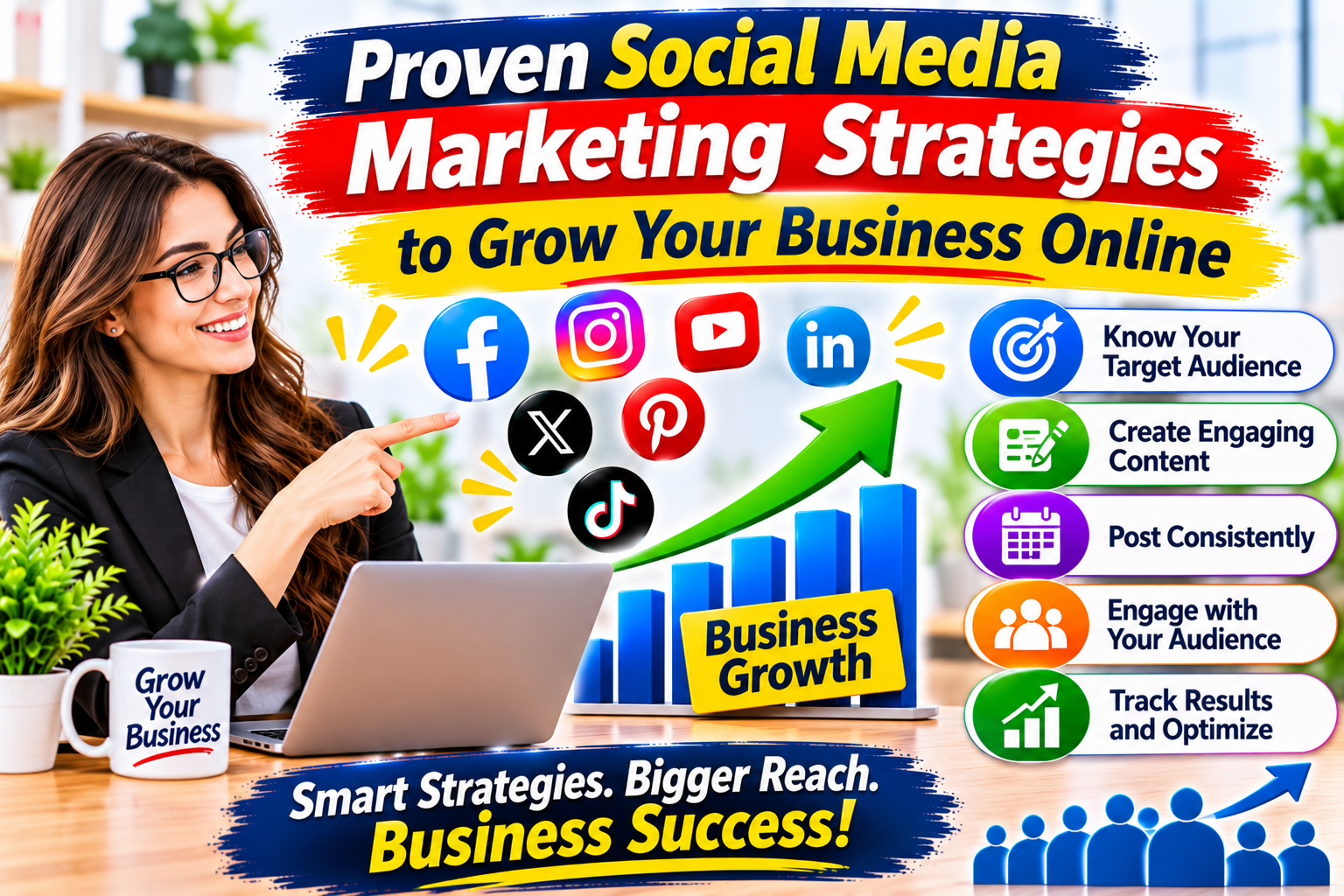
1. Define Your Social Media Marketing Goals
Start by identifying what you want to achieve through social media. Clear objectives help businesses choose suitable platforms, create relevant content, and measure their progress.
Common goals include:
- Increasing brand awareness
- Attracting potential customers
- Driving traffic to a website
- Generating business inquiries
- Improving customer engagement
- Promoting products and services
Choose goals that support your overall business objectives and review them regularly.
2. Research Your Target Audience
Understanding your audience makes it easier to create content that attracts attention. Research their interests, common questions, challenges, and preferred social media platforms.
You can learn about your audience by reviewing comments, conducting polls, studying customer feedback, and observing industry discussions.
This information helps businesses develop a more relevant social media marketing strategy instead of relying on random posting.
3. Create a Variety of Engaging Content
Different content formats can help businesses communicate with different types of users. A balanced content plan should include informative, entertaining, and promotional material.
Consider sharing:
- Educational tips and tutorials
- Short videos and reels
- Product demonstrations
- Customer testimonials
- Behind-the-scenes updates
- Industry news and useful insights
Keep your posts clear, visually appealing, and relevant to your audience.
4. Focus on Consistent Branding
Your social media profiles should present a recognizable business identity. Use consistent logos, colors, descriptions, and communication styles across platforms.
Make sure your profile explains what your business offers and provides accurate contact information.
A consistent brand presentation can make your business easier to recognize and help create a professional impression.
5. Develop a Reliable Posting Schedule
Regular publishing helps businesses stay connected with their followers. Create a content calendar to organize topics, captions, images, and publishing dates.
Avoid posting simply to meet a daily target. Prioritize useful content and choose a schedule that your team can maintain.
A well-organized social media marketing plan can help maintain consistency and make content management easier.
6. Build Relationships Through Communication
Social media should be treated as a communication channel, not just an advertising platform.
Respond to comments, answer customer questions, and address feedback professionally. Encourage discussions and show appreciation when customers interact with your business.
Listening to your audience can also reveal opportunities to improve products, services, and customer support.
7. Explore Social Media Advertising
Paid advertising can help businesses reach audiences beyond their existing followers. Platforms provide campaign options for increasing awareness, generating leads, and attracting website visitors.
Before launching an advertisement, define its purpose and decide how success will be measured.
Start with a manageable budget, test different creative ideas, and review the results before increasing spending.
8. Monitor Performance and Improve Campaigns
Measuring performance helps businesses identify which activities are producing useful results.
Important metrics include:
- Post reach and impressions
- Comments, shares, and saves
- Video views
- Profile visits
- Website clicks
- Leads and conversions
Use these insights to improve future content and adjust your campaigns. Businesses can strengthen their social media marketing efforts by regularly reviewing performance instead of relying on assumptions.
9. Keep Up With Relevant Platform Changes
Social media platforms regularly introduce new features, content formats, and advertising options. Businesses should stay informed about changes that may affect how their audiences discover and interact with content.
Experiment with relevant features, but avoid following every trend without considering whether it suits your brand.