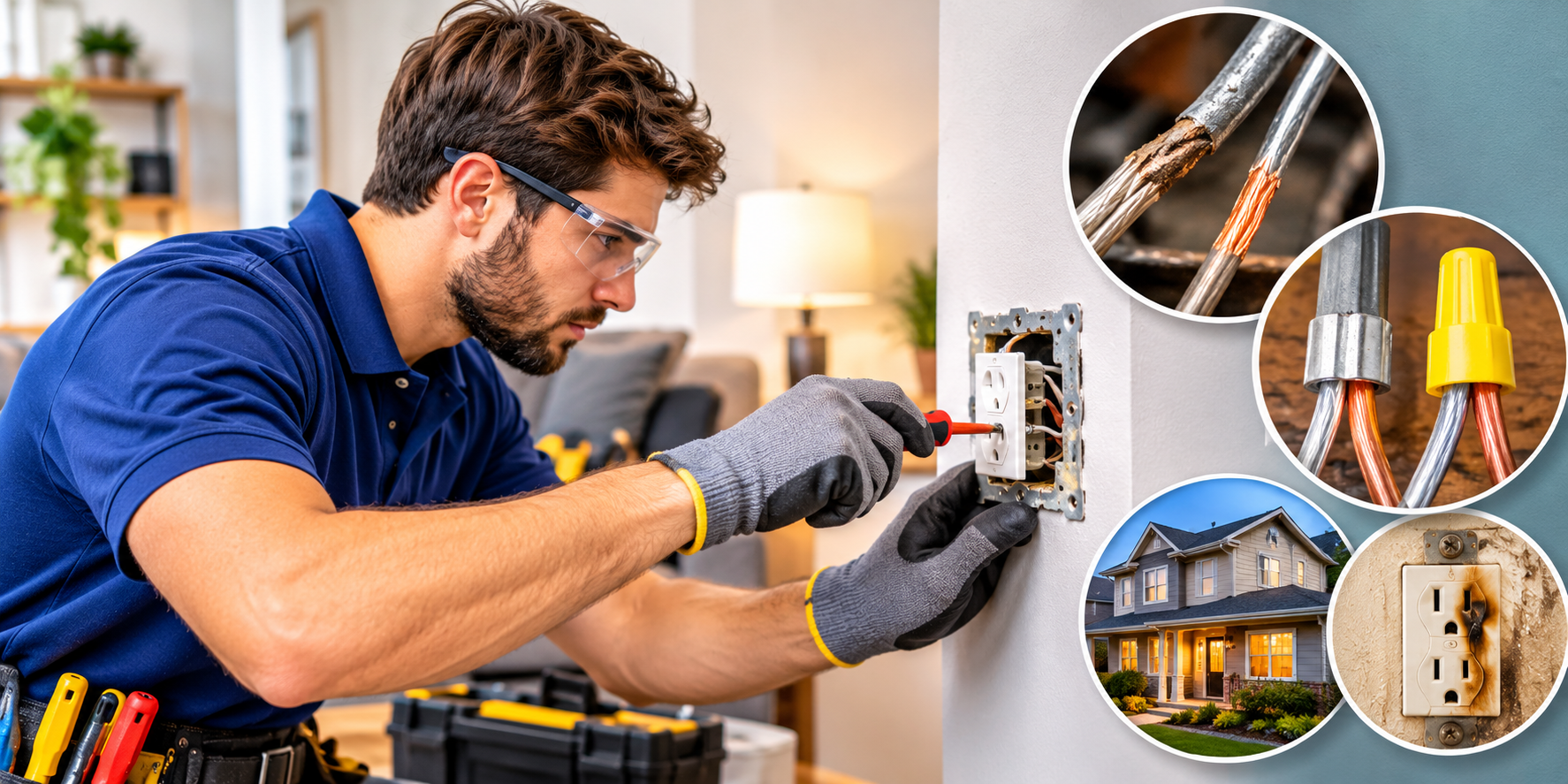
Aluminum wiring was once a practical choice for residential electrical systems, but decades of expansion, contraction, and wear at connections can create safety concerns in older homes. Loose connections, damaged outlets, and incompatible electrical devices may increase the risk of overheating and fire. Recognizing these issues early helps homeowners understand when an inspection is necessary and which repairs may be appropriate. Knowing how to identify aluminum wiring and which repair methods experts approve can help you protect your home and make informed decisions with a licensed electrician.
Why Aluminum Wiring Is Dangerous In Homes
Aluminum wiring can look harmless, but the risk lies where wires connect to outlets, switches, and fixtures. The sections below explain how it started, how those connections fail, and which homes are most likely to have it.
A Short History of Aluminum Branch Wiring
Many homes built from the mid-1960s through the mid-1970s used aluminum for branch circuits that power outlets, switches, and lights. Builders chose it because copper was expensive. Aluminum conducts electricity well, so the conductor itself is only part of the issue, the connections are a major concern. Problems can develop at connections between the wire and electrical devices or other conductors.
How Connections Fail Over Time
Aluminum expands and contracts more than copper as it heats and cools. Over years of use, a screw connection can loosen, and a loose connection creates resistance and heat. Aluminum also forms a surface oxide that conducts poorly, which adds more resistance. Thermal expansion and contraction, oxidation, and connection deterioration can increase resistance at a termination. The resulting heat can worsen the damage and increase the risk of electrical failure.
Which Homes Face the Highest Risk
- Houses built roughly between the mid-1960s and mid-1970s
- Homes with original wiring that was never updated
- Houses where outlets and switches were never replaced with aluminum-rated devices
- Homes with additions or renovations that mixed copper and aluminum without proper connectors
What Are the Signs of Overheating Aluminum Electrical Wire?
Some failing connections show warning signs, but aluminum wiring can overheat without obvious symptoms. Recognizing possible signs of trouble is important, but their absence does not guarantee safe connections.
- Outlets, switches, or cover plates that feel warm to the touch
- Discolored or scorched plates, outlets or switches
- A burning or fishy plastic smell near a wall or fixture
- Lights that flicker or dim for no clear reason
- Outlets or switches that suddenly stop working
- Buzzing or crackling sounds from a wall box
If you notice a burning smell, scorching, unusual heat, buzzing, or crackling, stop using the affected circuit safely and contact a qualified electrician promptly. If there is smoke or an active fire, leave the area and call emergency services. Do not remove outlets or open electrical boxes to investigate.
How Should You Start Inspecting Older Home Electrical Wiring?
A good inspection begins with identifying what you actually have. Aluminum cable is usually marked with the word aluminum or the letters AL on its outer jacket, and the conductors look silver instead of copper colored. An electrician can check these markings at the panel and in accessible boxes, and also inspect the devices, since manufacturers design CO/ALR-marked outlets and switches for aluminum.
A professional can also use a thermal camera to find hot connections without opening every wall. Ask for a written report that lists the type of wiring found, which connections look suspect, and which repairs it recommends. That report gives you a clear starting point and helps when you speak with insurers or prospective buyers.
Confirm the required materials with your electrician before work begins. EDC supplies breakers, panel boards, and safety switches that electricians rely on for residential electrical wiring repair, so share your parts list with your contractor to keep the job moving!
What Is the Best Approach to Remediating Aluminum Wiring Safely?
The right fix depends on your home, your walls, and the condition of the existing connections. The sections below cover copper rewiring, connector repairs, and a quick comparison of the main options.
Rewiring With Copper
Replacing aluminum branch circuits with copper is the most complete solution because it removes the source of the problem. It is also the most disruptive, since electricians must pull new cable through walls and ceilings, and the job usually needs some drywall repair. Many homeowners schedule it alongside a renovation to limit the extra work.
Repairing Connections
When full rewiring is not practical, an electrician can repair the connections instead. This approach joins each aluminum wire to a short copper pigtail using a purpose-built connector, so devices connect to copper, not aluminum. Use only connectors listed for aluminum-to-copper joints, since ordinary twist-on connectors made for copper are not suitable.
Remediation Options at a Glance
Each fix suits a different situation, so it helps to see them side by side.
- Full copper rewiring replaces the aluminum branch wiring entirely and works well in homes already undergoing renovation.
- Connector repair joins aluminum wire to copper pigtails at each connection, which keeps the walls intact in a finished home.
- CO/ALR-rated switches and receptacles connect directly to aluminum conductors, but they don’t provide a complete, permanent repair for every connection in an aluminum-wired home.
Ask your electrician which permanent option best fits your home.
How DoCOPALUM vs AlumiConn ConnectorsCompare?
Both are recognized repair methods when installed correctly. COPALUM uses a special crimping tool to permanently join aluminum wire to a copper pigtail, but it requires trained installers and may be hard to find in some areas.
AlumiConn uses set screws to clamp the wires inside an insulated body. It is more widely available, but it needs proper torque and enough room in the wall box. Your electrician can tell you which fits your home.
Frequently Asked Questions
1. Is all aluminum wiring unsafe?
Not necessarily, the risk comes mainly from connections at devices and splices, so proper repairs can make an aluminum-wired home much safer.
2. Can I use regular wire nuts to fix it?
No, standard copper connectors aren’t suitable for joining aluminum to copper. Use only connectors rated for this purpose, and have a professional install them.
3. How do I know if my home has aluminum wiring?
Look for markings such as aluminum or AL on the cable jacket, and look for silver-colored conductors. A home built in the 1960s or 1970s deserves a closer check.
4. Does aluminum wiring affect insurance?
Some insurers ask about it or request an inspection, so check with your provider and keep documentation of any repairs.
5. Can I do the repair myself?
A licensed electrician should repair aluminum wiring because a small connection mistake can cause overheating.
Conclusion
Aluminum wiring does not have to be a source of worry. Learn what is in your walls, watch for warm outlets and odd smells, and choose a repair method with a licensed electrician who knows the options. A qualified electrician can assess the wiring and recommend appropriate remediation, and it is far easier to act on early signs than to wait for a problem to grow.
Every safe home starts with a panel that can carry its load. Once you sort out your wiring, review the electrical panel upgrade indicators with a licensed electrician, and let EDC supply the quality components the upgrade requires!