Have you ever entered your car on a hot summer day and felt like stepping into an oven? A parked vehicle can become extremely hot when sunlight passes through its windows and heats the interior surfaces. The steering wheel, dashboard, and seats can become uncomfortable to touch, making every journey less enjoyable.
Fortunately, car window sheets that reduce heat can help improve your driving experience. These products are designed to reduce the amount of solar heat entering your vehicle, minimize glare, and provide additional protection against sunlight.
Whether you drive daily, park outdoors, or travel with your family, choosing the right car window heat protection solution can make a noticeable difference.
In this guide, we will explore how heat-reducing car window sheets work, their benefits, the different types available, and how to choose the right option for your vehicle.
What Are Car Window Sheets That Reduce Heat?
These products generally fall into two categories:
- Car window sunshades: Removable covers that block direct sunlight when a vehicle is parked.
- Car window heat protection films: Thin films applied to vehicle glass to reduce solar heat transmission, glare, and, depending on the product, ultraviolet (UV) radiation.
Both options help improve comfort, but they work differently.
A removable sunshade is particularly useful when parking outdoors, while a professionally installed solar-control window film can provide ongoing heat and glare reduction during everyday driving.
The effectiveness of each product depends on its material, construction, installation, and the amount of sunlight reaching the vehicle.
How Do Car Window Heat Protection Sheets Work?
Sunlight contains visible light, ultraviolet radiation, and infrared energy. When sunlight enters a vehicle, it can heat the dashboard, seats, and other interior surfaces.
These heated surfaces release energy into the surrounding air, contributing to the uncomfortable temperatures experienced inside parked cars.
Heat-reducing window products help manage this process in different ways.
1. Reflecting Solar Energy
Reflective sunshades use materials that reflect a portion of incoming sunlight away from the vehicle.
This helps reduce the amount of solar energy absorbed by the dashboard and other interior surfaces.
2. Absorbing or Rejecting Heat
Solar-control window films use specialized coatings or materials to absorb or reflect selected portions of solar energy.
Some advanced films are designed to reject a significant amount of solar heat while allowing visible light to pass through.
The actual performance varies by film type and specifications.
3. Reducing Direct Sunlight
Removable car window sunshades create a barrier between the sunlight and the vehicle’s interior.
They are especially useful for front windshields, where a large amount of sunlight can reach the dashboard.
Benefits of Using Car Window Sheets That Reduce Heat
Installing or using the right heat protection product can offer several practical advantages.
Improved Interior Comfort
A vehicle parked in direct sunlight can become uncomfortable before the driver even starts the engine.
A suitable sunshade or solar-control film can reduce solar heat entering through the glass, helping make the cabin more comfortable.
Although these products cannot eliminate all heat, they can help reduce the intensity of sunlight inside the vehicle.
Reduced Sun Glare
Direct sunlight can create glare on windows, dashboards, and reflective surfaces.
Some heat-reducing window films are designed to minimize glare, making bright conditions more comfortable for drivers and passengers.
However, excessive window darkness can reduce visibility. Always choose a product that maintains safe driving visibility.
Additional UV Protection
Certain automotive window films can block a substantial amount of ultraviolet radiation.
This can help reduce UV exposure inside the vehicle and protect interior materials from some sun-related damage.
Not every window sheet provides the same UV protection. Check the manufacturer’s specifications before purchasing.
Protection for Vehicle Interiors
Repeated exposure to sunlight can contribute to fading, discoloration, and deterioration of interior materials.
A suitable window film or sunshade can help reduce direct sunlight exposure, potentially helping preserve the appearance of seats, dashboards, and other interior components.
Better Comfort During Outdoor Parking
If your vehicle is regularly parked in an open parking area, a removable windshield sunshade can be a practical solution.
It can help reduce direct solar exposure while the vehicle is stationary, particularly during hot weather.
Types of Car Window Sheets for Heat Reduction
Different products are available depending on your budget, driving habits, and heat protection requirements.
1. Reflective Car Windshield Sunshades
Reflective windshield sunshades are designed to cover the front windshield while the car is parked.
They commonly use reflective outer materials to reduce direct solar exposure.
Best for: Drivers who park outdoors and want a simple, removable solution.
Key benefits:
- Easy to install and remove.
- No permanent modification to the vehicle.
- Helps protect the dashboard from direct sunlight.
- Available in different sizes and designs.
2. Ceramic Car Window Heat Protection Film
Ceramic window films use advanced ceramic materials to manage solar energy.
Depending on their specifications, they can provide strong heat rejection while maintaining relatively high visible light transmission.
This makes them a popular option for drivers who want heat reduction without excessively dark windows.
Best for: Drivers seeking a long-term solar-control solution.
Before purchasing, compare the film’s total solar energy rejection, visible light transmission, and UV protection ratings.
3. Carbon Car Window Tint Film
Carbon window films use carbon-based materials to provide a tinted appearance and solar-control benefits.
They can help reduce glare and solar heat, depending on the product’s performance specifications.
Best for: Vehicle owners looking for a balance between appearance, comfort, and heat management.
The quality and performance of carbon films vary between manufacturers.
4. Removable Side Window Sunshades
Side window sunshades are designed to reduce direct sunlight entering through side windows.
Some products attach using suction cups, while others use flexible frames or static-cling materials.
Best for: Families, passengers, and drivers who want additional shade during outdoor parking or passenger travel.
Choose a design that does not obstruct the driver’s view or interfere with vehicle safety systems.
How to Choose the Best Car Window Sheets That Reduce Heat
Selecting the right product requires more than choosing the darkest available shade.
Consider the following factors before making a purchase.
Check Heat Rejection Performance
Look for product specifications that explain how effectively the material reduces solar heat.
For window films, total solar energy rejection (TSER) can help compare overall solar-control performance.
A higher TSER generally indicates that less total solar energy passes through the tested glass-and-film combination.
Consider Visible Light Transmission
Visible light transmission (VLT) measures how much visible light passes through the glass.
A lower VLT means a darker appearance and less visible light transmission.
For everyday driving, choose a film that provides suitable heat protection without compromising visibility.
Look for UV Protection
If UV protection is important to you, check whether the product provides documented UVA and UVB protection.
Avoid assuming that every dark-colored window film offers excellent UV protection.
Choose the Correct Size
A sunshade should fit the intended window properly.
An incorrectly sized product may leave gaps that allow direct sunlight to enter the vehicle.
Before purchasing, measure your windshield or check the manufacturer’s vehicle compatibility guide.
Consider Installation Requirements
Removable sunshades are generally straightforward to use.
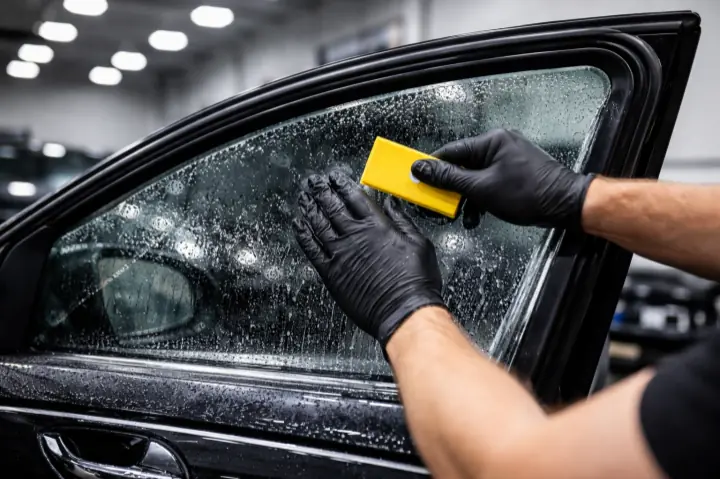
Window films, however, may require professional installation to achieve a clean finish and avoid bubbles, creases, or damage.
For permanent automotive window film, choose an experienced installer who understands your vehicle’s glass and local tinting regulations.
Car Window Sunshades vs. Heat Protection Films
Both products can help reduce solar exposure, but they serve different purposes.
| Feature | Removable Sunshade | Window Heat Protection Film |
|---|---|---|
| Installation | Usually simple | May require professional installation |
| Removable | Yes | Usually not easily removable |
| Best use | Parked vehicles | Everyday driving |
| Heat reduction | Depends on material and coverage | Depends on film performance |
| UV protection | Depends on material | Depends on film specifications |
| Cost | Usually lower | Usually higher |
For many drivers, a removable windshield sunshade is a practical starting point.
For ongoing heat and glare reduction while driving, a suitable automotive solar-control film may be more appropriate.
Some vehicle owners use both solutions for additional protection when parked.
Are Car Window Sheets Worth It?
Car window sheets can be a worthwhile investment for people who frequently drive or park in sunny conditions.
A removable sunshade offers a simple way to reduce direct sunlight while the vehicle is parked.
A high-quality solar-control window film can provide more continuous heat management, depending on its specifications and installation.
The best choice depends on your vehicle, climate, budget, and personal comfort requirements.
It is important to remember that no window sheet can completely prevent a vehicle from heating up in direct sunlight. Parking in a shaded area whenever possible remains a useful additional measure.
Frequently Asked Questions
Do car window sheets really reduce heat?
Yes. Suitable sunshades and solar-control window films can reduce the amount of solar energy entering a vehicle. Their effectiveness depends on the material, product specifications, and window coverage.
Which car window sheet is best for reducing heat?
The best option depends on your needs. Reflective windshield sunshades are useful for parked vehicles, while high-performance ceramic window films can provide ongoing solar heat reduction during driving.
Can car window heat protection films block UV rays?
Many automotive window films provide substantial UV protection, but performance varies. Check the manufacturer’s documented UVA and UVB protection ratings before purchasing.
Do darker car window sheets reduce more heat?
Not necessarily. A darker appearance does not automatically mean better heat rejection. Compare the product’s solar heat rejection specifications rather than relying only on its color.
Can I install car window heat protection film myself?
Some films are designed for DIY installation, but professional installation can help achieve a cleaner finish and reduce the risk of bubbles or application errors.
Are car window sunshades useful in summer?
Yes. A properly fitted sunshade can reduce direct sunlight entering through the windshield while the car is parked, helping improve interior comfort.
Final Thoughts
Car window sheets that reduce heat can help make driving and outdoor parking more comfortable, especially during hot summer months.
From reflective windshield sunshades to advanced ceramic window films, several options are available to suit different vehicles and budgets.
Before choosing a product, compare its heat rejection performance, UV protection, visibility, and installation requirements.
A well-selected car window heat protection solution can help reduce solar exposure, improve comfort, and protect your vehicle’s interior from some of the effects of prolonged sunlight.
Choose a product that meets your needs while maintaining safe visibility and complying with local vehicle regulations.