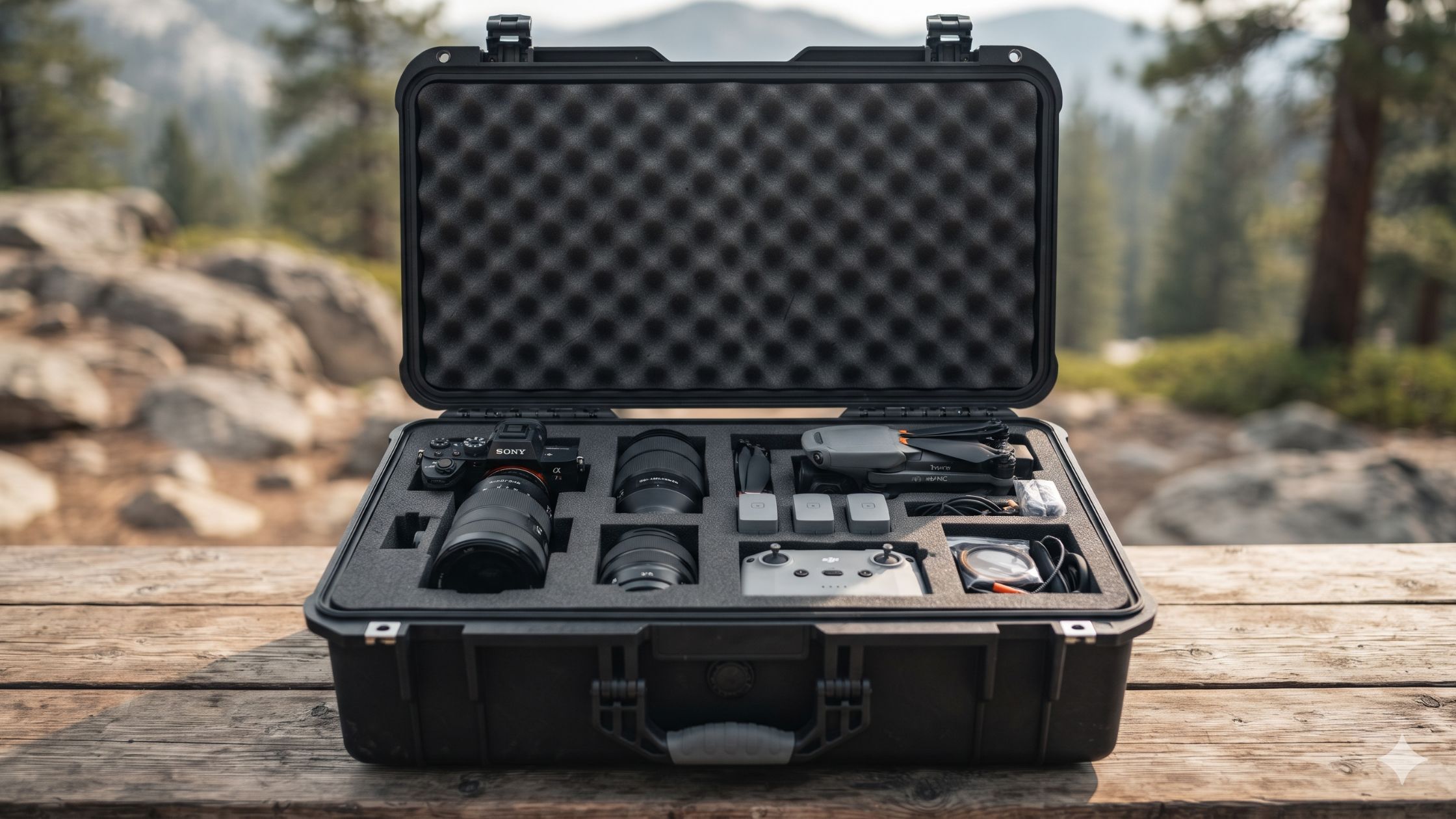
Your camera, lenses and drone can easily be worth more than a used car. Yet many creators still carry them in soft bags that offer little protection from drops, crushing or rain.
A good hard case is one of the cheapest forms of insurance you can buy. But with so many materials, sizes and foam options, choosing the right one isn’t obvious. Here’s what to look for.
1. Start with how you actually travel
- Flying often? Size and weight matter. Check your airline’s carry-on dimensions before buying, and remember that most airlines require spare lithium batteries, including drone batteries, to travel in the cabin, not in checked luggage.
- Shooting outdoors? Prioritise water and dust resistance.
- Driving to client shoots? Rigidity and organisation may matter more than weight.
The best case for a wedding photographer is rarely the best case for a drone pilot filming in the mountains.
2. Understand the main case materials
Aluminum cases are rigid, look professional and are easy to customise in size and layout. They suit photographers who want strong crush protection and a premium appearance when meeting clients. The trade-off is weight.
ABS plastic cases are lighter and usually more affordable. They’re fine for everyday protection but less rigid under heavy loads.
Molded PP (polypropylene) cases are very light and often built with a rubber seal for waterproof, dustproof protection. They suit outdoor shooting but are usually made in standard sizes only.
There’s no single “best” material. It depends on whether you value rigidity, weight or weather sealing most.
3. Foam matters as much as the shell
- Pick-and-pluck foam: pre-cut cubes you remove by hand. Quick and flexible, good if your kit changes often.
- EVA foam: denser and more durable, often precision-cut to fit specific equipment. Ideal for a fixed, professional kit.
- EPE foam: lighter and softer, good for cushioning lighter items.
- Multi-layer foam: stacked layers for storing accessories under or above your main gear.
Tip: your gear should fit snugly, with no movement when you shake the closed case, and with at least a couple of centimetres of foam between each item and the case wall.
4. Check the small details
- Latches: sturdy latches that won’t pop open if the case is dropped
- Hinges: a full-length (piano) hinge spreads the load better than small hinges
- Corners: reinforced corners protect the case where it’s most likely to hit the ground
- Handles: a comfortable handle, and wheels for heavier setups
- Locks: lockable latches, or holes for TSA-approved locks, if you fly
5. Consider a custom case for a fixed kit
If you use the same setup for every shoot, a custom-fitted case can save time and protect better than a generic one. Every item has its own slot, and you can see at a glance if something is missing before you leave a job.
Many manufacturers can cut foam to your exact equipment. You’ll typically need to share the dimensions and weight of each item, and how you want them arranged.
Final thought
A case should match the way you work. List your equipment, think about how and where you travel, then choose the material and foam that fit that life. Not the other way around.