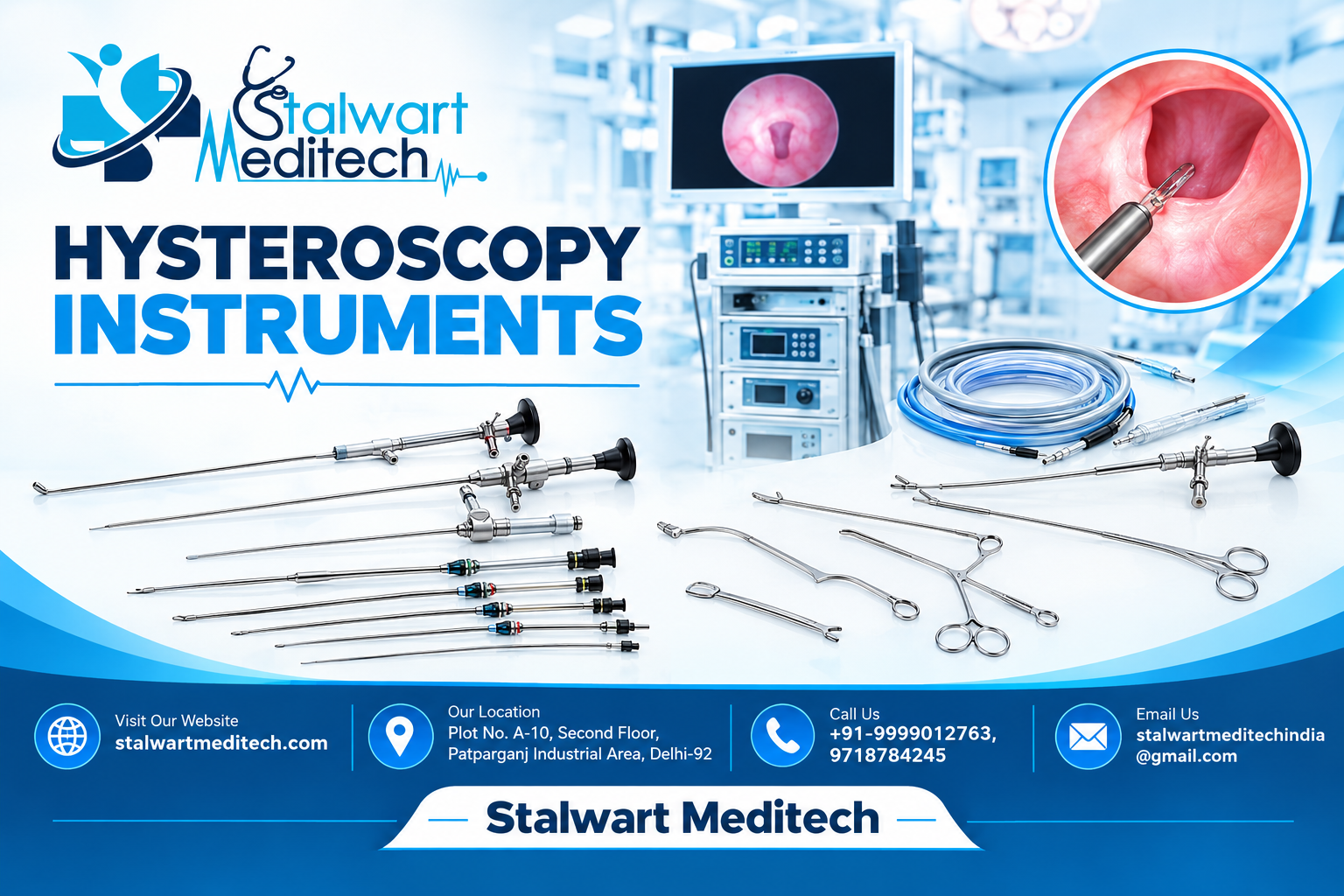
Hysteroscopy instruments play an important role in modern gynecology by helping healthcare professionals examine the inside of the uterus and perform selected diagnostic and surgical procedures. From identifying the causes of abnormal uterine bleeding to removing certain polyps and other intrauterine abnormalities, these instruments support precise visualization and minimally invasive treatment.
Choosing the right hysteroscopy equipment requires an understanding of the procedure, instrument design, patient safety, and clinical requirements. Hospitals, gynecology clinics, and medical equipment buyers should consider optical quality, compatibility, sterilization requirements, durability, and after-sales support when evaluating available products.
Stalwart Meditech provides medical equipment solutions for healthcare facilities seeking dependable equipment for modern clinical environments. Understanding the main types of hysteroscopy instruments can help healthcare professionals make informed purchasing decisions.
Quick Answer: What Are Hysteroscopy Instruments?
Hysteroscopy instruments are specialized medical devices used to examine the uterine cavity and perform selected diagnostic or operative gynecological procedures. Common examples include hysteroscopes, optical systems, light sources, sheaths, distension-fluid systems, graspers, scissors, biopsy forceps, and resectoscopes.
The appropriate instruments depend on the procedure, the clinician’s requirements, the patient’s condition, and the equipment’s compatibility with the intended application.
What Is Hysteroscopy and Why Are These Instruments Important?
Hysteroscopy is a minimally invasive procedure in which a healthcare professional inserts a thin, illuminated viewing instrument through the vagina and cervix to examine the uterine cavity. It generally avoids abdominal incisions and allows direct visualization of the uterine lining.
Hysteroscopy may be used to investigate or manage several gynecological conditions, including:
- Abnormal uterine bleeding.
- Suspected endometrial polyps.
- Selected submucosal uterine fibroids.
- Intrauterine adhesions.
- Certain congenital abnormalities of the uterine cavity.
- Selected cases requiring targeted endometrial sampling.
The instruments used during hysteroscopy influence visualization, access, procedural efficiency, and the clinician’s ability to perform the intended intervention.
For example, a diagnostic examination may require a hysteroscope and an appropriate optical system, while an operative procedure to remove a polyp may require additional working instruments and a compatible operative hysteroscope.
The specific approach must be determined by a qualified gynecologist according to the clinical indication.
Types of Hysteroscopy Instruments
Understanding the main categories of hysteroscopy instruments helps hospitals and healthcare professionals select equipment appropriate for their clinical needs.
1. Hysteroscope
The hysteroscope is the primary instrument used to visualize the uterine cavity. It generally contains an optical system that transmits images from the uterus to the clinician.
Hysteroscopes are commonly classified into diagnostic and operative designs.
Diagnostic hysteroscopes are intended primarily for examination and visualization. Their design may support access through the cervix with minimal instrument manipulation.
Operative hysteroscopes accommodate compatible working instruments or treatment accessories, allowing selected procedures to be performed under direct visualization.
When selecting a hysteroscope, consider its diameter, field of view, optical quality, working-channel design, and compatibility with the intended accessories.
2. Optical System and Camera
The optical system helps the clinician see the uterine cavity clearly. Depending on the equipment configuration, the system may connect to a camera, monitor, and image-processing unit.
Important considerations include:
- Image clarity and resolution.
- Color reproduction.
- Compatibility with the hysteroscope.
- Monitor connectivity.
- Ease of setup and operation.
- Availability of technical support.
A clear image can help clinicians identify anatomical structures and assess abnormalities more effectively. However, image quality also depends on the optical components, fluid clarity, equipment settings, and procedural conditions.
3. Light Source and Light Cable
Adequate illumination is essential for visualizing the uterine cavity. A light source delivers illumination through a compatible light cable connected to the hysteroscope.
Healthcare facilities should evaluate brightness control, heat management, connector compatibility, and maintenance requirements.
The light source should be suitable for the selected optical system and used according to the manufacturer’s instructions.
4. Hysteroscope Sheaths
Sheaths surround the hysteroscope and provide access for fluid inflow, outflow, or compatible operative instruments, depending on the design.
Some systems use different sheath configurations for diagnostic and operative applications.
When choosing a sheath, check its diameter, channel arrangement, sealing mechanism, and compatibility with the hysteroscope. Correct compatibility is particularly important because components from different systems may not work together safely.
5. Distension Fluid Management System
A distension medium is used to expand the uterine cavity so that the clinician can inspect its internal surfaces.
Depending on the procedure and equipment, this may involve a fluid management system that controls fluid delivery and monitors relevant parameters.
Selection considerations include:
- Controlled fluid delivery.
- Appropriate pressure regulation.
- Reliable tubing connections.
- Fluid-deficit monitoring where applicable.
- Compatibility with the procedure and distension medium.
Fluid management is a critical safety consideration. Excessive pressure or fluid absorption can cause complications, so the clinical team must follow established protocols and monitor the patient appropriately.
The appropriate fluid and monitoring approach depends on the procedure, energy modality, and equipment manufacturer’s instructions.
6. Graspers and Biopsy Forceps
Graspers and biopsy forceps are working instruments used in selected diagnostic and operative procedures.
Depending on their design, they may help obtain tissue samples, grasp small structures, or assist with the removal of selected intrauterine lesions.
Before purchasing these instruments, evaluate their intended function, jaw design, working length, handling characteristics, and compatibility with the hysteroscope.
7. Hysteroscopic Scissors
Hysteroscopic scissors are used for selected cutting procedures under direct visualization. They may be appropriate for carefully selected intrauterine adhesions or other situations in which controlled mechanical cutting is indicated.
Their suitability depends on the clinical indication and the clinician’s judgment.
Healthcare facilities should check the instrument’s opening and closing mechanism, construction, compatibility, and reprocessing requirements.
8. Resectoscopes and Electrosurgical Accessories
Resectoscopes are operative instruments used for selected procedures that require tissue resection under direct visualization.
Depending on the system, they may work with compatible electrodes and an electrosurgical generator. Such equipment may be used for selected submucosal fibroids or other intrauterine conditions when clinically indicated.
Important considerations include:
- Compatibility between the resectoscope and generator.
- Appropriate electrode selection.
- Insulation integrity.
- Fluid-management requirements.
- Manufacturer-approved cleaning and inspection procedures.
Because these procedures involve specialized equipment and potential complications, appropriate training and adherence to clinical protocols are essential.
Common Hysteroscopy Instruments and Their Uses
The following table summarizes common instruments and their general applications.
| Instrument | Primary Function | Key Selection Consideration |
| Diagnostic hysteroscope | Examination of the uterine cavity | Diameter and optical quality |
| Operative hysteroscope | Visualization during operative procedures | Working-channel compatibility |
| Camera and optical system | Image transmission and visualization | Image quality and connectivity |
| Light source and cable | Illumination | Connector compatibility and heat management |
| Hysteroscope sheath | Access and fluid-channel support | Diameter and channel design |
| Fluid management system | Distension-fluid delivery and monitoring | Pressure control and safety features |
| Biopsy forceps | Tissue sampling | Jaw design and compatibility |
| Graspers | Grasping selected tissue or structures | Handling and working length |
| Hysteroscopic scissors | Controlled mechanical cutting | Cutting mechanism and intended use |
| Resectoscope and electrodes | Selected operative tissue-resection procedures | System compatibility and safety requirements |
The exact instrument configuration varies according to the procedure and the equipment platform.
How to Choose the Right Hysteroscopy Instruments
Selecting hysteroscopy instruments should be based on clinical requirements rather than price alone. The following factors can help healthcare facilities evaluate their options.
1. Identify the Intended Procedures
Start by determining whether the equipment will be used mainly for diagnostic hysteroscopy, operative hysteroscopy, or both.
A clinic performing routine diagnostic examinations may need a different configuration from a hospital that regularly performs operative procedures.
Create a list of required procedures and identify the instruments needed for each one.
2. Evaluate Optical Performance
Clear visualization is central to hysteroscopy. Assess image quality, field of view, illumination, and compatibility with the camera and monitor.
Whenever possible, request a product demonstration or technical specifications before making a purchasing decision.
3. Confirm System Compatibility
Check that the hysteroscope, sheaths, working instruments, light cables, camera, and fluid-management components are compatible.
Do not assume that similar-looking components from different manufacturers can be used interchangeably. Confirm compatibility through the relevant product documentation.
4. Review Safety and Quality Documentation
Ask the supplier for applicable product specifications, instructions for use, maintenance guidance, and regulatory documentation.
For medical devices supplied in India, verify the applicable requirements under the Medical Devices Rules, 2017, as amended, and confirm the product’s relevant regulatory status.
Hospitals should also review cleaning, disinfection, sterilization, and inspection requirements for reusable instruments.
5. Consider Reprocessing and Maintenance
Reusable hysteroscopy instruments require appropriate cleaning, inspection, and reprocessing according to the manufacturer’s instructions.
Before purchasing, evaluate:
- Ease of disassembly, where applicable.
- Access to cleaning instructions.
- Availability of compatible accessories.
- Repair and maintenance support.
- Availability of replacement components.
These considerations can influence equipment availability and long-term operating costs.
6. Compare Total Cost of Ownership
The initial purchase price is only one part of the overall investment.
Healthcare facilities should also consider accessories, consumables, servicing, training, replacement parts, and expected maintenance costs.
A product that meets the facility’s clinical requirements and offers dependable technical support may provide better long-term value than an option selected solely because it has a lower upfront price.
Benefits of Modern Hysteroscopy Equipment
Appropriately selected hysteroscopy equipment can offer several advantages in gynecological practice.
Direct visualization: Clinicians can examine the uterine cavity rather than relying exclusively on indirect assessment.
Minimally invasive access: Hysteroscopy typically provides access through the cervix without abdominal incisions.
Targeted intervention: Compatible operative instruments can help clinicians perform selected procedures under direct visualization.
Support for diagnostic assessment: Hysteroscopy can help investigate abnormal uterine bleeding and evaluate suspected intrauterine abnormalities.
Potentially efficient care: In appropriately selected cases, some procedures can be performed in outpatient settings, depending on the intervention, patient factors, and available facilities.
These benefits depend on appropriate patient selection, clinician expertise, suitable equipment, and adherence to safety protocols. Hysteroscopy is not risk-free, and treatment decisions should always be made by qualified healthcare professionals.
Why Choose a Reliable Medical Equipment Supplier?
A dependable supplier can help healthcare facilities identify suitable equipment and understand its specifications before purchasing.
When evaluating a hysteroscopy instruments supplier, consider the following:
- Clear product specifications and documentation.
- Guidance on compatible accessories.
- Product quality and applicable regulatory compliance.
- Availability of technical assistance.
- Maintenance and after-sales support.
- Transparent commercial terms.
Stalwart Meditech is a medical equipment business serving healthcare-related equipment needs. Hospitals, clinics, and medical equipment purchasers can contact the company to discuss their requirements and check the availability and specifications of relevant products.
Before finalizing an order, confirm the exact model, intended use, included accessories, compatibility, and applicable documentation with the supplier.
Frequently Asked Questions About Hysteroscopy Instruments
1. What are the main instruments used in hysteroscopy?
Common hysteroscopy instruments include diagnostic and operative hysteroscopes, optical systems, cameras, light sources, sheaths, fluid-management equipment, biopsy forceps, graspers, scissors, and resectoscopes. The required combination depends on the procedure.
2. What is the difference between diagnostic and operative hysteroscopes?
A diagnostic hysteroscope is designed primarily to examine the uterine cavity. An operative hysteroscope accommodates compatible instruments or accessories for selected treatments. The appropriate type depends on the clinical indication and planned procedure.
3. What should hospitals consider when buying hysteroscopy instruments?
Hospitals should evaluate optical quality, instrument diameter, compatibility, intended clinical applications, regulatory documentation, sterilization requirements, maintenance support, and total cost of ownership.
4. Are hysteroscopy instruments reusable?
Some hysteroscopy instruments are reusable, while others may be designed for single use. Reusable devices must be cleaned, inspected, disinfected, or sterilized according to the manufacturer’s validated instructions and applicable clinical protocols.
5. How can I choose a reliable hysteroscopy instruments supplier in India?
Review the supplier’s product documentation, applicable regulatory compliance, technical specifications, compatibility information, warranty terms, and after-sales support. Confirm the product’s availability and suitability for your facility before purchasing.
Conclusion
Hysteroscopy instruments are essential components of modern diagnostic and operative gynecology. From hysteroscopes and optical systems to fluid-management equipment and specialized working instruments, each component contributes to the safe and effective performance of the intended procedure.
Choosing the right equipment requires careful consideration of clinical applications, visualization quality, system compatibility, regulatory documentation, reprocessing requirements, and long-term costs.
For hospitals, gynecology clinics, and medical equipment buyers, working with a knowledgeable supplier can simplify product evaluation and help identify suitable solutions.
Looking for hysteroscopy instruments for your healthcare facility?
Contact Stalwart Meditech to discuss your medical equipment requirements and request information about relevant products, specifications, and availability.
- Website: https://stalwartmeditech.com/
- Email: stalwartmeditechindia@gmail.com
- Phone: +91-9999012763 / 9718784245
- Address: Plot No. A-10, Second Floor, Patparganj Industrial Area, Delhi-92
Connect with Stalwart Meditech today to explore medical equipment solutions for your facility.