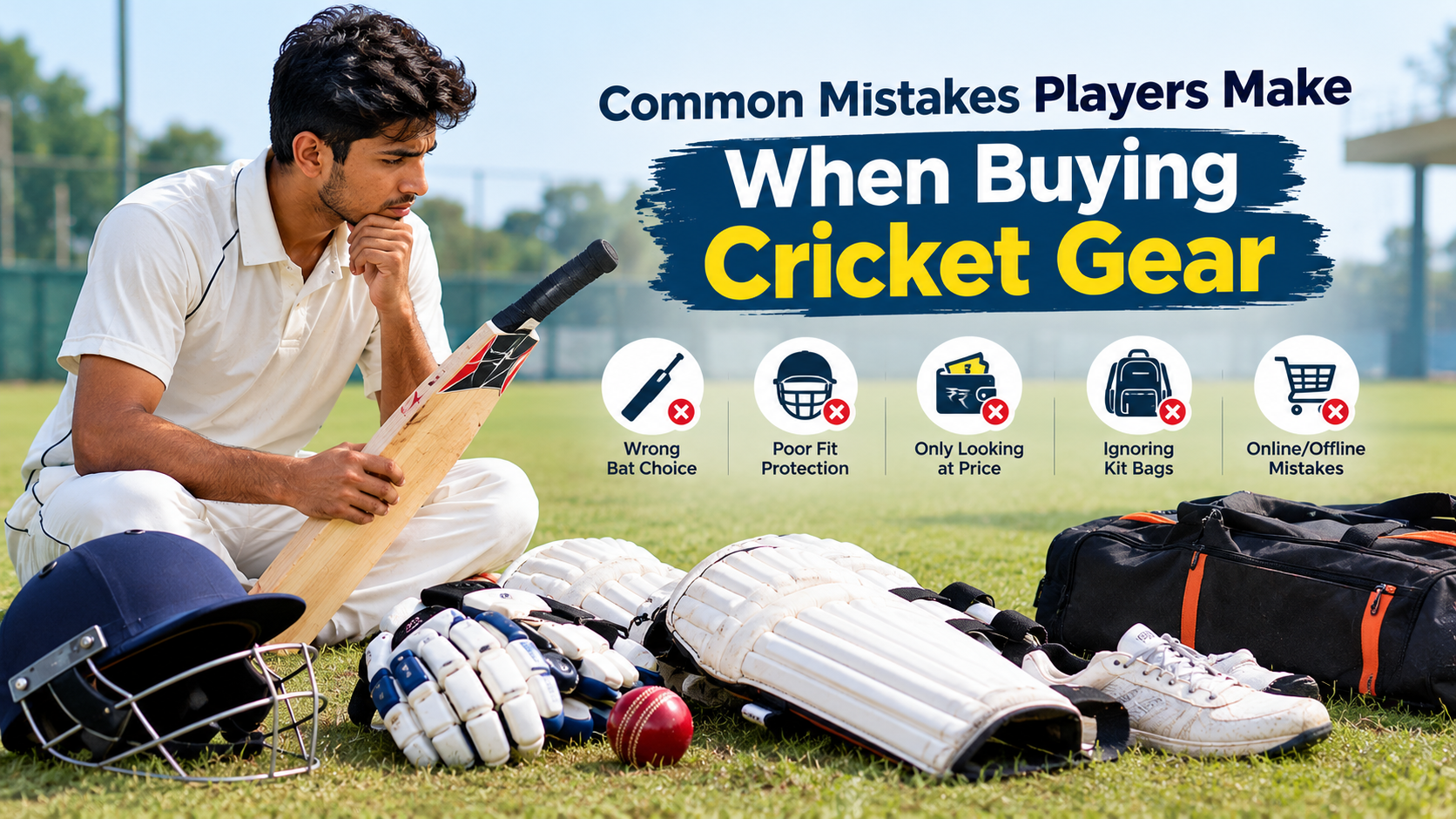
Buying the right cricket equipment is important for comfort, control, and confidence on the field. However, many players make purchasing decisions based on appearance, price, or recommendations without checking whether the equipment actually suits their needs.
From choosing the wrong bat weight to buying poorly fitting protective gear, small mistakes can affect both comfort and performance. Beginners are particularly likely to overlook important details when purchasing their first set of equipment.
Understanding these common mistakes when buying cricket gear can help players make better decisions, avoid unnecessary expenses, and select equipment that matches their playing style and level.
1. Choosing Equipment Without Considering Playing Level
One common mistake is buying equipment designed for advanced players when a simpler option would be more suitable. Professional-level equipment is not automatically the best choice for everyone.
Beginners usually need comfortable, manageable equipment that helps them develop their technique. Regular club players may have more specific requirements based on their playing conditions, preferred shots, and match experience.
Before making a purchase, consider how frequently you play, whether you mainly practise or participate in competitive matches, and which features are genuinely useful for your game.
The right cricket gear should meet your current requirements rather than simply look impressive.
2. Selecting a Cricket Bat Only by Its Weight
A bat’s weight is important, but it should not be the only factor influencing your decision. Two bats with similar weights can feel different because of their balance, shape, and weight distribution.
A bat that feels too heavy may make quick movements difficult, while one that is too light might not provide the feel you prefer during certain shots.
When choosing a cricket bat, check its pickup, handle comfort, blade profile, and overall balance. If possible, hold the bat and perform a few controlled practice movements before buying it.
Online buyers should review the available specifications and ask the seller about the actual weight and balance when this information is not provided.
3. Ignoring the Importance of Proper Protective Cricket Gear
Protective equipment should never be selected based on appearance alone. A helmet, batting pads, gloves, and other protective items must fit properly and be suitable for the level and conditions in which you play.
A helmet that moves excessively or feels unstable may not provide the intended protection. Similarly, pads that are too large can restrict movement, while tight gloves may affect grip and comfort.
When purchasing cricket protective equipment, check the fit, fastening system, coverage, and relevant safety standards. Make sure the equipment is appropriate for the ball type and playing conditions.
Never assume that a more expensive product automatically offers a better fit or greater protection.
4. Focusing Only on Price
Budget matters, especially when purchasing several items at once. However, choosing the cheapest available option without checking its quality can lead to problems later.
Poor stitching, uncomfortable materials, weak fastenings, or unsuitable construction may reduce an item’s usefulness. On the other hand, spending more than necessary on features you will rarely use is not always sensible.
A better approach is to compare specifications, material quality, comfort, and expected usage before making a decision.
Set a realistic budget and prioritise essential equipment first. This helps you find a practical balance between cost, quality, and performance.
5. Buying the Wrong Size
Incorrect sizing is another frequent cricket equipment buying mistake. Junior players may purchase full-size equipment too early, while adults sometimes select gloves or pads without checking the fit.
Equipment that is too large or too small can affect movement, grip, and comfort. The problem becomes particularly noticeable during longer practice sessions or competitive matches.
Check the manufacturer’s sizing chart before ordering. For junior equipment, consider the player’s height and build rather than relying on age alone.
If you are shopping in a physical store, try the equipment on whenever possible. Online shoppers should review the measurements and return policy before completing the purchase.
6. Overlooking Cricket Kit Bags and Storage
Players often spend considerable time choosing bats and protective equipment but give little attention to how they will carry and store everything.
A suitable cricket kit bag should have enough space for the equipment you regularly use. Separate compartments can help organise gloves, pads, clothing, shoes, and accessories.
Before selecting a bag, consider its capacity, material, stitching, zippers, shoulder straps, and ease of carrying. Players who travel frequently may prefer a design that makes transporting their equipment more convenient.
Choosing the correct size also matters. A bag that is too small can become difficult to organise, while an unnecessarily large one may be inconvenient to carry.
7. Not Checking Product Details When Shopping Online
Online shopping makes it easier to compare different products, but product images alone do not always provide enough information to make a confident decision.
Before ordering cricket gear online, check the product description, size, material, specifications, delivery details, and return or replacement conditions.
Read customer reviews carefully, paying attention to repeated comments about fit, durability, and product quality. Check whether the seller provides clear contact information and genuine product photographs.
If an important detail is missing, contact the seller before placing the order. A quick question can help prevent the inconvenience of receiving equipment that does not meet your expectations.
8. Buying Equipment That Does Not Match Your Playing Style
Every player has different preferences. Some batters value quick bat movement, while others prefer a particular balance or blade profile. Bowlers may have different requirements for footwear, and wicketkeepers need equipment suited to their role.
Choosing cricket gear simply because another player recommends it can result in an unsuitable purchase.
Think about your position, playing conditions, comfort, and the movements you perform most frequently. Compare different options and select equipment that supports your technique.
Advice from an experienced coach or knowledgeable equipment specialist can also help you understand which features are worth prioritising.
9. Forgetting About Maintenance and Durability
Buying suitable equipment is only the first step. Proper maintenance can help you keep it in good condition for longer.
Check your bat, gloves, pads, helmet, and other items regularly for visible damage or wear. Store equipment in a dry place and follow the manufacturer’s care instructions.
Replace damaged protective equipment when it can no longer provide reliable protection. A cracked helmet, badly damaged padding, or compromised fastening should not be ignored simply to save money.
Understanding maintenance requirements before purchasing can also help you compare the long-term value of different products.
How to Choose Cricket Gear More Confidently
Before making your next purchase, use this simple checklist:
- Choose equipment that matches your playing level and requirements.
- Check the size, fit, weight, and comfort before buying.
- Prioritise suitable protection for your playing conditions.
- Compare product quality and specifications rather than price alone.
- Review online seller details, delivery terms, and return policies.
- Consider storage, maintenance, and long-term usability.
Taking a few extra minutes to check these details can help you avoid common purchasing mistakes and spend your budget more effectively.
Making Better Equipment Choices
Buying cricket equipment does not have to be complicated. The key is to understand what you need, compare available options, and avoid making decisions based only on price, appearance, or popularity.
Whether you are purchasing a bat, protective equipment, footwear, or a kit bag, comfort, fit, quality, and suitability should guide your choice.
With careful selection and regular maintenance, the right equipment can support your development as a player and make practice and matches more comfortable. more infromation