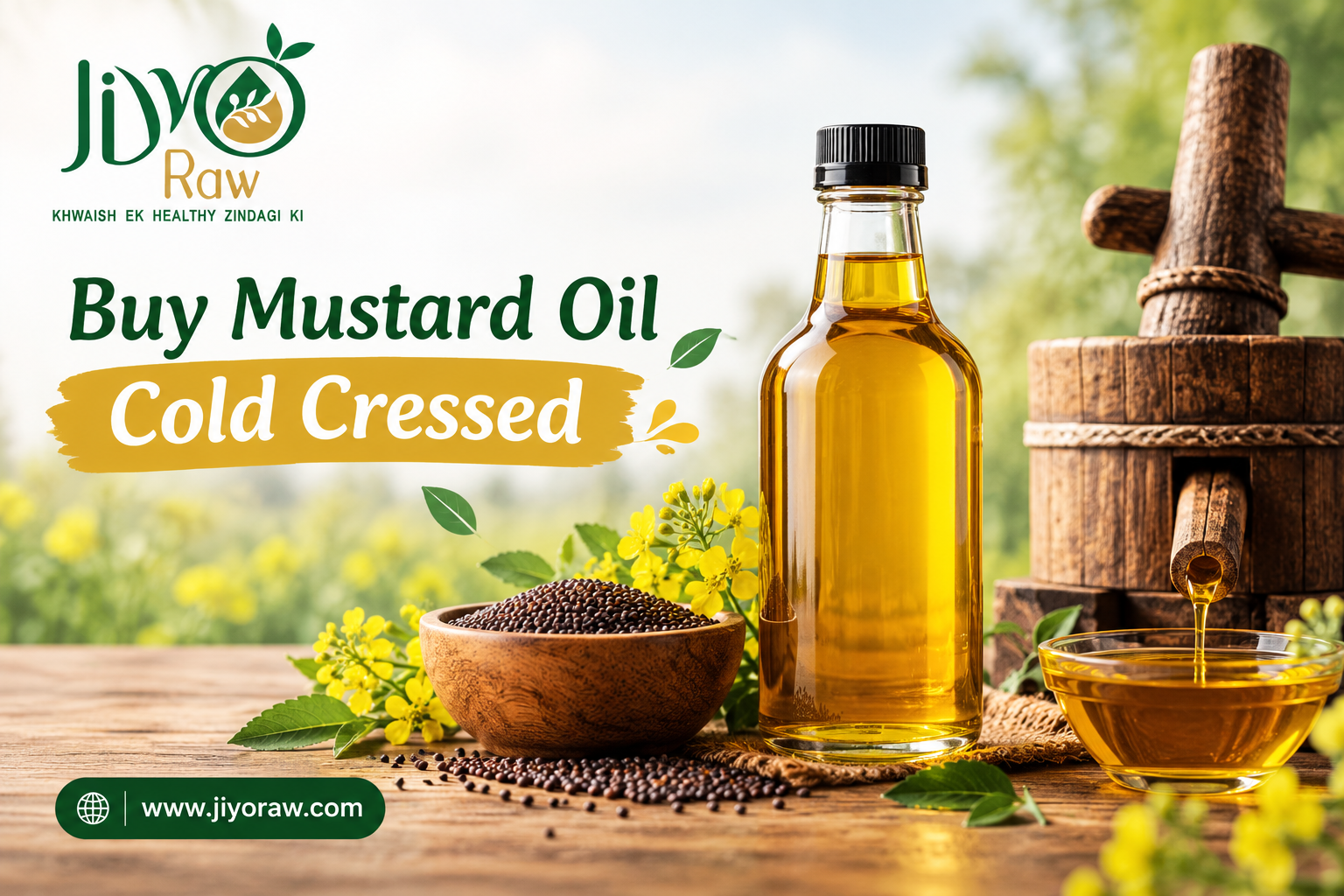
Choosing the right cooking oil is an important part of building a balanced kitchen. Mustard oil has been a staple in many Indian households for generations because of its distinctive flavour, versatility, and connection to traditional cooking. Today, more consumers are exploring cold-pressed mustard oil as an alternative to conventionally processed oils.
If you plan to Buy Mustard Oil Cold Cressed, understanding its extraction method, quality indicators, nutritional properties, and intended use can help you make an informed decision. Cold-pressed mustard oil is produced by mechanically extracting oil from mustard seeds, generally without the high-temperature processing associated with some conventional methods.
Brands such as Jiyo Raw cater to consumers interested in traditionally produced pantry essentials. However, before purchasing any product, it is important to check its ingredient information, manufacturing details, packaging, and quality standards rather than relying on marketing claims alone.
Quick Answer: How Do You Choose Cold-Pressed Mustard Oil?
To choose good-quality cold-pressed mustard oil, look for oil made from suitable mustard seeds using a clearly described mechanical extraction process. Check the label for ingredients, manufacturing details, batch information, FSSAI licence details, and best-before date.
Choose a reputable seller that provides transparent product information and food-safety documentation. Consider the oil’s flavour, intended cooking application, packaging, and price per litre. Remember that cold-pressed describes an extraction method; it does not automatically guarantee organic certification, superior nutritional value, or freedom from adulteration.
What Is Cold-Pressed Mustard Oil?
Cold-pressed mustard oil is obtained by mechanically pressing mustard seeds to release their natural oil. The method generally aims to limit heat generation during extraction and reduce dependence on intensive refining processes.
Mustard seeds contain fats, including monounsaturated and polyunsaturated fatty acids, along with naturally occurring compounds that contribute to their characteristic aroma and pungent taste.
Traditional oil extraction methods have long been used in Indian households and local oil mills. Modern wooden ghani and other mechanical pressing systems continue this tradition, although equipment design and operating conditions can vary.
Cold-Pressed vs. Refined Mustard Oil
Understanding the differences between these products can help you select an oil that suits your preferences.
| Feature | Cold-Pressed Mustard Oil | Refined Mustard Oil |
| Extraction | Mechanical pressing with controlled heat generation | Extraction and processing may involve multiple industrial steps |
| Processing | Often minimally processed, depending on the product | Usually undergoes refining to meet product specifications |
| Flavour | Typically distinctive and pungent | Generally milder, depending on processing |
| Aroma | Often retains a characteristic mustard aroma | May have a reduced natural aroma |
| Buying priority | Extraction transparency and quality testing | Refining standards and product specifications |
Neither category should automatically be considered safer or healthier in every situation. Product quality, regulatory compliance, fatty acid composition, and appropriate use all matter.
Key Benefits of Cold-Pressed Mustard Oil
Cold-pressed mustard oil is valued for its flavour and culinary versatility. Its potential nutritional advantages should be understood in the context of an overall balanced diet.
1. Contains Unsaturated Fatty Acids
Mustard oil contains different types of dietary fats, including monounsaturated and polyunsaturated fatty acids. Replacing some sources of saturated fat with unsaturated fats can support cardiovascular health when done as part of an appropriate dietary pattern.
However, mustard oil remains calorie-dense, like other cooking oils. Portion size and overall dietary balance are important.
2. Adds Traditional Flavour to Indian Dishes
One reason consumers choose mustard oil is its distinctive pungency. It is commonly used in regional Indian cooking, including Bengali, Punjabi, Bihari, and other traditional cuisines.
It can contribute depth to preparations such as vegetable curries, pickles, marinades, and selected stir-fried dishes. The flavour can be particularly noticeable in recipes where mustard oil is a key ingredient rather than just a cooking medium.
3. Offers Versatility in Everyday Cooking
Mustard oil can be used in a variety of culinary applications, subject to the product’s intended use and applicable food-safety guidance.
For example, a household may use it to prepare a traditional vegetable curry, make a marinade, or prepare a regional pickle. Its pungent flavour may be more suitable for some recipes than others, so the best choice depends on personal taste.
4. Fits a Traditional Food Preparation Approach
Consumers interested in traditional food practices often prefer oils extracted through mechanical pressing. Cold pressing can appeal to buyers who want to understand how their cooking oil is produced and how much processing it undergoes.
Still, the extraction method alone does not establish a product’s overall nutritional superiority. Seed quality, handling, storage, and testing also influence the final product.
Important: Mustard oil’s suitability for cooking depends on the specific product, its regulatory status, and local food-safety guidance. In India, certain mustard oils have historically been sold for massage or other external applications. Always verify that the product is legally marketed and labelled for edible use before consuming it.
How to Buy Mustard Oil Cold Pressed: A Practical Buying Guide
When shopping online or at a local store, use the following checks to compare products more confidently.
1. Check the Extraction Method
Look for a clear description of how the oil is extracted. If a product claims to be cold-pressed or wooden-pressed, the seller should provide meaningful information about the process.
Terms such as wooden ghani, kachi ghani, and cold-pressed may describe related traditional or mechanical approaches, but they should not be assumed to mean exactly the same thing in every product.
2. Review the Ingredients and Label
A product label can provide important information about what you are buying.
Check for:
- The product’s intended use and ingredient declaration.
- Manufacturer or marketer details.
- Batch or lot number and relevant date information.
- FSSAI licence details, where applicable.
- Storage instructions and best-before date.
If you are looking for pure mustard oil, check whether the product lists mustard oil as the sole ingredient. Avoid relying on the word “pure” alone as proof of quality.
3. Look for Credible Quality Information
Trustworthy sellers should be able to explain their quality-control practices. Depending on the product and applicable requirements, relevant documentation may include laboratory testing for specified quality parameters and contaminants.
Do not assume that a product is tested simply because its packaging uses terms such as natural, traditional, or premium. Where available, review credible test reports or ask the seller how product quality is verified.
4. Choose Suitable Packaging
Packaging affects how well oil is protected during storage and transport. Look for a properly sealed, food-grade container that protects the contents from contamination and excessive exposure to light.
After opening, keep the bottle tightly closed and store it in a cool, dry place away from direct sunlight and strong heat sources. Follow the manufacturer’s storage instructions.
5. Compare Price and Value
The cheapest product is not necessarily the best value. Compare the price per litre alongside the extraction method, ingredient information, packaging, product origin, and quality documentation.
For example, if two one-litre bottles have different prices, consider whether the more expensive product offers verifiable information about sourcing or testing. Do not pay a premium solely for an attractive label or unsubstantiated health claims.
How to Use Cold-Pressed Mustard Oil in Your Kitchen
Mustard oil is widely used in traditional Indian recipes, but the amount and method of use depend on the dish.
For vegetable curries: Its pungent flavour can complement vegetables, legumes, and regional spice blends.
For marinades: Mustard oil can add depth to selected marinades when combined with ingredients such as ginger, garlic, turmeric, and other spices.
For pickles: Its characteristic aroma makes it a familiar ingredient in several traditional Indian pickle recipes. Follow a reliable recipe with appropriate food-safety and preservation practices.
For everyday meals: Rotate cooking oils according to your dietary needs and cooking methods rather than depending on one oil for every purpose.
Avoid overheating oil beyond its appropriate cooking conditions. Smoke point varies with composition and processing, so do not assume every cold-pressed mustard oil behaves identically.
Common Mistakes to Avoid When Buying Mustard Oil
A few simple precautions can help you avoid misleading product claims.
First, do not assume that cold-pressed automatically means organic. Organic status depends on the relevant certification and supply-chain requirements.
Second, do not judge purity only by colour, smell, or taste. These characteristics can vary naturally and cannot reliably establish the absence of adulteration.
Third, avoid products that make unsupported claims about curing diseases, guaranteeing weight loss, or preventing specific medical conditions.
Finally, verify that the oil is intended and approved for edible use. In India, regulatory restrictions and permitted uses can differ by product category, so check current requirements and the label before buying.
Why Consider Jiyo Raw When Shopping for Traditional Pantry Essentials?
Consumers looking for traditionally produced food products often value clear product information, convenient ordering, and confidence in the seller.
Jiyo Raw is a brand to explore when comparing traditional pantry essentials. Before choosing any mustard oil from Jiyo Raw or another seller, review the specific product listing, intended use, ingredient details, extraction method, packaging, and available quality information.
A well-informed purchase should be based on verifiable product details rather than general claims about naturalness or health benefits.
You can visit Jiyo Raw to explore its available products and review the information provided for each item.
Frequently Asked Questions
1. What should I check before buying cold-pressed mustard oil?
Check the intended use, ingredient list, extraction method, manufacturer information, applicable FSSAI licence details, batch information, best-before date, and available quality documentation. Choose a reputable seller that provides transparent product details.
2. Is cold-pressed mustard oil better than refined mustard oil?
Not necessarily in every respect. Cold-pressed oil may retain a stronger flavour and undergo less refining, while refined oil typically has a milder taste. Nutritional suitability depends on the oil’s composition, product quality, and how it fits into your overall diet.
3. Can I use cold-pressed mustard oil for everyday cooking?
Only use a product that is legally marketed and labelled for edible use. Follow its instructions and use it according to the cooking method. If you have specific dietary or medical concerns, consult a qualified healthcare professional.
4. How can I identify pure mustard oil?
Read the ingredient list, check the seller’s quality information, and look for appropriate testing or certification where applicable. Colour, aroma, and taste alone cannot prove purity or rule out adulteration.
5. How should I store cold-pressed mustard oil?
Keep it tightly sealed in a clean, food-grade container in a cool, dry place away from direct sunlight and excessive heat. Follow the storage instructions on the label and observe the best-before date.
Conclusion
Choosing the right mustard oil involves more than comparing prices or looking for the words “cold-pressed” on a bottle. Understanding the extraction method, checking the label, reviewing quality information, and confirming that the product is suitable for edible use are essential steps.
If you plan to buy mustard oil cold pressed, focus on transparent sourcing, appropriate food-safety compliance, suitable packaging, and realistic product claims. These checks can help you select an oil that complements your cooking preferences and household needs.
Call to Action
Looking for traditional pantry essentials for your kitchen? Visit www.jiyoraw.com to explore available products, compare product information, and make a more informed choice. Review the details of each product before purchasing to find options that suit your cooking needs.