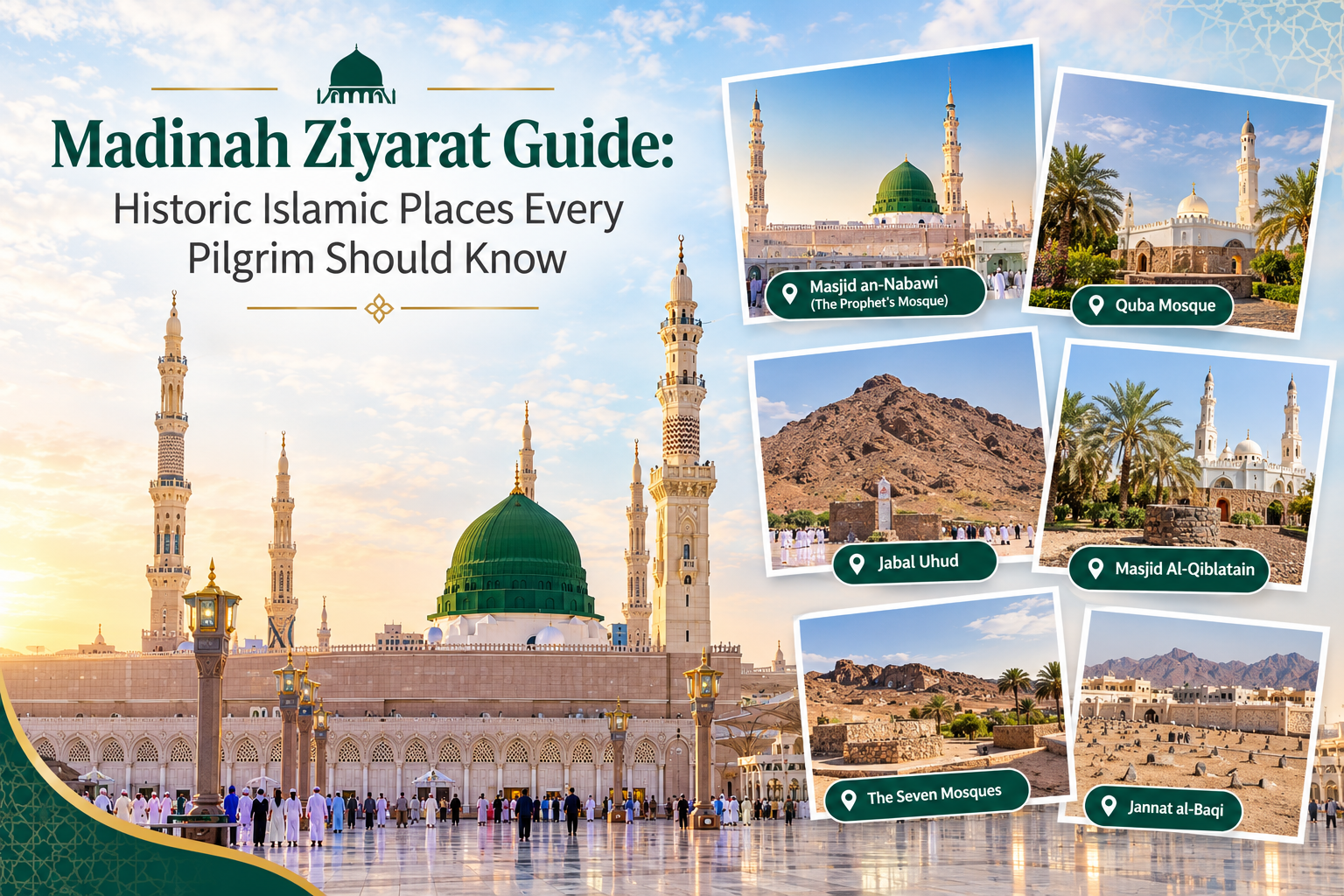
Madinah is known as the City of the Prophet ﷺ, and it is one of the most peaceful places on earth. After the rites of Umrah or Hajj in Makkah, many pilgrims travel here to walk where the Prophet ﷺ and his companions lived. This Madinah ziyarat guide explains the key historic places, why each one matters and how to prepare for your visit.
Why Madinah Ziyarat Matters
Ziyarat means visiting places of religious and historical importance. It is not a required part of Hajj or Umrah, but it is a much-loved tradition that helps pilgrims connect with the Seerah. Seeing the places where early Muslims prayed, struggled and built a community makes history feel real. If you are planning your first trip from the UK, a reliable Hajj and Umrah travel agency can arrange your hotel, transport and guided visits, so you can spend your time on worship and reflection.
Historic Places to Visit in Madinah
Masjid al-Nabawi and the Rawdah
Masjid al-Nabawi was built by the Prophet ﷺ soon after he arrived in Madinah in 622 CE. Today it is one of the largest mosques in the world, yet its heart remains the same. Pilgrims offer salams at the Prophet’s ﷺ resting place and pray in the Rawdah, the area between his house and his pulpit. It can be very busy, so go early and be patient.
Masjid Quba
Masjid Quba is regarded as the first mosque in Islam. The Prophet ﷺ stopped here on his journey to Madinah, and the community helped to build it. According to a well-known hadith, praying there after making wudu at home carries a reward like that of Umrah. Many pilgrims visit in the morning, when it is quieter.
Masjid al-Qiblatayn
The name means the Mosque of the Two Qiblas. It was here that the Muslims were told to change the direction of prayer from Jerusalem to the Kaaba in Makkah. The mosque is a gentle reminder of obedience and trust in Allah, and it is a popular stop on most ziyarat tours.
Mount Uhud and the Martyrs of Uhud
The Battle of Uhud took place in 625 CE, and many companions were martyred, including the Prophet’s ﷺ uncle, Hamza (RA). Pilgrims visit the graveyard at the foot of the mountain to make dua and reflect on sacrifice and patience. Families often find this stop especially moving, and Family Umrah packages that include private transport make it easier to visit with children and elderly parents.
Jannat al-Baqi
Jannat al-Baqi is the main cemetery of Madinah. Many companions, members of the Prophet’s ﷺ family and early scholars are buried here. Visits are usually possible at set times, and women may have separate access arrangements, so it is wise to ask your guide for current rules before you go.
The Site of the Battle of the Trench
In 627 CE, the Muslims defended Madinah by digging a trench around the city. The area near Masjid al-Khandaq, often called the Seven Mosques, reminds visitors of unity and clever planning in the face of great danger. It is a short visit, but a powerful lesson in leadership.
Planning Your Ziyarat
Many pilgrims travel with their local mosque or community, and Group Hajj packages often include guided ziyarat with a knowledgeable leader. A good guide explains the history at each stop, keeps the group together and helps with timings. This is especially helpful for first-time visitors who may feel overwhelmed by the crowds.
Practical Tips for Pilgrims
Wear comfortable shoes and light clothing, and carry water, especially in the warmer months. Be respectful at every site: keep your voice low, follow the instructions of staff and avoid blocking pathways. Remember that opening times and access rules can change, so always check with your provider before you travel. Most importantly, keep your intention sincere. Ziyarat is about learning, remembering and drawing closer to Allah.
Final Thoughts
While Madinah brings the story of Islam to life, understanding the most important religious landmarks in Makkah adds deeper meaning to your spiritual journey. From the Prophet’s ﷺ Mosque to the hills of Uhud, every site in Madinah carries a lesson in faith, courage, and community. With careful planning and an open heart, your ziyarat can become one of the most memorable parts of your journey.
Contact Islamic Travel UK
Need help planning your trip? Our team is ready to advise and book.
- Address: Suite No.5, The Old Dispensary, 30 Romford Road, Stratford, London, England, E15 4BZ
- Phone: 0203-970-4500
- Email: info@islamictravel.co.uk
Frequently Asked Questions (FAQs)
What is Madinah ziyarat?
Ziyarat means visiting historic and religious places. In Madinah, it includes sites such as Masjid al-Nabawi, Masjid Quba, Mount Uhud and Jannat al-Baqi.
Is Madinah ziyarat compulsory for Hajj or Umrah?
No. It is not a required part of either pilgrimage, but many Muslims choose to do it to learn more about the Seerah.
How many days do I need in Madinah?
Most pilgrims stay between three and five days. This allows time for prayers at Masjid al-Nabawi and a guided tour of the main sites.
What is the best time to visit Masjid al-Nabawi and the Rawdah?
Early morning and late at night are usually quieter. Access to the Rawdah is often managed through an official booking system, so check the latest rules before you travel.
Can families and elderly pilgrims join ziyarat tours?
Yes. Many tours use air-conditioned transport and move at a gentle pace. Ask your provider about private options if you are travelling with children or older relatives.
How should I choose a travel provider for Madinah?
Choose a licensed UK agency with clear pricing, good reviews and helpful support. Always confirm what is included before you pay.