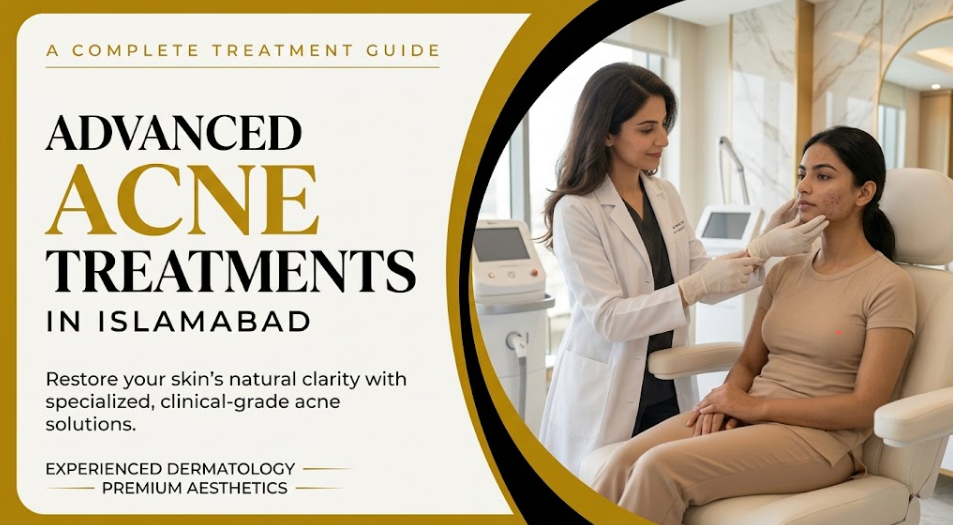
Acne leaves its mark on more than your skin. For many people in Islamabad, Rawalpindi, and across Pakistan, the scars left behind affect confidence long after the breakouts themselves are gone. This guide explains what acne scars are, which treatments are used to improve them, who makes a good candidate, what the process involves, and how to look after your skin afterwards.
Full treatment details: https://www.royalcosmeticsurgery.com.pk/acne-treatment.html
What Are Acne Scars?
Acne scars, sometimes called zit scars, are the marks left after acne fades. Some appear as dents or uneven areas in the skin, while others are flat patches of discoloration. They matter to people for a simple reason: they can affect confidence and self-esteem, and they are very hard to remove with home remedies.
Advances in cosmetic dermatology have made it realistic to reduce the appearance of scars. Most professional treatments work by encouraging the body to produce more collagen, which improves how the skin looks and feels.
Acne vs. Acne Scars
It helps to think of these as two stages. Active acne is the ongoing breakout. Scars are what remains afterwards. Scar treatment tends to work best when breakouts are controlled, since new breakouts create new marks. If you are still breaking out regularly, speak with a dermatologist about managing that first.
The Main Treatment Options
Fractional CO2 laser. Advanced laser technology creates tiny microthermal zones in the skin, which trigger natural healing and collagen production. Resurfacing the skin improves the structure and tone of scarred areas. It is described as effective for deep, pitted scars with minimal downtime.
Radiofrequency treatment. This non-invasive procedure heats deeper skin layers with radiofrequency energy to increase collagen and elastin production. It tightens skin, reduces scars, improves structure, and is gentle on all skin types, with minimal healing time.
Chemical peels. A chemical solution is applied to exfoliate the skin, which then peels away. The new skin that grows in is typically smoother and shows fewer marks.
Microneedling. A device with fine needles creates tiny punctures in the skin. This speeds up collagen production and helps scars heal.
Dermal fillers. Materials such as hyaluronic acid are injected to fill scars that are not flat, which improves the surface of the skin right away.
Benefits of Treatment
- Better skin texture, as treatments smooth the skin’s surface
- An improved overall look, with more even skin tone
- Increased confidence as scars become less noticeable
- Minimally invasive options with little to no recovery time for many methods
- Results that can last, though they vary between individuals and depend on aftercare
Who Is a Good Candidate?
An ideal candidate for acne scar treatment generally:
- Has practical expectations and understands what results are possible
- Has healthy skin that heals well and responds to treatment
- Has acne scars that have not improved with other approaches
- Does not currently have active acne, which can make scar treatment less effective
What the Process Looks Like
- Initial consultation. A full examination of the face to identify the type of scars and how severe they are.
- Treatment plan. Specialists choose a plan to fit your skin type and needs.
- The procedure. Sessions are carried out in a controlled setting, depending on the chosen method. You receive aftercare instructions to help healing.
- Follow-up. Regular check-ups monitor how treatment is working and how the skin is healing.
- Extra sessions. The dermatologist may recommend additional sessions if they are needed to reach the best results.
Aftercare Instructions
Aftercare is essential for good results and for avoiding complications:
- Stay out of the sun and use a broad-spectrum sunscreen on the treated area
- Use mild, non-irritating skin care products
- Drink enough water to keep skin hydrated and support healing
- Do not pick at treated areas
- Follow your dermatologist’s instructions on any prescribed medication or additional care
Results and Recovery
Many patients see their scars look noticeably better after treatment. Methods such as fractional CO2 laser, microneedling, and radiofrequency help skin produce more collagen and heal itself, which leads to smoother, more even skin. Results continue to improve as the skin heals, and good aftercare and a consistent skin care routine help maintain them. Side effects such as redness, swelling, and slight irritation usually last a few days.
Dark Marks After Acne
Some people are bothered more by colour than by texture: darker patches that remain after a pimple heals. This is a pigmentation concern and is handled differently from scarring. A dermatologist may discuss options such as glutathione-based treatment, lasers, or peels, depending on the case. You can read about the clinic’s skin whitening treatment in Islamabad, which focuses on pigmentation and uneven tone. Many people raise both concerns at the same consultation.
Frequently Asked Questions
How many sessions will I need? It depends on how severe the scars are and which therapy is used.
Does treatment hurt? Specialists use numbing creams to reduce discomfort during microneedling and fractional CO2 laser.
Can treatments be combined? Yes. Combinations such as chemical peels with laser therapy can improve results. Your dermatologist will recommend what suits your skin type and condition.
Are there side effects? Redness, swelling, and slight irritation are common and usually last a few days.
Choosing a Specialist in Islamabad
Because the right method depends on the type and depth of your scars, the experience of the person examining your skin matters. At Royal Cosmetic Surgery in F-7 Markaz, Islamabad, the clinic names Dr. Maryam Malik, a dermatologist, and Dr. Ayusha Khan, an aesthetic physician, among those who treat acne scars. Patients travelling from Rawalpindi and other cities can ask about planning sessions and follow-ups around their schedules.
Summary
Acne scar treatment can make a real difference to skin texture and confidence. The most important steps are getting active acne under control, choosing a method that matches your scar type, following aftercare carefully, and keeping expectations realistic. A thorough consultation is the best starting point.
This guide is for general educational purposes and does not constitute medical advice. Consult a qualified dermatologist before starting any treatment.