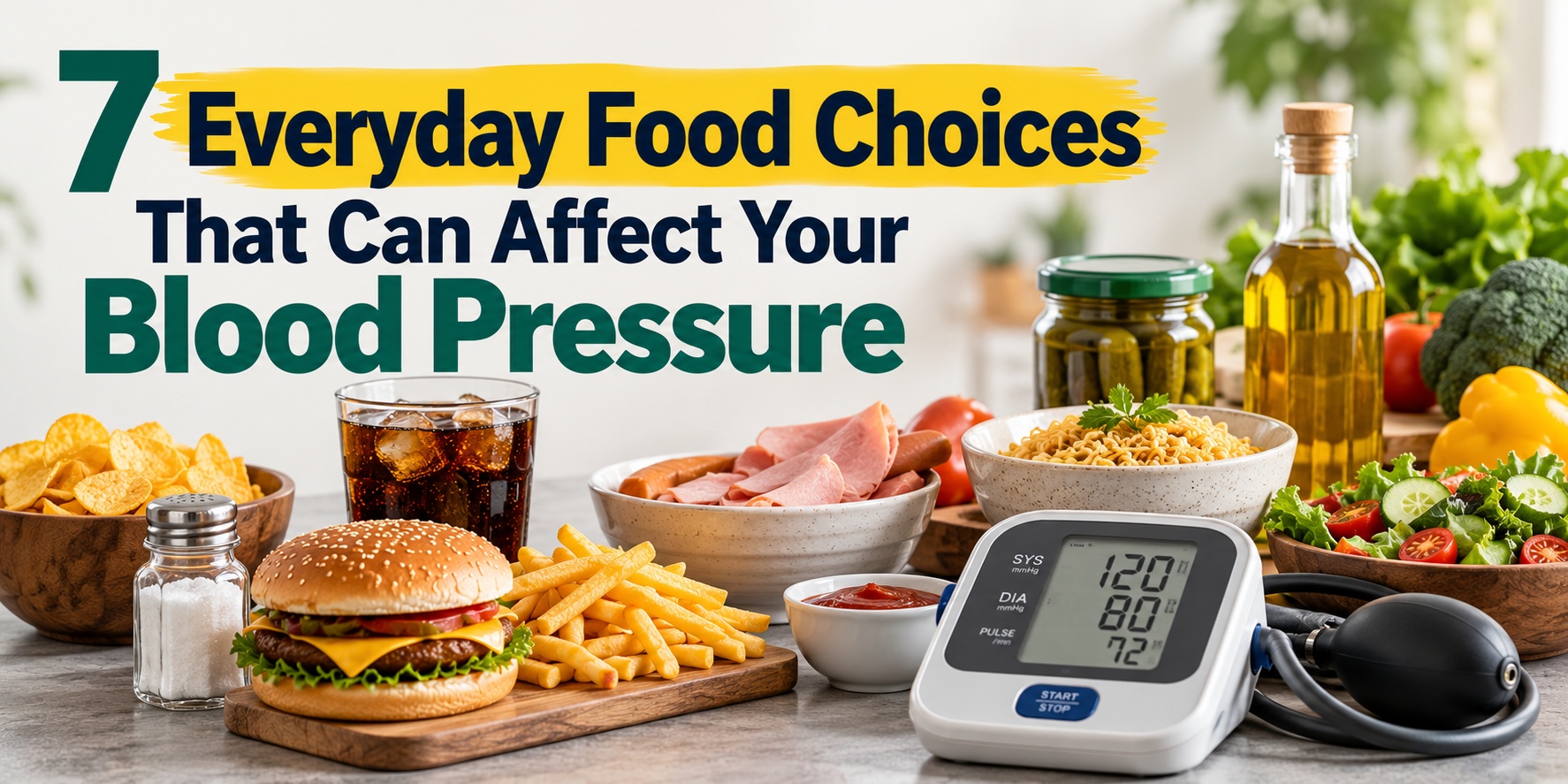
You may not think much about blood pressure when you sit down for breakfast or order dinner.
But your everyday food choices can affect how much sodium, potassium, sugar, and saturated fat you consume. Over time, these dietary patterns can play a role in blood pressure and overall heart health.
This does not mean one salty meal will suddenly cause hypertension. Your overall eating pattern matters much more.
High blood pressure can also develop without obvious symptoms. The only reliable way to know your blood pressure is to have it measured.
So, what should you actually look at on your plate?
Here are seven everyday food choices that are worth paying attention to.
1. Adding Too Much Salt to Your Food
Salt is probably the first food-related factor that comes to mind when we talk about blood pressure.
And there is a reason for that.
Salt contains sodium. Consuming too much sodium can contribute to higher blood pressure in many people. WHO recommends that adults consume less than 2,000 mg of sodium per day, which is equal to less than 5 grams of salt.
The tricky part is that sodium does not only come from the salt shaker.
It can also come from:
- Pickles
- Papad
- Packaged snacks
- Instant noodles
- Processed foods
- Sauces and chutneys
- Salted nuts
- Ready-to-eat meals
- Processed meats
- Restaurant and takeaway food
Think about a normal day.
You may add salt while cooking, eat a pickle with lunch, have packaged namkeen in the evening, and order a salty meal at night.
Each choice may seem small. Together, they can add up.
What can you do?
Try tasting your food before automatically adding more salt.
Use ingredients such as lemon, garlic, ginger, coriander, cumin, and other spices to add flavour.
You do not have to make your food bland.
The goal is to gradually reduce your dependence on salt.
2. Eating Packaged Snacks Too Often
Chips, namkeen, salted biscuits, and other packaged snacks can be convenient when you are hungry between meals.
But they can also contribute significant amounts of sodium.
The American Heart Association points out that sodium is often found in processed and packaged foods, not just in the salt we add while cooking.
This is where reading food labels can help.
When buying a packaged product, look at:
- Serving size
- Sodium
- Saturated fat
- Added sugar
- Total calories
The serving size can be easy to overlook.
A packet may contain more than one serving, so eating the entire packet can mean consuming more sodium than you expected.
A simple snack swap
Instead of reaching for packaged snacks every evening, try options such as:
- Unsalted nuts
- Fresh fruit
- Roasted chickpeas with little salt
- Plain yoghurt
- Homemade vegetable snacks
- Sprouts
- Fresh coconut in suitable portions
You do not need to remove every packaged food from your kitchen. Just avoid making them your default snack every day.
3. Choosing Processed and High-Sodium Foods Frequently
Processed foods can make life easier.
There is nothing unusual about using packaged foods occasionally.
The issue is frequency.
Foods such as processed meats, instant foods, ready-made sauces, soups, and certain convenience meals may contain significant sodium.
WHO specifically identifies processed foods as an important source of sodium and recommends limiting foods high in salt.
In an Indian diet, sodium can also come from foods that do not necessarily taste extremely salty.
For example:
- Bread
- Cheese
- Sauces
- Instant soups
- Packaged breakfast foods
- Pickles
- Papad
- Restaurant gravies
This is why simply saying, “I don’t add much salt,” may not tell you how much sodium you actually consume.
Try this instead
Choose fresh or minimally processed foods more often.
When you buy packaged products, compare similar products and choose the one with less sodium when practical.
Small changes can become easier once you get used to checking labels.
4. Drinking Sugary Beverages Regularly
What you drink matters too.
Soft drinks, sweetened juices, energy drinks, flavoured beverages and other sugary drinks can add a lot of sugar without making you feel particularly full.
A diet high in added sugars can contribute to excess calorie intake and weight gain, which can affect cardiovascular health and blood pressure risk. WHO recommends limiting free sugars as part of a healthy diet.
Consider your daily drinks.
Do you have:
- Tea with several teaspoons of sugar?
- Soft drinks with lunch?
- Sweetened coffee during work?
- Packaged fruit drinks?
- Energy drinks?
- Flavoured milk drinks?
One drink may not seem significant.
But if you have two or three sugary drinks every day, the pattern becomes different.
Better everyday options
Depending on your health needs and preferences, you can choose:
- Plain water
- Unsweetened tea
- Unsweetened coffee
- Water with lemon
- Plain buttermilk with limited salt
- Whole fruit instead of sugary fruit drinks
If you are used to very sweet drinks, reduce the sugar gradually.
Your taste preferences can change with time.
5. Not Eating Enough Fruits and Vegetables
When discussing blood pressure, people often focus on what they should remove.
But what you add matters too.
Fruits and vegetables provide potassium along with fibre and other nutrients.
Potassium can help counter some of sodium’s effects and can support healthy blood pressure. The American Heart Association recommends getting potassium mainly through food, while also pointing out that people with certain kidney conditions or those taking specific medicines may need individual medical advice about potassium intake.
Good food sources include:
- Bananas
- Oranges
- Guava
- Papaya
- Spinach
- Tomatoes
- Potatoes
- Sweet potatoes
- Beans
- Lentils
- Plain yoghurt
WHO also recommends consuming at least 400 grams of fruits and vegetables per day for adults and children over 10 as part of a healthy diet.
You do not have to eat the same fruit every day.
Try adding variety.
For example, have fruit with breakfast, vegetables with lunch and dinner, and legumes such as dal or beans as part of your meals.
6. Choosing Fried and High-Saturated-Fat Foods Too Often
A samosa once in a while is not the whole story.
The bigger question is how often fried foods and foods high in saturated fat appear in your diet.
Frequent consumption of fried and heavily processed foods can make it harder to maintain a heart-healthy eating pattern.
The American Heart Association recommends a dietary pattern rich in vegetables, fruits, whole grains, legumes, nuts, and fish, while limiting sodium, saturated fat, trans fat, processed meats, and foods with added sugar.
Instead of thinking, “I can never eat fried food again,” look at your weekly routine.
If fried snacks appear several times a week, start by reducing the frequency.
You can also change how you prepare familiar foods.
Try:
- Grilling
- Roasting
- Steaming
- Sautéing with appropriate amounts of oil
- Baking
For Indian meals, you can still enjoy familiar foods while changing the cooking method and portion size.
7. Eating Restaurant and Takeaway Food Frequently
Eating outside has become part of everyday life for many people.
Maybe you order lunch because you are busy at work.
Maybe dinner arrives through a food delivery app because you are too tired to cook.
That is understandable.
The challenge is that restaurant food can contain more sodium, saturated fat, and calories than you realise.
Sauces, gravies, cheese, processed ingredients and added salt can all contribute to the final meal.
How can you make better choices?
You do not need to stop eating out completely.
Try a few practical changes:
- Ask for less added salt when possible
- Choose grilled or roasted options more often
- Add vegetables to your meal
- Avoid making fried sides the default
- Choose water or an unsweetened drink
- Watch portion sizes
- Share large portions when appropriate
- Keep very salty sauces on the side
If you eat out several times a week, even a few changes can reduce your overall intake of sodium and excess calories.
Why Potassium Matters for Blood Pressure
Sodium gets most of the attention, but potassium deserves a place in the conversation too.
Potassium can help reduce the effects of sodium and support healthy blood vessel function.
This is one reason a diet rich in fruits, vegetables, legumes, and other potassium-containing foods can fit into a blood-pressure-friendly eating pattern.
But more potassium is not automatically better for everyone.
People with kidney disease and people taking certain medicines may need to limit or carefully manage potassium.
So, avoid taking potassium supplements on your own.
Food choices and supplements are not the same thing.
If you have a medical condition or take regular medication, ask your healthcare professional what is suitable for you.
What Does a Blood-Pressure-Friendly Plate Look Like?
You do not need a complicated meal plan.
A simple plate might include:
- Plenty of vegetables
- A source of protein such as dal, beans, fish, eggs, or other suitable options
- Whole grains or other minimally processed carbohydrate sources
- A portion of fruit
- Unsalted or lightly salted nuts when suitable
- Low-fat or reduced-fat dairy if it fits your diet
This approach is similar to the principles used in the DASH eating pattern, which focuses on fruits, vegetables, whole grains, legumes, nuts, fish and lower-fat dairy while limiting sodium and certain fats.
The exact food choices can be adapted to Indian meals.
You do not need to suddenly start eating unfamiliar foods.
Dal, sabzi, roti, rice, curd, beans, fruits and vegetables can all fit into a balanced eating pattern.
How Much Salt Should You Eat?
WHO recommends less than 5 grams of salt per day for adults, which equals less than 2,000 mg of sodium.
The American Heart Association recommends no more than 2,300 mg of sodium per day, with an ideal limit of 1,500 mg for most adults, especially people with high blood pressure.
These numbers refer to total sodium intake from the whole diet, not simply the salt you add at the table.
That distinction matters.
A person can use very little table salt and still consume a lot of sodium through packaged foods, restaurant meals, and condiments.
Simple Food Changes You Can Start Today
You do not need to change everything at once.
Try these seven changes:
- Taste food before adding extra salt.
- Replace frequent salty packaged snacks with fruit, unsalted nuts or other suitable snacks.
- Check sodium on packaged food labels.
- Drink water more often instead of sugary beverages.
- Add vegetables and fruit to your daily meals.
- Reduce how often you eat fried foods.
- Choose lower-sodium options when eating outside.
Which one would be easiest for you?
Start there.
Once that becomes normal, work on the next change.
When Should You Check Your Blood Pressure?
You cannot reliably tell whether your blood pressure is high just by how you feel.
Some people with hypertension have no obvious symptoms. WHO states that measuring blood pressure is the way to detect hypertension.
Regular blood pressure checks can be useful, particularly if you have risk factors such as:
- Family history of hypertension
- Overweight or obesity
- Low physical activity
- High-salt diet
- Diabetes
- Kidney disease
- Tobacco use
- Regular heavy alcohol consumption
If your readings are repeatedly high, speak with a healthcare professional.
Do not rely on food changes alone when medical treatment has been recommended.
How a Multispeciality Clinic Can Help
Blood pressure is not only a nutrition issue.
Your doctor may also look at your weight, blood sugar, cholesterol, kidney health, medicines, physical activity, and family history.
This is where a multispeciality healthcare setting can be useful when you need different types of medical assessment.
If you are searching for the Best multispeciality clinic in Nagpur, consider factors such as:
- Availability of qualified doctors
- Diagnostic services
- Medical specialties offered
- Appointment availability
- Follow-up care
- Accessibility
- Clear communication about test results
Your choice should depend on the type of care you need.
For someone with repeated high blood pressure readings, for example, a medical consultation may be more useful than simply searching for another diet plan online.
FAQs About Food and Blood Pressure
What foods can raise blood pressure?
Foods high in sodium can contribute to higher blood pressure. Common sources include salty packaged snacks, processed foods, pickles, sauces, processed meats, and some restaurant meals.
Does eating too much salt cause high blood pressure?
A high-sodium diet can raise blood pressure, particularly in salt-sensitive people. Reducing sodium is one dietary step that can help manage blood pressure.
Are bananas good for blood pressure?
Bananas contain potassium, and potassium can help reduce some of sodium’s effects. They can be part of a healthy diet, but one food does not control blood pressure by itself.
What should I eat if I have high blood pressure?
A dietary pattern rich in vegetables, fruits, whole grains, legumes, nuts and suitable lean protein can support blood pressure management. Reducing excess sodium, saturated fat and added sugar can also help.
Can I eat pickles if I have high blood pressure?
Pickles can contain considerable amounts of sodium. If you have high blood pressure, consider smaller portions and check the overall sodium content of your diet.
Your Everyday Food Choices Matter
You do not need a perfect diet to support healthy blood pressure.
Start by looking at what you eat most often.
Is your food heavily salted?
Do packaged snacks appear every day?
Are vegetables and fruits missing from most meals?
Do you drink sugary beverages regularly?
How often do you eat fried or restaurant food?
These questions can tell you more about your overall eating pattern than one “healthy” meal ever will.
Small changes can add up when you repeat them.
And if your blood pressure readings are consistently high, do not try to manage the problem only through internet advice. Get it checked and discuss the right approach with a qualified healthcare professional.
If you are looking for the Best multispeciality clinic in Nagpur, consider a clinic that can assess your blood pressure along with other health factors and guide you on the next steps.