Introduction
Hair loss can gradually affect the density, shape, and overall appearance of the scalp, leading many people to explore modern hair restoration options. Among the techniques available today, FUE hair transplant in Abu Dhabi is recognized as a follicular unit extraction approach that focuses on transferring individual hair follicles from a suitable donor area to areas experiencing thinning or reduced density. Understanding the procedure, preparation, candidacy, and expected healing process can help create realistic expectations before considering treatment.
Understanding FUE Hair Transplantation
FUE, or Follicular Unit Extraction, is a hair restoration technique in which individual follicular units are extracted from a donor area and placed into areas where greater hair density is desired. Unlike techniques that involve removing a continuous strip of scalp tissue, FUE works with individual follicular units.
The donor area is commonly selected from parts of the scalp where hair tends to have stronger and more stable growth characteristics. The extracted follicles are then prepared for transplantation and positioned according to the planned hairline, density, and overall scalp pattern.
Why Hair Loss Assessment Matters
Before undergoing a FUE hair transplant, understanding the reason and pattern of hair loss is important. Hair thinning can occur in different patterns, and the progression can vary considerably from one person to another.
An assessment can examine the extent of existing hair loss, the condition of the scalp, donor hair availability, and the areas where density has decreased. These factors help determine whether transplantation is an appropriate option and what type of result may be realistically achievable.
Evaluating the Donor Area
The donor area plays an important role in FUE transplantation because it provides the follicles used for restoration. The available number, density, and characteristics of donor follicles can influence the scope of treatment.
A strong donor area does not necessarily mean that every available follicle should be transplanted. Careful planning helps preserve the appearance of the donor region while allocating follicles strategically to areas where they can contribute to a balanced result.
Understanding Hair Density and Coverage
A common misconception is that transplantation simply replaces every lost hair. In reality, the number of available donor follicles is limited, so treatment planning often focuses on achieving the most natural visual coverage possible.
Hair density, existing hair, scalp visibility, hair characteristics, and the size of the thinning area all influence the appearance of coverage. Strategic placement can help create the impression of greater fullness while working within the limitations of the available donor supply.
Planning the Hairline
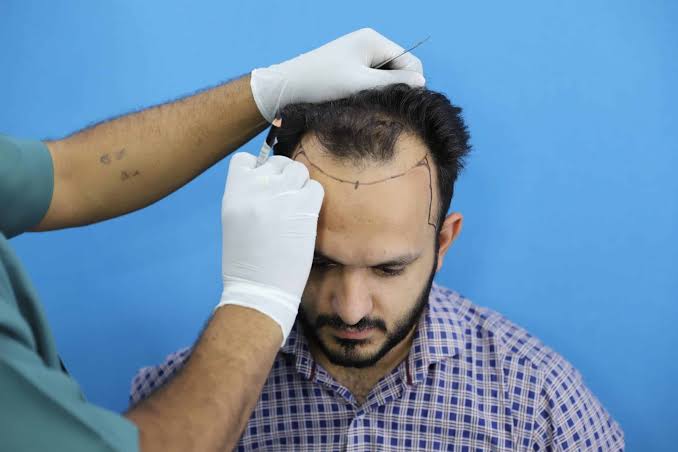
The hairline is one of the most noticeable aspects of a hair transplant. Its position, shape, angle, and transition into surrounding hair can strongly influence whether the overall appearance looks natural.
A well-planned hairline generally considers age, facial proportions, existing hair patterns, and potential future changes in hair density. Rather than creating an unnaturally straight or low hairline, treatment planning usually aims for a design that complements the individual’s features.
What Happens During FUE?
During FUE, individual follicular units are carefully extracted from the selected donor area. These units are then prepared for placement into recipient areas.
Small openings or recipient sites are created according to the planned direction, angle, and distribution of the hair. The follicles are then inserted into these sites. Their positioning is important because natural hair growth follows specific patterns rather than emerging uniformly from the scalp.
Understanding Graft Selection
A graft may contain one or more individual hair follicles. Different graft types can serve different purposes during transplantation.
Single-hair grafts may be useful around the front portion of the hairline because they can contribute to a softer transition. Grafts containing multiple hairs can provide greater density behind the hairline where fuller coverage is desired.
The strategic distribution of grafts helps create a more natural relationship between the hairline and the rest of the scalp.
Preparing for the Procedure
Preparation begins with following the specific instructions provided during the consultation. The scalp may be examined and photographed to document the existing hair pattern and help with treatment planning.
It is also important to provide accurate information about existing health conditions, medications, previous hair treatments, and changes in hair loss. These details can help the healthcare professional determine whether additional evaluation or preparation is appropriate.
Setting Realistic Expectations
One of the most important things to understand before FUE is that hair transplantation does not recreate the original number of follicles a person had before hair loss. Instead, it redistributes available donor follicles to improve coverage in selected areas.
The visual outcome can vary according to donor density, hair characteristics, the extent of hair loss, graft placement, and individual healing. Having realistic expectations is therefore an essential part of the treatment process.
Understanding the Growth Timeline
Transplanted hair does not generally produce its final appearance immediately. The follicles need time to settle and progress through their natural growth cycle.
The early period may involve changes in the appearance of the transplanted area, followed by gradual new growth. Hair becomes increasingly visible as the growth cycle progresses, and the final appearance develops over an extended period rather than within a few days.
The Importance of Hair Characteristics
Hair thickness, texture, curl pattern, and color can influence the visual effect of a transplant. For example, thicker hair may provide greater coverage per follicle, while naturally curly or wavy hair can create a different visual density compared with straight hair.
These characteristics should be considered when planning follicle placement because the goal is to work with the individual’s existing hair rather than apply a single design to every person.
Existing Hair and Future Hair Loss
A transplant restores hair to selected areas, but it does not necessarily prevent additional hair loss from occurring in untreated areas. This is an important consideration when planning long-term hair restoration.
The current hairline and density should therefore be evaluated alongside the possibility of future changes. A conservative and balanced design may help maintain a natural appearance as the surrounding hair pattern develops over time.
Scalp Condition and Hair Health
The condition of the scalp can also be relevant before transplantation. Healthy scalp tissue provides an important environment for hair follicles and can influence the overall treatment plan.
Any concerns involving the scalp should be discussed during the assessment. Understanding the condition of the skin and existing hair follicles allows the treatment approach to be considered more carefully.
Understanding the Recovery Period
Recovery after FUE varies between individuals. The scalp may require a period of healing after follicles have been extracted and transplanted.
Following aftercare instructions is an important part of protecting the newly transplanted follicles during the early healing period. Activities, scalp care, washing instructions, and other recommendations may be adjusted according to individual circumstances.
Choosing an Appropriate Treatment Plan
FUE is not simply about extracting and placing as many follicles as possible. Effective treatment planning involves evaluating the donor supply, recipient areas, hairline design, existing hair, facial proportions, and long-term goals.
A personalized plan can help ensure that the available donor follicles are used strategically. This is particularly important for people with extensive hair loss because donor resources may be more limited relative to the area requiring coverage.
Questions to Discuss Before FUE
Before deciding on treatment, individuals may want to discuss the expected number of grafts, donor-area characteristics, proposed hairline design, anticipated growth timeline, recovery instructions, and long-term hair restoration considerations.
Understanding these aspects beforehand can make the process clearer and help align expectations with what the procedure can realistically accomplish.
Who May Be a Candidate for FUE?
FUE may be considered by individuals experiencing certain patterns of hair loss who have sufficient donor follicles for transplantation. However, candidacy cannot be determined by hair loss alone.
The quality and density of the donor area, the stability of hair loss, scalp characteristics, general health, and desired outcome all play a role. A professional assessment is necessary to determine whether FUE is appropriate for an individual situation.
Conclusion
Before considering a FUE hair transplant, it is important to understand how follicular units are extracted and transplanted, how donor availability affects coverage, and why hairline planning matters. Realistic expectations are equally important because transplanted hair develops gradually and available donor follicles are limited. A thorough assessment can help determine candidacy and create a treatment plan based on hair characteristics, existing density, scalp condition, and long-term restoration goals. Understanding these factors beforehand can make the decision-making process more informed and help establish realistic expectations for the eventual appearance.
FAQs
What does FUE mean in hair transplantation?
FUE stands for Follicular Unit Extraction. It is a hair restoration technique in which individual follicular units are extracted from a donor area and transplanted into areas with reduced hair density.
What should be assessed before an FUE hair transplant?
The donor area, pattern of hair loss, scalp condition, existing hair density, hair characteristics, and desired restoration goals are important factors to assess before treatment.
How important is the donor area in FUE?
The donor area is essential because it provides the follicles used for transplantation. Its density and available follicular supply can influence the amount of coverage that can be achieved.
How is the hairline planned for an FUE transplant?
Hairline planning can consider facial proportions, age, existing hair patterns, hair density, and potential future changes to create a balanced and natural-looking transition.
Does an FUE transplant provide immediate hair growth?
No. Transplanted follicles require time to progress through their natural growth cycle. The visible result develops gradually over an extended period.
Can FUE restore all previously lost hair?
The amount of restoration depends on the available donor follicles and the size of the area requiring coverage. Treatment generally focuses on strategically redistributing available follicles.
Why are realistic expectations important before FUE?
Expectations should reflect the available donor supply, existing hair characteristics, extent of hair loss, and natural growth timeline. These factors vary from person to person.
Can future hair loss affect the appearance of an FUE transplant?
Future changes in untreated areas can influence the overall appearance. Long-term planning is therefore an important part of designing a balanced hair restoration approach.