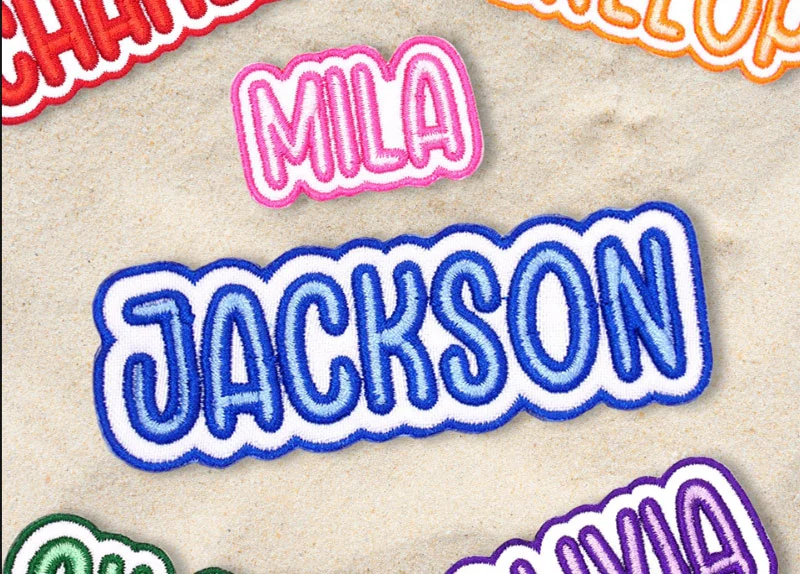
Getting custom patches used to mean committing to a bulk order before you even knew if the design worked. That’s changed. Today, small brands, sports teams, clubs, and individual creators can order exactly the quantity they need — even a single patch — without paying a wholesale-sized invoice upfront. This guide breaks down what “cheap” really means in this context, why prices shift between patch types, and how to get the best value without sacrificing quality.
What “Cheap” Actually Means Here
Affordable doesn’t have to mean flimsy. A well-made patch at a low price point comes from smart production choices — simplified artwork, standard sizing, efficient materials — not from cutting corners on stitching or backing. The patches to avoid are the ones with loose threads, weak adhesive, or backing that peels after a few washes. Price and quality aren’t automatically linked; the goal is finding a supplier that keeps both in balance.
“No minimum” simply means you’re not locked into ordering hundreds of units just to unlock decent pricing. You can order one patch for a sample, five for a small event, or fifty for a local team — and pay a fair, if slightly higher, per-unit rate for that flexibility.
Why Prices Vary So Much Between Patch Types
Not all patches cost the same to make, and that shows up in the price tag:
- Embroidered patches involve thread, stitching machines, and run time — more stitches and colors mean higher cost.
- Woven patches use finer thread and capture small details with a flatter, lower-stitch-count finish, often making them cheaper for intricate logos.
- Printed, PVC, and sublimated patches are priced more by size than by color complexity, so photo-realistic or gradient designs often cost less here than they would in embroidery.
Size, backing choice (sew-on, iron-on, Velcro, adhesive), and design complexity all layer on top of the base production method to determine your final price.
Wholesale vs. No-Minimum: Which Fits Your Order?
This is where a lot of buyers get confused, so it’s worth separating clearly:
Wholesale orders are built for volume. Setup and digitization costs get spread across hundreds or thousands of units, so the price per patch drops significantly. This is the right call for organizations, resellers, or brands that need consistent, large-scale runs.
No-minimum orders let you buy any quantity — including just one. The per-patch price is higher because setup costs are spread over fewer units, but you avoid overstock, upfront risk, and large capital outlay. This suits individuals, startups testing a design, or anyone running a limited or one-off batch.
If you’re specifically comparing cheap custom patches no minimum wholesale options, look for a supplier that offers wholesale-level pricing tiers alongside true no-minimum flexibility — so your cost per unit drops naturally as your order grows, without forcing you into a bulk commitment from the start.
Why No-Minimum Orders Cost More Per Unit
It helps to understand what you’re actually paying for:
- Setup and digitization — converting your artwork into a production-ready file happens whether you order 1 patch or 1,000.
- Machine run time — calibration, thread changes, and quality checks take the same time regardless of batch size.
- Manual finishing — trimming, heat-sealing, and backing application are done per patch, so labor cost doesn’t shrink with smaller runs.
None of this means small orders are being overcharged — it just means fixed costs are divided among fewer units.
How to Keep Your Order Affordable
A few practical choices go a long way toward lowering your per-patch cost:
- Simplify the artwork. Fewer colors and cleaner lines reduce digitization time and stitching complexity.
- Stick to standard sizes. Custom dimensions often trigger extra setup fees.
- Choose common backing types. Sew-on and basic iron-on are typically cheaper than Velcro or magnetic backing.
- Limit stitch density. For embroidery specifically, a moderate stitch count keeps both cost and production time down.
Common Mistakes to Avoid
- Picking the cheapest option without checking if the backing actually suits your use case (a jacket patch needs different backing than a hat patch).
- Overcrowding small patches with too much detail, which blurs in embroidery and looks messy overall.
- Assuming every “cheap” patch is built the same way — material and finishing quality still varies between suppliers.
Quality Checks Worth Doing
Even at a low price point, a solid patch should have:
- Even, tight, consistent stitching with no loose threads
- Clean edge finishing (merrowed or heat-sealed) to prevent fraying
- Strong adhesive for iron-on or sticker-backed patches
- Durability that holds up through multiple washes
Online Manufacturer vs. Local Shop
Online producers generally offer lower prices thanks to efficient, high-volume production and accessible design tools — useful if you don’t have a specialty shop nearby. Local shops may charge more for small runs due to overhead, but offer in-person consultation and same-day pickup. Which one wins depends on whether you value cost and convenience, or hands-on service.
Marketplace Platforms vs. Dedicated Manufacturers
Template-based marketplaces are easy to use and require no design experience, but they typically limit customization — fewer backing options, fewer material choices, and higher per-unit costs on small orders. A dedicated patches maker usually offers more material flexibility, tighter quality control, and better pricing as your order size increases, making it the stronger choice once you need consistent branding, uniforms, or larger batches down the line.
Final Thoughts
Cheap custom patches with no minimum order give you room to test designs, order small runs, and scale up only when you’re ready — without the pressure of a large upfront commitment. Focus on artwork simplicity, standard sizing, and a supplier that’s transparent about what drives cost, and you’ll get patches that look professional without stretching your budget.