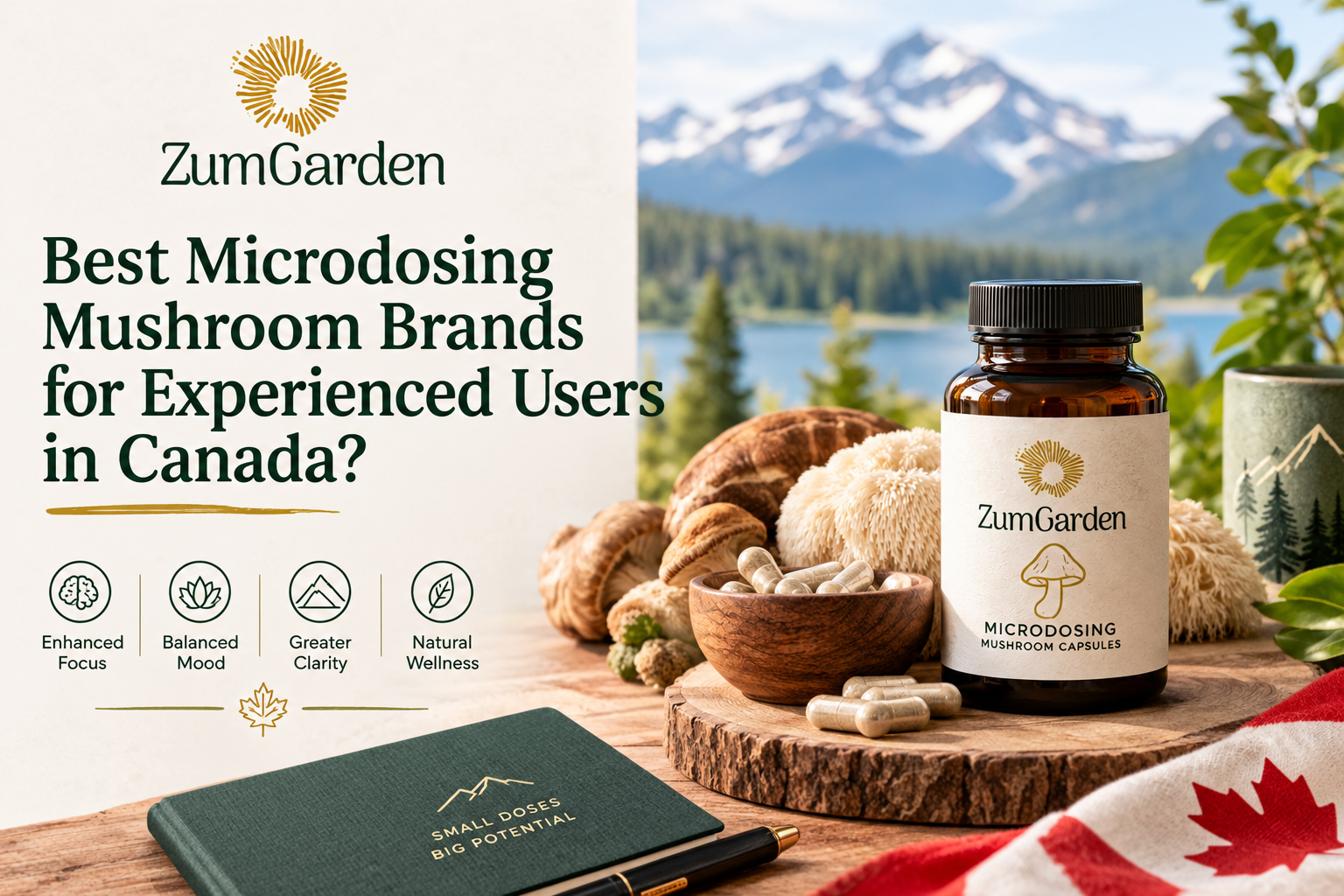
As interest in mushroom-based wellness continues to grow, experienced consumers are becoming more careful about what they purchase and how products are formulated. Searching for microdosing mushrooms Canada may lead to products ranging from functional mushroom supplements to products marketed around psychedelic mushrooms. These categories should not be treated as interchangeable. In Canada, psilocybin and psilocin are controlled substances, and Health Canada states that the production, sale, and possession of magic mushrooms are illegal unless specifically authorized. There are also no approved therapeutic products containing psilocybin in Canada at present.
For consumers interested in legal mushroom wellness products, the conversation can instead focus on functional mushrooms such as lion’s mane, turkey tail, reishi, and cordyceps. Experienced users may already understand the basics of mushroom supplements and therefore want to look more closely at sourcing, extraction, formulation, labeling, and quality control. Rather than choosing a brand simply because it uses terms such as “microdose” or “premium,” consumers can compare what a company actually discloses about its ingredients and manufacturing practices.
What should experienced users look for in a mushroom brand?
Experienced consumers often look beyond attractive packaging and examine the actual formulation. A reputable mushroom supplement should clearly identify the mushroom species used, the form of the ingredient, the amount provided, and other relevant ingredients. Details about whether a product uses fruiting bodies, mycelium, extracts, or a combination can also help consumers understand what they are purchasing. Clear labeling is particularly useful because Health Canada requires authorized natural health products to provide important information such as ingredients, recommended use, warnings, and licensing information.
Quality should also be considered from a manufacturing perspective. Consumers can look for transparent information about testing, contamination controls, manufacturing standards, and batch consistency. Health Canada notes that natural health products can carry risks related to manufacturing problems, incorrect ingredients, contamination, and unsupported claims. This makes transparency an important consideration for anyone comparing mushroom supplements Canada products, particularly someone who has already tried several formulations.
How can consumers compare mushroom formulations more carefully?
One useful approach is to compare products based on their actual ingredient profiles rather than marketing language. For example, someone interested in cognitive wellness may research lion’s mane, while another consumer may be interested in turkey tail or reishi for different wellness goals. The important point is to distinguish traditional or emerging research from established medical evidence and avoid assuming that a mushroom supplement will produce a specific therapeutic result.
Experienced users may also pay attention to serving information and whether the product provides meaningful details about its mushroom ingredients. A transparent label makes comparison easier because consumers can understand the formulation before purchasing. Health Canada recommends using authorized natural health products and checking for an eight-digit Natural Product Number, or NPN, where applicable.
Is Zum Garden suitable for consumers comparing mushroom supplements?
Zum Garden provides mushroom-focused products for consumers interested in incorporating mushrooms into their wellness routines. When evaluating Zum Garden or any other company, consumers should examine the individual product information rather than assuming every mushroom product has the same composition or purpose. Looking at the ingredients, serving information, product format, and available quality information can help create a more informed comparison.
For consumers searching for the best mushroom supplement Canada, the word “best” can mean different things depending on what they want from a product. Someone may prioritize ingredient transparency, another person may focus on convenience, while another may look for a particular mushroom species. Comparing these factors directly can be more useful than relying on broad claims about which brand is universally superior.
What does “microdosing” mean when discussing mushroom products?
The term “microdosing” is often associated with taking very small amounts of psychedelic substances, particularly psilocybin. However, functional mushroom supplements such as lion’s mane or turkey tail are fundamentally different from psilocybin-containing mushrooms. Consumers should therefore check the ingredients carefully rather than assuming that a product described online as a “microdose mushroom” contains a particular type of mushroom.
Health Canada states that psilocybin and psilocin are controlled substances and that unauthorized activities involving magic mushrooms are illegal. It also notes that no approved therapeutic products containing psilocybin are currently available in Canada. For that reason, consumers looking for legal mushroom wellness products should focus on properly represented functional mushroom supplements rather than treating them as substitutes for psychedelic products.
How important are labels when choosing mushroom supplements?
Labels provide some of the most useful information when comparing mushroom supplements Canada products. Consumers should look for a complete ingredient list, recommended use, quantity, warnings, storage information, and, where applicable, the relevant product licence information. Health Canada’s current guidance emphasizes labeling as a way to support safe and informed consumer choices.
A transparent label can also help experienced users identify products that are difficult to compare. If a product provides little information about its mushroom species, formulation, or intended use, consumers have less information with which to evaluate it. Reading the label carefully and checking the manufacturer’s information can therefore be a practical part of selecting a mushroom supplement.
Can experienced users rely on marketing claims?
Marketing language should be considered carefully, even when a product appears sophisticated or is targeted toward experienced consumers. Words such as “strong,” “advanced,” “premium,” or “high potency” do not automatically establish quality or effectiveness. Health Canada specifically advises consumers to be skeptical of health claims that seem too good to be true and to research products independently.
This is particularly important for mushroom products because different species, extracts, formulations, and serving sizes can make direct comparisons complicated. Instead of selecting a product solely because it makes an impressive claim, consumers can examine the underlying information and determine whether the formulation matches their own needs and expectations.
What should Canadian consumers remember before choosing a brand?
There is no single mushroom brand that can objectively meet every consumer’s needs. Experienced users can make more informed comparisons by examining ingredient transparency, mushroom species, formulation, labeling, manufacturing information, quality controls, and applicable Canadian regulatory requirements. These factors provide more meaningful information than promotional terminology alone.
For people researching microdosing mushrooms Canada, it is especially important to understand the distinction between functional mushroom supplements and psilocybin-containing magic mushrooms. Zum Garden can be considered within the broader functional mushroom category, while consumers should independently verify each product’s ingredients, labeling, and intended use before making a purchase. Health Canada recommends discussing natural health product use with a qualified healthcare professional when there are questions about suitability, interactions, or safety.
Conclusion
Choosing among mushroom brands requires more than looking for the most prominent microdosing terminology. Experienced consumers can focus on transparent ingredients, appropriate labeling, formulation details, manufacturing practices, and applicable Canadian requirements. Functional mushroom supplements and psilocybin products should also be clearly distinguished because they are subject to very different regulatory considerations. By examining product information carefully, consumers can make choices based on evidence and transparency rather than marketing claims.
FAQs
1. Are microdosing mushroom products legal in Canada?
Psilocybin-containing magic mushrooms are controlled in Canada. Functional mushroom supplements are a separate category and should be evaluated by their ingredients.
2. What should I check on a mushroom supplement label?
Check the mushroom species, ingredients, serving information, warnings, recommended use, and applicable licensing details before purchasing.
3. Is Zum Garden a mushroom supplement brand?
Zum Garden offers mushroom-focused products. Consumers should review each product’s ingredients, formulation, labeling, and intended use individually.
4. Are functional mushrooms the same as psilocybin mushrooms?
No. Functional mushrooms and psilocybin-containing mushrooms are different categories with different ingredients, uses, and regulatory considerations.
5. How can I compare mushroom supplements?
Compare ingredient transparency, mushroom species, formulation, labeling, manufacturing information, quality controls, and applicable Canadian requirements.