A non-profit budget carries the weight of public expectation at every line item. Grants, individual gifts, and municipal contracts all demand documented stewardship. Your website falls under the same standard of care. It must build confidence and drive contributions.
Yet development costs compete directly with the programs your supporters care about. The tension is real and recurring across fiscal years. The sections that follow map out a practical route through each of these challenges.
Designing Pages That Answer Donor Questions
Most people arrive at a non-profit website in a supportive but uncertain state of mind. They want to help, but they need information before they commit. Your design must supply that information without delay.
Three questions drive the decision to give. What problem does this organization address? Who benefits from its work? How do I contribute today? When those answers sit near the top of the page, visitors engage willingly.
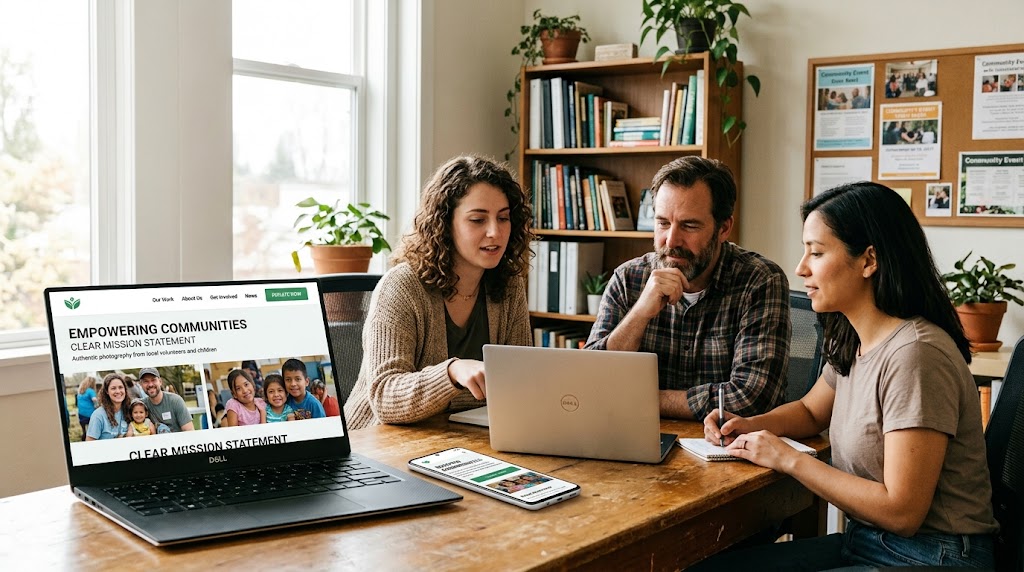
A homepage cluttered with decorations and unnecessary widgets complicates the donor’s first impression. Affordable website design favors restraint and clarity in visual layout, choosing simple forms over elaborate decoration. Real photographs from your programs replace generic stock imagery that dilutes credibility. A streamlined layout gives visitors more room to focus on the cause itself.
Menu design deserves the same restraint. Five or six top-level links provide enough direction for any visitor. Additional items fragment attention and push the donate action out of sight. When every element earns its place, visitors respond with trust and attention.
Who Builds Your Site and How to Choose
Once your content and structure are defined, execution shifts to a single important decision. That decision concerns who will bring the design to life. Internal talent, freelancers, and agencies each bring different tradeoffs.
Some teams try to stretch the project budget by hiring a cheap web designer. The reasoning is straightforward — keep the investment low and launch sooner. But weak code, missing documentation, and fragile integrations often surface weeks after go-live. Fixing those problems typically exceeds the original development fee.
Affordable website design takes a fundamentally different approach to cost control. It relies on established themes and visual builders rather than ground-up coding. This saves development hours and produces a site that is easier for your team to maintain. Efficiency, not corner-cutting, is what actually reduces the price.
Begin your search among freelancers who have completed non-profit projects before. Agencies committed to community work sometimes reserve discounted capacity for charitable clients. Ask other non-profit leaders for recommendations based on their own experiences.
State your budget ceiling clearly in the very first meeting. A designer needs that number to propose deliverables within reach. Secure a written contract covering page count, features, and revision terms before construction starts. Scope clarity protects both parties and prevents budget surprises.
The Website Features Donors Notice
Certain elements of a non-profit website carry disproportionate influence on giving behavior. Their presence or absence determines whether visitors follow through with a contribution. Treat each one as a requirement.
Donation Options That Encourage Follow-Through
The donation button is the most conversion-critical element on the page. Place it on every page with a color that contrasts with surrounding elements. The giving flow should require under two minutes and no account registration. Ask for a payment method and a name — nothing more.
Use trusted payment services like Stripe or PayPal to handle transactions. Donors already trust these processors, and integration is routine work for a cheap web designer. Their fee structures are transparent and widely understood. Every unnecessary step you remove directly increases completed contributions.
Stories That Make Impact Tangible
Donors want to see evidence that their support produces real change. Real numbers carry more weight than mission statements alone. If your shelter housed 200 individuals last winter, share that figure. Affordable website design makes room for these elements without expanding the project scope.
Pair hard data with brief quotes from people your organization has served. A parent describing how your tutoring program changed a child’s grades lands harder than any statistic. These human details transform abstract giving into emotional connection. Both data and narrative belong on your homepage.
Financial Openness
Charitable supporters appreciate knowing how their money moves through an organization. A simple chart or brief text summary of fund allocation satisfies this curiosity. If 85 cents of every dollar reaches programming, let that number appear clearly on the page. Honest disclosure converts occasional givers into committed long-term supporters.
Designing for All Abilities
A non-profit website should welcome every visitor regardless of how they access the web. People relying on screen readers need descriptive alt text on every image. Users with limited color vision need text and background colors with sufficient contrast. For an organization built around service and inclusion, this is non-negotiable.
Your Technology Foundation and What It Costs Over Time
The platform behind your website determines ongoing costs and technical demands. WordPress provides unmatched flexibility and an enormous plugin library. But hosting fees, premium extensions, and security updates demand recurring investment. Without a technical volunteer on staff, those tasks become a persistent drain.
Simpler platforms often prove more practical for teams without dedicated technical staff. Affordable website design benefits from technology stacks that keep recurring costs low and predictable. Squarespace and Wix bundle hosting, security, and customer support into a single monthly fee. Fewer technical dependencies translate into more predictable expenses.
Major technology vendors also support non-profits through formal discount programs. Google Workspace for Nonprofits provides email and productivity tools at zero cost to qualifying organizations. TechSoup extends significant price reductions on software ranging from antivirus packages to design suites. These programs are straightforward to access and compound in value over time.
Filling Your Site with Fresh Material
Once the website is live, content keeps it visible and relevant to supporters. Regular updates signal organizational vitality and improve search rankings. But producing articles and multimedia on a heavy schedule overwhelms most small teams.
One thoughtful post per month strikes a sustainable balance. Cover a recent program, an upcoming event, or an organizational milestone. Fresh material keeps returning visitors engaged and informed. Search engines reward steady, meaningful publishing regardless of output volume.
You do not need a production crew to create effective video. A volunteer with a smartphone can capture honest moments from daily operations. A cheap website designer can integrate those recordings directly into your template without difficulty. Raw footage of genuine activities consistently connects better than scripted marketing pieces.
Collect visitor emails as part of every content effort. People browsing today may be ready to support your cause months from now. A newsletter form paired with a downloadable resource gives them a reason to stay. Consistent communication eventually converts interest into lasting commitment.
Keeping Everything in Working Order
A finished website requires ongoing attention to remain accurate and secure. Dead links frustrate visitors and signal organizational neglect. Unpatched software creates openings for security breaches.
Place one person in charge of a monthly site review. Have them load each primary page and verify everything functions correctly. Update the footer copyright year and rotate in current photographs from recent events. Archive past events so the homepage always reflects present work.
Talk to your developer about continued support before the project wraps up. Many professionals offer routine maintenance covering updates and scheduled backups. Consistent oversight from the original builder preserves technical quality over time. Preventive care always costs less than emergency recovery.
Turning Traffic Data into Better Decisions
Evidence-based refinement beats guesswork every time. Google Analytics provides a detailed picture of visitor behavior at no cost. It shows where traffic origins, which pages attract attention, and where people leave.
Your donation conversion rate deserves the closest monitoring. A thousand monthly visitors producing five gifts indicates friction somewhere in the giving journey. The checkout process may ask for more information than donors want to share. Or the homepage may fail to communicate urgency clearly.
Introduce individual changes one at a time and measure the outcome. Move a call-to-action higher on the page or rewrite a confusing headline. A cheap web designer with analytics experience can help configure tracking properly. Small, deliberate experiments build momentum across weeks and months.
Building a Site That Honors Every Contribution
A non-profit website funded by donor dollars must balance ambition with accountability. Spend only on elements that serve the mission or strengthen the giving experience. Clear messaging, accessible design, and steady maintenance deliver results that outlast any visual trend.
Your supporters give generously when they feel respected and informed. A site that demonstrates real impact and makes giving effortless earns that respect. Over time, trust accumulates through repeated acts of transparency and care. That trust, earned through visible stewardship, is what keeps a non-profit standing.