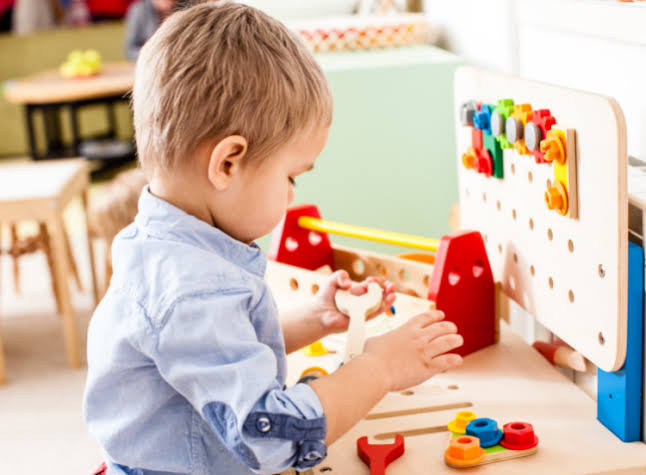
Educational toys can play a useful role in early childhood development by turning everyday play into an opportunity to practice important skills. Puzzles, building blocks, counting games, shape sorters, art materials, and other learning-focused toys can support areas such as problem-solving, language, coordination, memory, and creativity. However, the value of educational toys depends on how suitable a toy is for a child’s age, interests, and development stage. A toy alone does not guarantee faster learning. Meaningful play, adult interaction, repetition, and freedom to explore also have an important role. Understanding these factors helps families make better decisions when selecting toys for early learning.
How Educational Toys Support Early Learning
Educational toys are designed to encourage specific skills through play. A simple puzzle can develop visual recognition and logical thinking, while stacking blocks can support hand-eye coordination and spatial awareness. Matching cards can strengthen memory, and counting toys can introduce basic mathematical concepts.
The main advantage comes from active participation. A child needs to touch, move, arrange, compare, or solve something rather than simply watch a screen or listen to instructions. Active play creates opportunities to practice skills repeatedly in a relaxed environment.
Problem-Solving and Critical Thinking
Many educational toys encourage children to figure out how different pieces work together. Building sets, puzzles, mazes, and sorting games can introduce basic problem-solving concepts.
A child may need to determine which piece fits a particular space, how to balance a structure, or how to complete a sequence. Such activities encourage logical thinking and patience. Mistakes also become part of the learning process because repeated attempts can help develop persistence.
Language and Communication Skills
Toys involving stories, letters, pictures, role-play, or conversation can support early language development. Picture cards can introduce new vocabulary, while pretend-play sets can encourage storytelling and simple conversations.
For example, a toy kitchen can create opportunities to name food items, describe actions, and create imaginary situations. Books and storytelling toys can also help develop listening skills, sentence formation, and understanding of basic concepts.
Adult participation can make these activities more meaningful. Asking simple questions about colors, shapes, characters, or actions can encourage children to express ideas and use new words.
Fine Motor and Hand-Eye Coordination
Early childhood involves significant development of physical coordination. Educational toys that require grasping, placing, connecting, drawing, or threading can help strengthen fine motor skills.
Building blocks, peg boards, threading beads, magnetic tiles, and age-appropriate craft materials require controlled hand movements. These activities can prepare children for everyday tasks such as holding pencils, using utensils, fastening clothing, and handling small objects safely.
Early Mathematics Skills
Math learning does not need to begin with worksheets. Educational toys can introduce numbers and basic mathematical ideas through enjoyable activities.
Counting objects, arranging items by size, matching quantities, identifying shapes, and creating simple patterns can provide an early foundation for mathematics. Number puzzles and sorting games can also help children understand relationships between objects.
Practical play often makes abstract concepts easier to understand because numbers, shapes, and patterns become connected with physical objects.
Creativity and Imagination
Not every educational toy needs a single correct answer. Open-ended toys such as blocks, drawing supplies, clay, magnetic construction pieces, and pretend-play accessories can encourage creativity.
Open-ended play allows different outcomes from the same materials. A set of blocks might become a house, bridge, tower, or imaginary vehicle. Such freedom supports creative thinking and gives children opportunities to make independent decisions.
Social and Emotional Development
Some learning toys can also support social and emotional skills. Board games, cooperative activities, role-play toys, and group construction projects can introduce concepts such as sharing, turn-taking, patience, and following simple rules.
Pretend play can provide a safe setting for exploring emotions and everyday situations. A child may use dolls or role-play figures to recreate experiences involving family, school, friendship, or problem-solving. Such play can help develop emotional expression and social understanding.
Does Every Educational Toy Improve Skills?
Not necessarily. The label “educational” does not automatically mean that a toy provides meaningful developmental benefits. Some products may contain excessive features that distract from the main learning activity.
A useful educational toy should encourage active thinking, movement, communication, creativity, or practice. Age suitability also matters. A toy that is too simple may provide little challenge, while a toy that is too advanced may create frustration.
Quality play is often more important than the number of toys available. A small collection of versatile toys can provide many learning opportunities when used creatively.
How to Select Educational Toys for Different Ages
Age recommendations provide a helpful starting point, but developmental ability should also be considered. For younger children, simple stacking, sorting, sensory, and shape-based activities can introduce basic concepts. As skills develop, puzzles, construction sets, counting games, drawing materials, and beginner board games can provide greater challenges.
Consider these practical factors:
- Age suitability: Select toys that match the child’s current developmental stage.
- Skill development: Look for activities involving language, movement, memory, problem-solving, or creativity.
- Safety: Check for appropriate materials, secure parts, and age-related safety warnings.
- Durability: Strong, reusable toys can support repeated play.
- Open-ended use: Toys with multiple possible activities can encourage imagination.
- Child interest: A toy connected to existing interests is more likely to encourage active participation.
The Importance of Play Beyond Toys
Educational toys are only one part of early learning. Conversation, reading, outdoor activities, drawing, music, household tasks, and imaginative games can also support development.
A child sorting laundry by color, helping arrange objects, listening to a story, or counting fruit can practice useful skills without a traditional educational toy. Real-world experiences often provide valuable opportunities for language, mathematics, motor development, and social learning.
Balanced play also matters. Too much structured activity can reduce opportunities for independent exploration. A combination of guided activities and free play allows children to experiment, make decisions, and develop confidence.
Practical Ways to Get More Learning From Toys
A few simple habits can increase the learning value of play. Rotate toys instead of presenting every toy at the same time. Fewer available choices can sometimes encourage deeper engagement.
Ask open-ended questions during play, such as “What could happen next?” or “How can this tower become taller?” Allow enough time for independent attempts before providing help. Avoid immediately correcting every mistake because experimentation can be an important part of learning.
It can also help to connect toys with everyday experiences. A counting game can be followed by counting household objects, while a building activity can lead to a discussion about houses, bridges, or shapes.
Educational Toys and Balanced Early Development
Educational toys can support early skills when activities are age-appropriate, engaging, and used as part of broader play experiences. Benefits may include improved coordination, early mathematics awareness, language practice, problem-solving, creativity, memory, and social development.
The strongest approach is not simply collecting more learning toys. Meaningful interaction, repetition, imagination, physical activity, reading, and real-world experiences all contribute to healthy early development. Educational toys work best as tools that encourage exploration rather than replacements for human interaction or natural play.
Why Bachaa Party Can Support Meaningful Learning Through Play
Bachaa Party provides access to a broad range of children’s products designed around different stages of childhood, interests, and play activities. Educational toys can become part of a balanced play environment where children practice thinking, coordination, creativity, and early academic concepts while having fun. A varied selection also makes it easier to introduce age-appropriate activities as skills develop. From learning-focused games to creative and imaginative play options, Bachaa Party can help families explore toys that combine entertainment with useful developmental opportunities. Thoughtful toy selection, active participation, and regular opportunities for independent play can make everyday playtime more meaningful.