
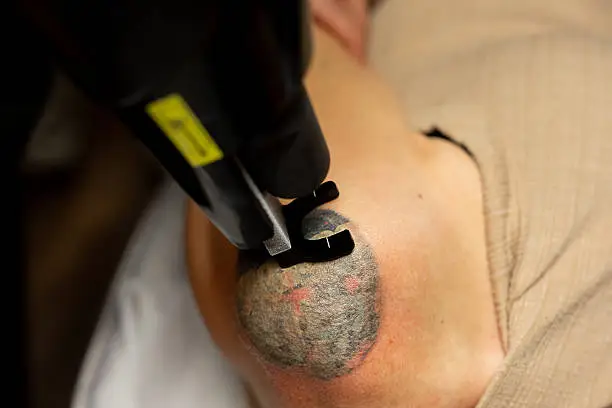
Dark tattoo ink can create a lasting visual statement, but personal preferences can change over time. A design that once felt meaningful may no longer match an individual’s current style, career goals, or personal circumstances. Laser Tattoo Removal Abu Dhabi is an aesthetic treatment approach designed to target tattoo pigment and gradually reduce its visible appearance.
Dark inks, particularly black pigment, can interact effectively with certain laser wavelengths because darker pigments tend to absorb laser energy. The treatment focuses on breaking tattoo pigment into smaller particles so the body’s natural processes can gradually clear them. The overall process is progressive rather than an instant removal of the design.
Understanding how laser technology interacts with dark ink can help explain why laser tattoo removal is commonly considered for unwanted black or dark-colored tattoos.
Understanding Dark Tattoo Ink
Tattoo ink is placed beneath the surface of the skin, where pigment particles remain within the dermal layer. Dark ink is commonly used for outlines, lettering, shading, symbols, and complete tattoo designs.
Because the pigment is located beneath the skin’s surface, ordinary cleansing cannot remove it. Laser tattoo removal approaches the pigment differently by delivering targeted light energy to the tattooed area.
The laser energy is absorbed by the darker pigment. This interaction helps break larger pigment particles into smaller fragments. The body’s natural processes can then gradually clear these fragmented particles.
How Laser Tattoo Removal Abu Dhabi Targets Dark Ink
Laser Tattoo Removal Abu Dhabi uses specialized laser energy to focus on tattoo pigment while treating the targeted area. Dark ink can absorb laser energy efficiently, allowing the pigment to be specifically addressed.
During treatment, the laser delivers controlled pulses of energy toward the tattoo. The energy interacts with the pigment particles and breaks them into smaller fragments.
Over time, the body processes these smaller particles. Because this process occurs gradually, tattoo fading generally requires a series of treatment sessions rather than one immediate procedure.
Why Black Ink Can Respond to Laser Treatment
Black tattoo pigment absorbs a broad range of laser light compared with many lighter colors. This characteristic makes dark ink particularly relevant to laser-based tattoo removal.
When laser energy reaches black pigment, the pigment absorbs the energy and undergoes fragmentation. The resulting particles are smaller than the original ink particles and can gradually be processed by the body.
The response can vary depending on the tattoo itself. Factors such as pigment density, tattoo depth, design size, ink composition, and the age of the tattoo can all influence how the ink responds.
Breaking Dark Pigment Into Smaller Particles
One of the central principles of laser tattoo removal is pigment fragmentation. The objective is not to physically scrape or remove the tattoo from the surface of the skin.
Instead, laser energy is directed toward the pigment beneath the skin. The energy causes pigment particles to break into smaller fragments.
The body’s natural clearance mechanisms then work over time to process these fragments. Repeated treatments can target remaining pigment, allowing gradual fading of the tattoo.
This explains why the appearance of dark ink can change progressively rather than disappearing immediately after a single session.
What Determines the Fading Process?
Several factors influence how quickly dark tattoo ink becomes less visible. The density of pigment is one important consideration. A heavily saturated tattoo contains more ink particles than a lightly shaded design.
The depth of the pigment can also affect treatment response. Tattoo artists may place ink at different depths depending on technique and design requirements.
The age of the tattoo can also influence its appearance. Older tattoos may already have undergone some natural fading, while newer tattoos may contain more concentrated pigment.
Tattoo size, location, composition, and individual skin characteristics can further influence the overall treatment process.
Can Laser Tattoo Removal Address Different Dark Designs?
Laser Tattoo Removal Abu Dhabi may be used for a variety of dark tattoo designs. These can include lettering, geometric patterns, symbols, outlines, shading, and larger artistic compositions.
The way the pigment is distributed within the design can influence how treatment progresses. Areas with heavier ink concentration may require continued attention compared with lightly shaded sections.
A treatment plan can be developed around the tattoo’s characteristics and the desired degree of fading.
The Importance of Multiple Treatment Sessions
Tattoo pigment is located beneath the skin, and the body needs time to process fragmented particles after laser exposure. For this reason, tattoo removal is generally approached as a gradual process.
Each session can target pigment that remains visible from previous treatments. As the tattoo becomes lighter, subsequent sessions may focus on the remaining areas of pigment.
The number of sessions required varies significantly between individuals. There is no universal treatment schedule because tattoos differ in size, density, age, ink composition, and placement.
How Tattoo Age Can Affect Dark Ink
The age of a tattoo can influence its current appearance and the amount of pigment that remains. Over time, tattoos may naturally become less defined or lighter.
An older tattoo may therefore have a different starting point compared with a recently created design. However, age alone does not determine how much fading can occur.
The composition and concentration of the ink remain important factors. A detailed assessment of the tattoo can help determine how the treatment approach may be structured.
What About Dark Multicolor Tattoos?
Some tattoos combine black or dark outlines with other colors. Laser treatment can involve different approaches depending on the pigments present.
Dark sections may respond differently from lighter colors because different pigments absorb different wavelengths of laser energy. For this reason, a multicolored tattoo may require a treatment strategy that considers each pigment separately.
The presence of dark ink can still make laser tattoo removal relevant, particularly when black or deep-colored areas form a significant part of the design.
Supporting Gradual Tattoo Fading
The primary purpose of Laser Tattoo Removal Abu Dhabi is to reduce the visibility of unwanted tattoo pigment. The process focuses on progressive fading rather than an immediate change.
As pigment particles are fragmented and naturally processed, the tattoo can gradually become lighter. Some areas may fade more quickly than others depending on pigment concentration and depth.
The final appearance can therefore depend on the original tattoo and how the individual responds to the treatment process.
Understanding Realistic Expectations
Laser tattoo removal should be viewed as a process rather than an instant solution. Dark ink can be responsive to laser energy, but complete removal is not guaranteed for every tattoo.
The outcome depends on factors such as ink type, pigment density, tattoo depth, location, size, and individual biological response.
Some people may seek significant fading rather than complete removal, especially when preparing the area for a future tattoo design. Others may want the tattoo to become substantially less noticeable.
Clear expectations are important when considering the treatment.
Conclusion
Laser Tattoo Removal Abu Dhabi can help reduce the visible appearance of dark tattoo ink by using targeted laser energy to fragment pigment beneath the skin. Dark and black pigments are particularly relevant to laser treatment because they can absorb laser energy effectively.
The fragmented pigment is then gradually processed by the body’s natural mechanisms, making tattoo fading a progressive process. Factors such as ink density, tattoo age, size, depth, design, and individual characteristics can influence the overall outcome.
For anyone considering treatment for unwanted dark ink, understanding the gradual nature of laser tattoo removal provides a clearer perspective on what the process can accomplish and why multiple treatment stages may be involved.
FAQs
What can Laser Tattoo Removal Abu Dhabi do for dark ink?
Laser Tattoo Removal Abu Dhabi can target dark tattoo pigment and break it into smaller particles. The body can then gradually process these fragments, leading to progressive fading of the tattoo.
Is black tattoo ink suitable for laser removal?
Black ink is commonly targeted with laser tattoo removal because dark pigment can absorb laser energy effectively. Individual treatment response still depends on the characteristics of the tattoo.
Can dark ink disappear after one treatment?
Tattoo removal is generally a gradual process. A single session typically does not remove all of the pigment because the body needs time to process fragmented ink particles.
Why does dark ink respond to laser energy?
Dark pigments can absorb laser light efficiently. When the laser energy reaches the pigment, it can cause the ink particles to fragment into smaller pieces.
Does tattoo size affect the treatment process?
Yes. Larger tattoos contain more pigment and cover a greater treatment area. Size is one of several factors that can influence the overall treatment plan and fading process.
Can old dark tattoos be treated?
Older tattoos can be considered for laser tattoo removal. Their response depends on factors such as remaining pigment, ink composition, tattoo depth, and the characteristics of the design.
Can Laser Tattoo Removal Abu Dhabi target tattoo outlines?
Laser treatment can be used to address dark outlines because these areas often contain concentrated pigment. The response can vary depending on ink density and depth.
How does the body clear fragmented tattoo pigment?
Laser energy breaks larger pigment particles into smaller fragments. The body’s natural processes can then gradually process and clear these particles over time.
Can dark ink require multiple treatment sessions?
Yes. Multiple sessions are commonly used because tattoo pigment is gradually processed by the body. Each treatment can address pigment that remains visible after previous sessions.
Can laser tattoo removal completely remove every dark tattoo?
Complete removal is not guaranteed for every tattoo. The outcome depends on pigment characteristics, tattoo depth, density, location, age, and individual response to treatment.


