
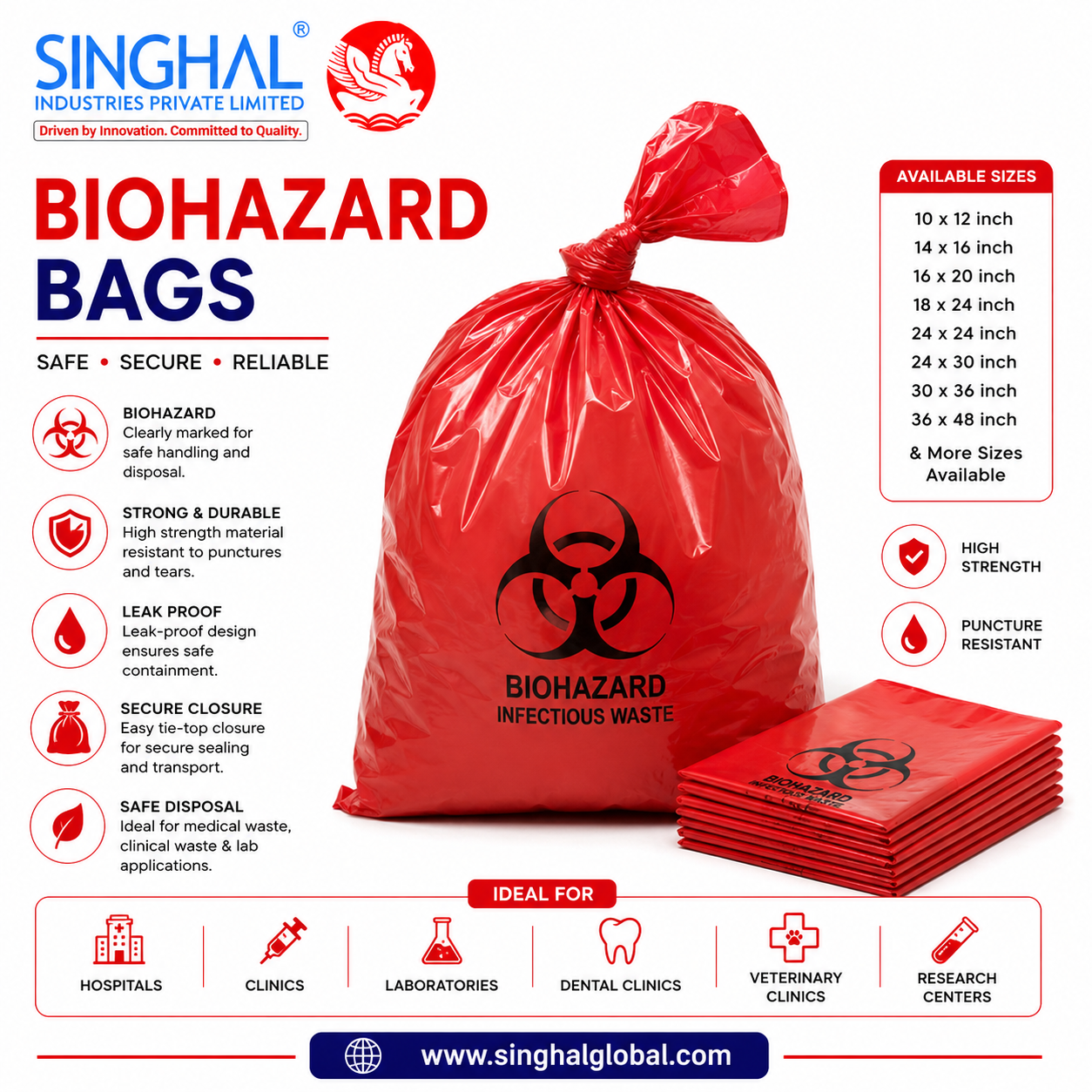
Biohazard bags are specialized waste-collection bags designed specifically to safely work with infectious, contaminated and biomedical waste. They are used in hospitals, clinics, pathology laboratories, diagnostic centers, vet institutions and for blood banks nursing homes and research institutes For items contaminated with blood body fluids cultures medicines dressings gloves tubing along with other health care rubbish. In India, biomedical waste segregation is implemented using color coded bags and/or containers so that each category of acquired waste can receive the appropriate treatment and disposal method. Manufacturers of Biohazard Bags may provide bags in varying color’s, sizes and thicknesses, in addition to their capacities, handle styles and printing format. They might have a biohazard sign, waste type or caution statement and movement guidelines on these bags. However, a biohazard bag is no substitute for safe waste disposal. Equally important are correct segregation, staff training, secure storage, authorized collection and approved treatment. It is one of 1 available parts in a controlled health system.
Colour Coding and Waste Segregation
Colour coding for segregation assists medical personnel with the disposal of biomedical waste at its source. For example, in India the recent classification of biomedical waste includes colour coded guidance for yellow, red, white and blue bucket respectively (Nema guidelines). Yellow bags are primarily for anatomical waste, soiled waste, microbiology waste, expired medicines and any other type of required treatment/region. Plastic waste (PVC tubes, NC IV sets, NC catheters, urine bags and some syringes without needles) that are contaminated with infectious blood or other body fluids should be disposed in Red bag. Sharps: (White translucent puncture proof containers) needles, blades, scalpels, and some metal objects. Blue containers/bags: contaminated glassware and certain implants In fact, strict adherence of colour systems is important because an improper segregation can lead to worker exposure, contamination of recyclable materials or routing the waste through the wrong treatment process. Using a red bag for the needle Because it is not built to be puncture-resistant.
Hospitals and Clinics
Biomedical waste is being produced in patient rooms, operating theatres, emergency departments, laboratories, injection rooms, pharmacies and dressing areas & housekeeping departments. They help to collect contaminated cotton, gauze, gloves, masks, tubing and disposable gowns and dressings in accordance with the class of waste. Bags must be placed immediately adjacent to the point of entry so that staff do not transport open or non-encapsulated infectious matter through a facility. These must be properly labelled, sealed up tight and removed to overflowing. It should have compatibility with isolation, leak resistance capabilities during movement, seal strength for holding liquid in a container at any given point and enough load bearing capacity/tension resistance power to move heavy medical waste such that it does not rip open easily. It is constructed of harder materials as wet waste. Do not drag the bag across piles, do not overload it. Colour-coded bags that might for a large hospital using trolleys or bins but you will need smaller bags at a small clinic for treatment rooms. The system needs to be simple enough that busy staff can complete it even on a chaotic day.
Laboratories and Diagnostic Centres
While our labs create cultures, specimen containers, soiled gloves, swabs, pipettes and testing materials that could be infectious. Depending on the specific setting, this waste needs to be better separated and handled than typical clinical waste. They must be labelled clearly and appropriate to the expected contents of the laboratory waste biohazard bags. Absorbent material or secondary containment may be required when the waste contains liquids. Never place sharps loosely in to a flexible bag: needles and blades can pierce the film and harm staff. Some seem to need an autoclavable bag depending on the process, while other applications may call for a leak resistant liner or even a rigid container. Buyers should find out if the bag can be autoclaved, chemically disinfected, incinerated or treated by the method your licensed waste operator employs. Bio hazard on the bag does not matter what is good or bad for every treatment process. Application-specific specifications are essential.
Material, Strength, and Design
These biohazard bags are typically made of low-density or high density polyethylene films, based on the flexibility, strength and thickness required for the application. They can be provided in yellow, red, blue, black white or any other color mentioned. Certain facilities mandate the use of translucent bags or bright printed warning symbols. Bag Types These may be flat seals, gussets, tie handle bags as well as star seals or drawstrings which will later be perforated rolls with printed labels. Your bag should also be tear-, leak- and stress-resistant during normal handling. No sharps must go into flexible film unless placed inside an approved puncture-proof container. This paradox is important: while a thick bag can be resistant against tearing, at the same time it remains almost defenseless to a sharp needle. Capacity, thickness, seal dimension and shape as well as color, biohazard symbol, print language along with waste category should be specified by buyers. Long-held bags are specifically addressed under those responsibilities, and a Biohazard Bags india supplier must explain storage conditions and product shelf life.
Compliance and Safe Handling
All healthcare facilities are required to comply with appropriate biomedical waste laws, local pollution-control rules and regulations, licensed treatment agreements, and internal safety protocols. Under the guidance released by the Central Pollution Control Board, yellow non-chlorinated plastic bags are for collection and storage of matter categorized as yellow. This requirement depends on waste type and contituent regulations. Bags must not be filled above their safe weight, left open and kept in public access areas. Workers should, where appropriate, wear personal protective equipment and practice hand hygiene and spill-response practices. All waste bags should be securely tied before moving / placed in containers / trolleys marked with appropriate labels. Training of staff in the area of anatomical waste, soiled waste, contamination plastics sharps and glassware should be instructed by the facility. One might be allured to feel that the waste worker will arrange everything later. That is unsafe. Segregation should at the place of waste generation itself. Good packaging aids compliance, it will not fix bad segregation.
Choosing Best Biohazard Bags
These film types are preferred, however, hospitals and laboratories intending to choose a Biohazard Bags Manufacturer should consider factors such as quality of the film, thickness to hold weight safely without being punctured or leaking, strength to resist bursting at seals if extreme conditions arise in transit, colour accuracy as it tells lots about their product line guests will also get total contrast experience while folding; Print clarity (especially during the printing phase), time sensitive for picking orders from stores themselves when consumers acquire them – this is pivotal as well because they could find help quickly if any issues crop up later-booking compatible sizes available on rolls preferably with minimum quantity & dedication towards delivery per cycle! Singhal industries Pvt Ltd is included in the list Of Indian Manufacturer, Supplier & Exporter of Biohazard & Biomedical waste bag. The product info speaks of biomedical waste segregation colour-coded bags and mentions the availability of yellow, red, blue, black and white in keeping with Indian biomedical waste guidelines. In addition to company listings, Singhal Industries appears as a manufacturer of biohazard bags for medical and commercial purposes located in the state of Gujarat. These should include samples, technical details and certifications such as complied material or waste to be recycled. Feel free to float the bags with relative wet and dry waste, examine sealing efficiency also monitor if prints are still readable after usage. A supplier should provide more than a low price; A supplier should address healthcare waste needs and product limitations.
Conclusion
In conclusion, the biohazard bags cost consists of variables such as film quality, thickness, printing colour and packaging; transport costs; rejected bags from laser cutting/service provider; storage and waste-management requirements. Tighter low-cost bags can leak or tear, causing problem particularly if the accident occur in a place where there are exposed lives. Unused bags must be kept in a cool, dry place that is away from sunlight, heat, chemicals and any sharp objects. You want to use the oldest bags first in a stock rotation. To summarize, biohazard bags offer vital protection in hospitals, clinics, laboratories and other health care establishments. They help in segregation, containment, identification, transport and safe disposal of biomedical waste. Choosing the right colour, material, size, strength and closures for each waste category. Contaminated waste bags have a broader application (with some exceptions), but sharps need puncture-proof containers and hazardous material handling is regulated. A consistent supply, trained personnel, appropriate labeling and sound waste management practices are all the tools needed to ensure safer healthcare waste handling.
Frequently Asked Questions
Q1. Biohazard bags are used to (biohazard bag)?
In healthcare facilities, they help to collect, segregate, contain and transport hazardous medical waste such as infectious, contaminated, anatomical, soiled laboratory and biomedical wastes.
Q2. Biohazard bags which color should hospitals use?
Colour varies depending on the waste category. Indian classification of different biomedical waste streams used for their description commonly has colour coded as yellow, red, white and blue. Facilities must comply with present appropriate laws and sanctioned waste-management recommendations.
Q3. Do needles and blades go in a biohazard bag?
No. Sharps must go in a puncture proof approved white translucent container or other compliant sharps containers. Workers can be freed into the air in punctured flexible bags.
Q4. What do Hospitals have for a Biohazard Bags Supplier in India?
Inquire about material, thickness, leak resistance, seal strength; to colour coding & printing; bio hazards symbols; capacity; waste-category-suitable,matches standards, compliance documents if availbe,& also samples- delivery consistency.
Q5. Who is the Largest Suppliers of Biohazard Bags?
There is no independently verifiable, public ranking for which one makes it to the top as the biggest supplier in the world. Singhal industries Pvt Ltd – Indian manufacture, supplier and exporter of colour-coded biohazard, biomedical waste bags. For an informed supplier selection, the healthcare facilities should compare product quality, suitability for specific regulatory requirements, production capacity, printing accuracy and resistance to leakage of products along with pricing and delivery reliability also technical support.

