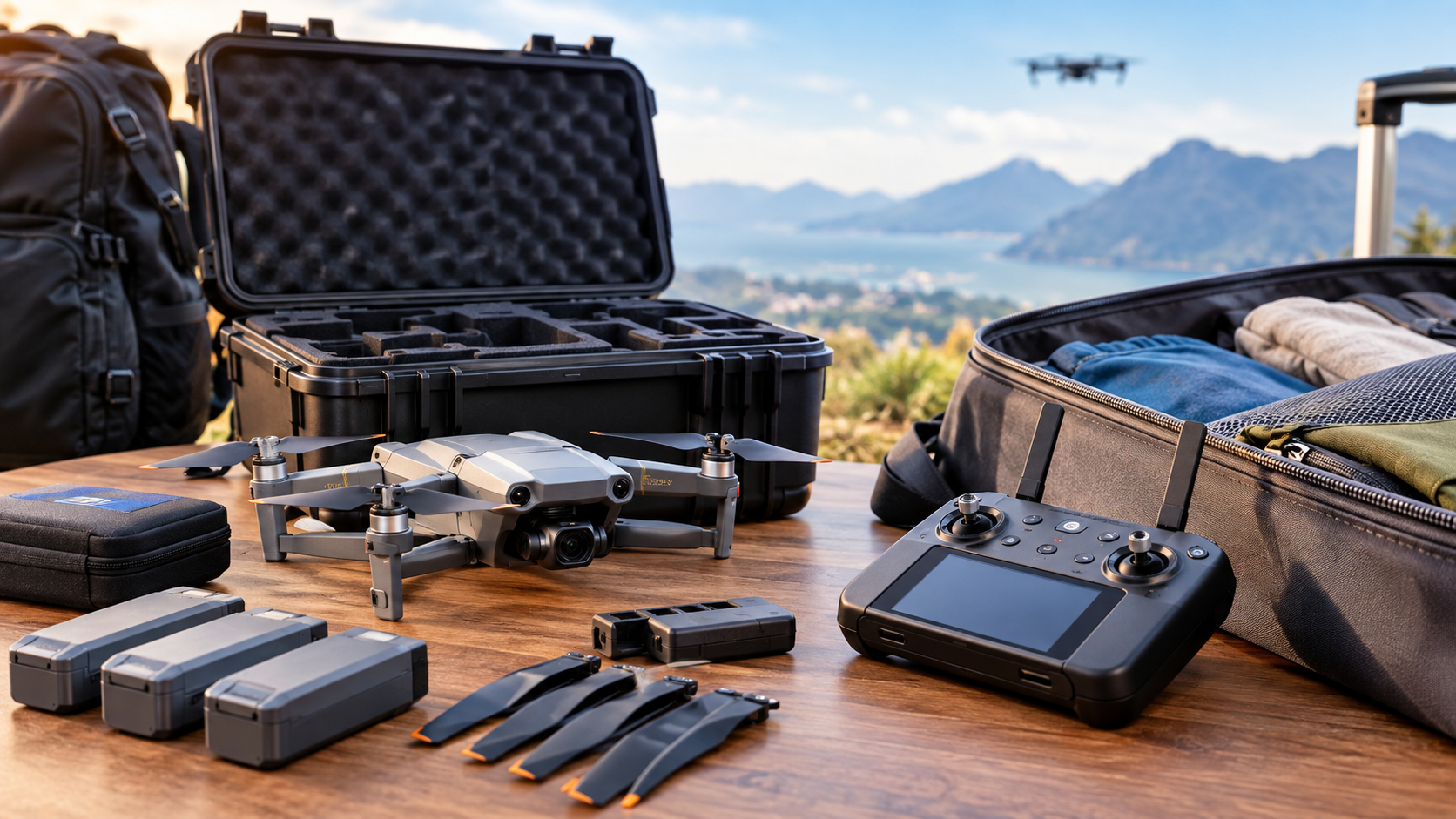
Most drone bags on the market are built around one assumption: that the airframe is the thing that needs protecting. Walk through what actually causes support tickets and repair shop visits, though, and the frame is rarely the problem. It’s the gimbal, the propellers, and the battery terminals — the smaller, more delicate components that a bag shaped like a camera backpack often does a mediocre job of isolating.
This guide covers what actually fails first when drones and RC gear travel, the battery rules that trip up even experienced pilots, and what a case built around real failure points looks like — rather than one built around the shape of the drone itself.
What Actually Breaks First: It’s Rarely the Frame
A drone’s main airframe is generally the toughest part of the whole package — it’s built to survive crashes during actual flight, so a bump in transit is rarely enough to damage it structurally. The parts that fail are the ones built for precision rather than durability: the gimbal, which holds the camera steady using small, sensitive motors and needs to stay within a very tight range of motion to function correctly; propellers, which are thin, rigid, and crack or chip easily under lateral pressure even though they’re inexpensive to replace; and battery terminals, which can short or corrode if they make contact with loose metal objects or other batteries during transport.
A case that cradles the drone body well but leaves these three components loose, unlabeled, or crammed into a single generic pocket is solving the wrong problem. The airframe was never the part at real risk.
The Lithium Battery Rules That Catch Even Experienced Pilots
This is the area where getting it wrong doesn’t just risk damage — it can mean a battery gets confiscated at security or a trip gets delayed. The core rules, consistent across TSA and international regulators: loose lithium batteries must travel in carry-on luggage, never in checked baggage, due to fire risk. The one exception is a battery that’s actually installed inside the drone itself — that can go in checked baggage, but every spare or removed battery needs to be in the cabin with you, ideally in its original packaging or a dedicated battery case or pouch, not loose in a bag pocket where it could short against keys or other metal.
Watt-hour capacity matters too. Most consumer drones — the compact, mini-class models most hobbyists fly — use batteries well under the 100Wh threshold that triggers additional restrictions, but larger industrial or professional-grade drones can use batteries in the 200Wh+ range, which are restricted or banned outright on commercial flights. It’s worth knowing your specific battery’s watt-hour rating before a trip, not assuming it falls under the common consumer threshold.
A dedicated LiPo-safe battery bag is a small, inexpensive addition (commonly under $20) that specifically contains any combustion risk if a battery does malfunction in transit. It doesn’t replace following the carry-on rule, but it’s a meaningful extra layer of protection for gear that’s genuinely more fire-sensitive than most other electronics travelers carry.
Gimbal Protection: The Most Overlooked Failure Point
The gimbal is arguably the single most fragile part of a modern camera drone, and it’s also the part most travel cases handle worst. Many drones ship with a plastic gimbal guard or lock specifically for transport, and skipping it — even for a “quick” trip across town — is one of the most common causes of gimbal motor damage among hobbyists. Beyond the guard itself, the gimbal needs to sit in a position where it isn’t pressed against anything, including the interior of its own case, since sustained pressure against the mechanism can throw off its calibration even without a visible impact.
A properly designed travel case addresses this with a cavity shaped specifically to hold the drone in its gimbal-locked position, with clearance around the camera and gimbal assembly rather than generic foam pressing against it from every side.
Propellers: Cheap to Replace, Still Worth Protecting Properly
Propellers are inexpensive and easy to swap, which is exactly why they get the least careful treatment — tossed loose into a side pocket, rattling against each other or other hardware. The real issue isn’t the cost of replacement; it’s showing up somewhere — a job site, a shoot, a competition — and discovering a chipped or cracked propeller right when you need to fly. A case with dedicated, separated propeller slots prevents them from knocking against each other or the drone body during transit, and keeps a full, matched set together instead of scattered across different bag pockets.
What a Case Built Around Real Failure Points Looks Like
Pulling this together, a genuinely protective drone and RC travel case needs: a rigid, impact-resistant shell — soft bags absorb some shock but offer no real protection against crushing or compression from other luggage stacked on top; a cavity shaped specifically for the drone body in its locked or folded transport position, not a generic padded compartment; separated, dedicated slots for propellers so they don’t contact each other or the airframe; a distinct compartment or pouch for batteries, ideally one that keeps terminals from contacting other metal objects; and enough overall rigidity that the case itself can be checked or stacked under other gear without transferring pressure to the gimbal or camera housing inside.
This is a meaningfully different design brief than “a bag shaped like the drone” — it’s a case designed around the actual sequence of things that break, in the order they tend to break.
A Practical Pre-Trip Checklist
Before any trip with a drone or RC gear: confirm the gimbal guard or lock is engaged before the drone goes in its case; check every spare battery is packed in carry-on luggage, not checked, and ideally in a dedicated LiPo bag or its original packaging; confirm your battery’s watt-hour rating against your airline’s specific policy, since individual carriers sometimes add restrictions beyond baseline TSA and FAA rules; make sure propellers are in their own protected slots, not loose in a side pocket; and give the case a firm shake before closing it for good — if anything moves audibly inside, it isn’t secured yet.
None of this requires expensive gear or a complicated routine. It just requires packing around what actually breaks, instead of around the shape of what you’re carrying.