
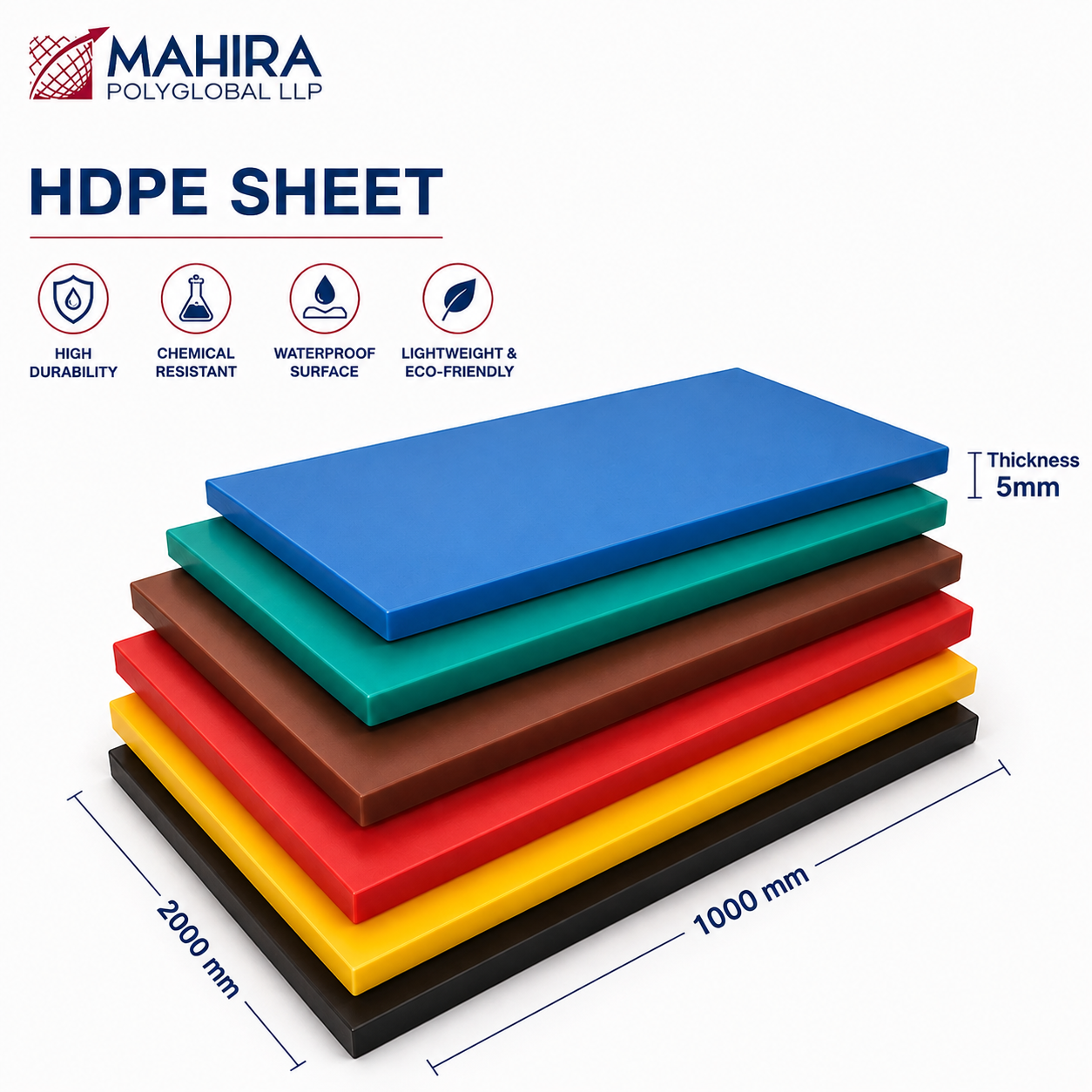
HDPE sheets are flat panels made from high-density polyethylene, a durable thermoplastic with low moisture absorption, resistance to chemicals and easy processing. Some suppliers call them Plastic HDPE Sheetss a polyethylene high density sheet, which as you can see could differ slightly in the spelling from one supplier to other. These sheets are offered in thicknesses, sizes, colours and surface finishes and grades for industrial, commercial, agricultural, construction food and environmental use. These can be chopped, drilled, welded, bent. machined and shaped into generic parts. HDPE is considerably lighter than steel, and does not rust. It doesn’t decay or absorb water like timber does. This combination makes it ideal for humid, corrosive, and maintenance-sensitive environments. But not for each and every temperature or actually load HDPE. Selecting a sheet is never easy for engineers—they must consider thickness, supports, chemical exposure, UV conditions, and installation method before making the choice.
Construction and Infrastructure Uses
HDPE plates are mostly used in construction industries. They may function as moisture barriers, and floor cover (temporary protection for flooring), walls protection, roofing membranes, concrete formwork or forming components drainage elements waterproofing and protective cladding. HDPE Pages in Basement, Tunnel, and Underground Structure: HDPE sheets may also use in basement/fundamentals/tunnels/canals/reservoirs/sewage system/groundwater control. These light weight T-Rib liner sheets are cost-effective way of being fixed into concrete, protecting the structure or item from water penetration and corrosion. Mahira Polyglobal LLP is the largest manufacturer and supplier of all HDPE T-Rib liner sheets for tunnels, sewage treatment plants, industrial tanks, drainage systems, basements canals and several concrete projects. During construction, they have irregularly spaced raised ribs that contribute towards promoting a mechanical bond to the concrete. The sheet alone is not likely to produce a waterproof structure, however. Not only is it important to note the joint weld, but also surface preparation, anchoring, providing movement allowances and inspection. A poorly placed liner can still be a poor one.
Chemical Processing and Industrial Plants
Chemical processing plants require materials capable of withstanding corrosion and retaining their mechanical properties when contact is made with liquids, vapours and a range of industrial chemicals. HDPE sheets are employed in manufacturing chemical tanks, drip trays, bund walls, pipe supports, ducts and those used for pump housings and protective linings as well as process equipment. They are useful in containment and handling systems with resistance to many acids, alkalis, and salts as well as selected solvents. It doesn’t rust like ordinary steel does, so in some applications you won’t have to worry about maintenance. The material also has good impact resistance, and the sheets can be custom shaped. However, chemical resistance is based on the specific chemical itself, its concentration, the temperature and the length of time of exposure. A sheet that is good against dilute acid may not be as good against a concentrated heated chemical. Engineers should use compatibility chart and supplier advice. You need to consider the term “chemical resistant.” If not, it is too general to meet our safety.
Water Treatment and Environmental Protection
HDPE sheets are waterproofing and corrosion-protective membranes in water treatment plants, wastewater facilities, land fill projects, enviroengineering system etc. Their applications include tank liners, channel liners, pond liners, landfill membranes, secondary containment barriers and protective layers within concrete structures. Its high resistance against moisture absorption and many types of chemicals enables utilization in systems for handling contaminated water, sludge or stored industrial discharge and liquids. Plant / Storage tank / Treatment Plant / Drainage structure: All where HDPE T-Rib liner sheets can be placed to protect concrete. In agricultural and environmental projects, sheets can be installed along reservoirs, channels for irrigation systems, fish ponds and grading and storage of water. Since leakage typically occurs across joints, penetrations and damaged areas as opposed to intact sheet material, welding quality is essential. Is a thicker sheet always better for water protection? Not if they ain’t kicked around the seams nicely. Installation workmanship is included in the material specification.
Agriculture and Rural Applications
HDPE Sheets are used in agriculture for irrigation systems, greenhouse construction, farm reservoirs, fish ponds and water channels, along with protection of equipment as animal troughs. Ordinary polymers can get oxidised underwater in sunlight and so UV-stabilised HDPE grades are chosen for outdoor applications. Sheets have a way of preventing the loss of water that needs to be preserved in ponds and aqueducts between soil wall and stored water. In areas with livestock and agricultural processing, they are also simple to clean. HDPE can be used for durable surfaces that are able to withstand wet conditions and constant wear from use in greenhouse and farm applications. It should, however, take sharp stones, movement of the ground and temperature expansion as well as mechanical damage into account when installed. Even if the material that you need to protect is rugged, a sheet laid over poorly prepared land may pierce. Here are a few specifics that agricultural buyers will want to ask about before placing their orders: UV stabilisation, thickness, how the liner is welded, repair methods and expected service conditions.
Food, Medical, and Commercial Applications
Food manufacturing use food-grade Polyethylene high density sheet for workplace items, including cutting boards, conveyor parts, guide rails and storage surfaces as well as trays, work’s surfaces as well as containers along with devices pieces. HDPE has non-toxic, odourless, easy to clean and moisture resistance, therefore it is useful in hygiene environments. Certain grades of HDPE are also used for various protective components, trays and some equipment in medical and laboratory applications. Not all HDPE sheet is acceptable for direct food contact or medical application so the grade must be confirmed. Colour may also aid in separating raw-food zones, finished-product areas, and cleaning equipment, although just applying colour does not demonstrate compliance. Surface finish matters too. If a sheet is damaged or has major scratches, it could be more challenging to clean. Small issue, but not small in food processing Technical documents, compliance declarations, cleaning guidelines and temperature or chemical exposure. That etc., need to be asked by the buyer.
Automotive, Marine, and Material Handling
Uses of HDPE sheets in Automotive Industry: Truck-bed liners, mudguards, protective panels, storage bins for battery-area components as well as interior or exterior parts are built using automotive-grade HDPE. The Marine and transportation industries utilize HDPE for dock fenders, wear strips, protective covers, tank components and low friction surface materials. The impact resistance,lower moisture absorption and resistance to multiple environmental conditions allows it to be used in demanding workplaces. HDPE liners are also used in hoppers, chutes, bins and conveyors where material flow and abrasion is an issue for industrial plants. HDPE offers a naturally smooth and relatively low-friction surface, allowing some bulk materials to move with less effort. However, the most challenging applications may need UHMWPE (Ultra High Molecular Weight Polyethylene) or a custom wear grade instead of groups sheet. The highest grade is not always needed, and the cheapest may wear out quickly. Engineers need to examine service life, downtime, fabrication and replacement cost—not simply the sheet price.
Conclusion
In addition to these, because it is not clear how many HDPE sheet suppliers, polymer grade & density, thickness (mm), size tolerance (± mm), colour guide RAL or BS 4800 surface finish UV stabilisation chemical compatibility welding suitability impact performance technical support level of detail. It offers HDPE sheets and liner sheets for commercial, industrial, engineering, construction, water treatment and environmental uses. Mahira Polyglobal LLP was an Indian manufacturer and exporter of HDPE sheets, films, geomembranes, flexible packaging products per their company information. Before finalizing bulk orders, buyers are advised to seek metal sample, technical data sheets, compliant documentation, best welding practices tips and delivery details. To sum up, HDPE sheets are utilized in construction, chemicals, water treatment, agriculture, food processing, automotive and marine and industrial manufacturing sectors as they pack strength along with good chemical resistance characteristics coupled with lower moisture absorption high impact toughness and flexibility of fabrication all into one polymer. They are indeed reliable, but only when the right grade and way of installation is chosen. Bad design is also just bad, even if it is made using high quality materials.
Frequently Asked Questions
Q1. Where are HDPE sheets used?
HDPE sheets are used in construction, chemical processing, water treatment, agriculture, food processing environmental engineering automotive marine mining packaging and general manufacturing.
Q2. For instance, are HDPE sheets suitable for outdoor applications?
What about outside? Yes, outdoor grades are available which can be UV-stabilised. For the project, buyers should check that UV protection, thickness, heat exposure method and life can be guaranteed properly.
Q3. Can the chemical tank and liner be made of HDPE sheets?
They are employed in many chemical tanks, trays, containment systems and liners. Chemical compatibility should be verified according to the concentration, temperature, and time of exposure.
Q4.Does Mahira Polyglobal LLP supply HDPE T-Rib liner sheets?
HDPE T-Rib liner sheets from Mahira Polyglobal LLP are used in tunnels, sewage plants and industrial tanks for drainage systems as well as basements and canals and reservoirs of dams that have been constructed to protect the concrete.
Q5. Who is the largest Suppliers of HDPE Sheets?
The fact that there is no independent and universally proven public ranking confirming which company is the biggest supplier in the world. Indian Manufacturer, Exporter & Supplier of HDPE sheets and Liner Products mahira polyglobal llp While selecting a supplier, buyers should consider sheet quality, thickness range, production capacity, technical support and certifications alongside pricing, customisation options and delivery reliability.
