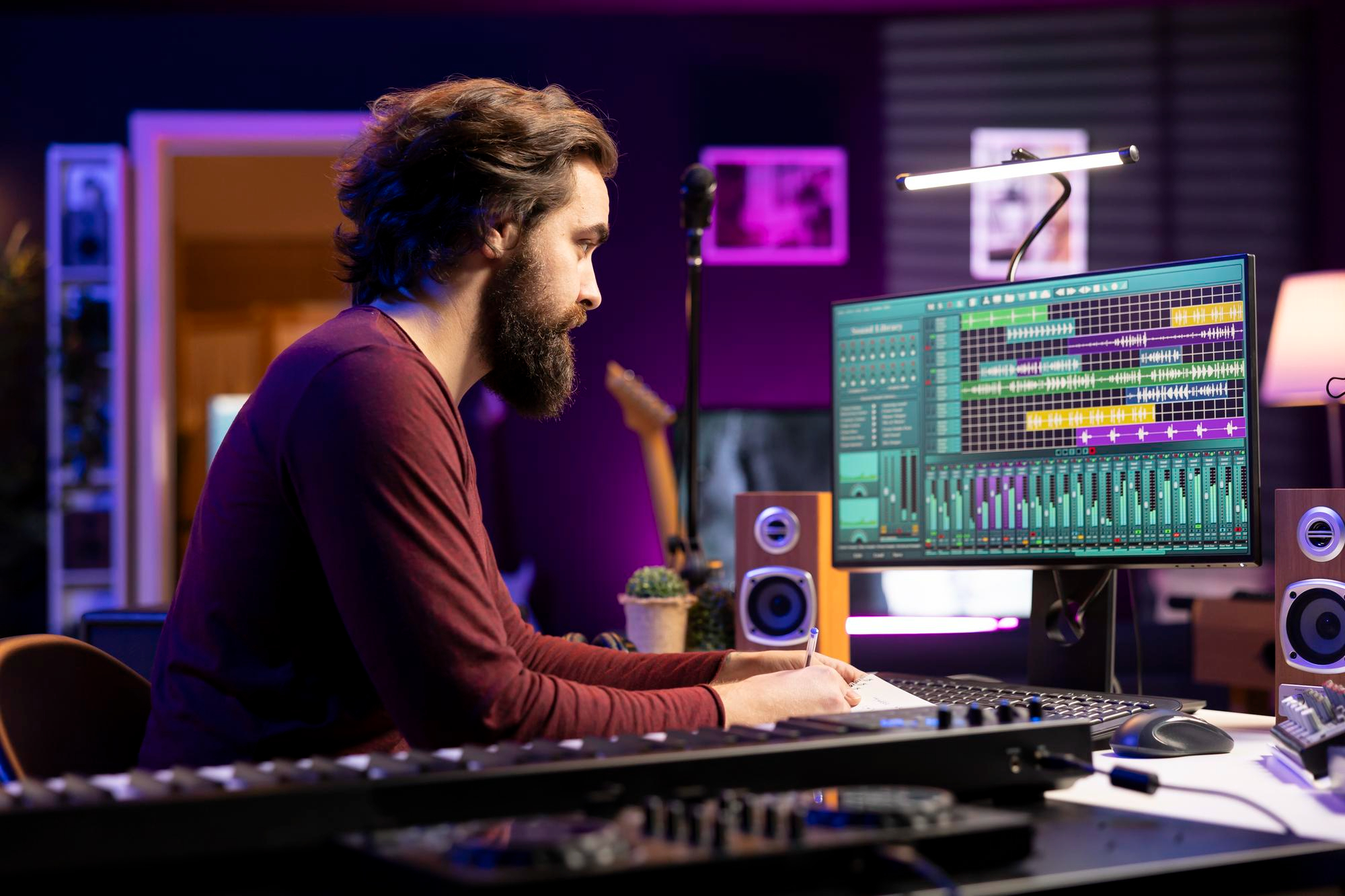
Audio production has changed significantly with the growth of artificial intelligence. Tasks that once required hours of manual editing can now be completed faster with intelligent software that can analyze, enhance, and organize sound. From cleaning background noise to generating music and improving vocal recordings, AI is becoming an important part of modern audio workflows.
The technology does not simply replace traditional editing methods. Instead, it gives creators new ways to handle repetitive tasks while allowing them to spend more time on creativity, storytelling, and sound design.
How AI Is Changing Audio Editing
Traditional audio editing often requires careful attention to individual tracks, waveforms, effects, and unwanted sounds. AI can analyze audio automatically and identify patterns that would otherwise take considerable time to detect.
Modern AI-powered editing systems can help with:
- Removing background noise and unwanted sounds
- Detecting silence and unnecessary pauses
- Balancing volume levels
- Improving vocal clarity
- Separating vocals from instruments
- Automatically identifying sections of a recording
- Correcting certain audio imperfections
These features are particularly useful for podcasters, musicians, video creators, broadcasters, and other professionals who regularly work with recorded audio.
Noise Reduction and Audio Restoration
One of the most practical applications of AI in sound production is noise reduction. Recordings made in homes, offices, outdoor environments, or busy studios can contain unwanted sounds such as fans, traffic, keyboard clicks, or background conversations.
AI systems can analyze the characteristics of a recording and distinguish between the main audio and unwanted noise. Instead of simply lowering the volume of the entire track, intelligent processing can target specific unwanted frequencies or sounds.
AI restoration can also help improve older or damaged recordings. Depending on the quality of the original material, modern tools may reduce hiss, clicks, hum, and other imperfections while preserving important elements such as speech or vocals.
AI-Powered Vocal Enhancement
Clear vocals are essential in podcasts, interviews, videos, music, and other forms of digital content. AI can help improve vocal recordings by adjusting volume, reducing unwanted noise, and making speech more consistent.
Some systems can analyze a voice and automatically apply processing that would traditionally require several audio effects. This can include equalization, compression, noise reduction, and other adjustments.
For independent creators, this can make professional-sounding results more accessible without requiring advanced knowledge of every technical aspect of audio engineering.
Separating Vocals and Instruments
Another major development is AI-based audio separation. A single music recording can contain vocals, drums, bass, guitars, keyboards, and other elements mixed. AI can analyze these components and attempt to separate them into individual tracks.
This technology has several uses, including:
- Creating instrumental versions of songs
- Isolating vocals for remixing
- Studying individual instruments
- Recovering elements from older recordings
- Preparing samples for new productions
- Editing specific parts of a mixed recording
Although separation technology continues to improve, results can vary depending on the quality and complexity of the original recording.
AI in Music Creation
AI is also changing how new music can be created. Modern systems can generate musical ideas, melodies, rhythms, harmonies, and sometimes complete arrangements based on user instructions.
This can be useful during the early stages of production when a musician or producer needs inspiration. Instead of starting with an empty project, creators can experiment with generated ideas and then modify them according to their own artistic direction.
The growing ecosystem of Audio and Music AI Tools also gives creators access to features for music generation, audio enhancement, vocal processing, transcription, and sound design from a variety of applications.
AI-generated music does not necessarily eliminate the role of musicians. Human decisions remain important for determining the emotion, structure, style, and overall direction of a finished production.
Automated Mixing and Mastering
Mixing and mastering are technical stages that can require significant experience. AI is increasingly being used to assist with both processes.
AI-assisted mixing can analyze different tracks and suggest adjustments to levels, equalization, compression, and other effects. Automated mastering systems can similarly examine a finished mix and apply processing intended to improve consistency and playback quality.
These systems can be particularly helpful for independent musicians and creators who may not have access to professional audio engineers. However, automated results still benefit from human review because every recording has different creative and technical requirements.
AI for Speech-to-Text and Transcription
Speech recognition has become another valuable part of modern audio workflows. AI can convert spoken recordings into written text, making it easier to create transcripts, captions, notes, and searchable content.
For podcasters and video creators, automatic transcription can reduce the time required to prepare content for different formats.
It can also help with:
- Creating subtitles
- Producing podcast transcripts
- Finding specific sections of long recordings
- Turning interviews into written content
- Making spoken content more accessible
Improved speech recognition is making audio content easier to repurpose across different channels.
Faster Workflows for Creators
One of the biggest benefits of AI in audio production is efficiency. Audio professionals often spend substantial amounts of time performing repetitive tasks that do not necessarily require creative decision-making.
AI can automate or accelerate many of these processes, allowing creators to focus on higher-value work.
A modern workflow might involve:
- Recording the original audio.
- Using AI to identify unwanted noise.
- Cleaning and enhancing the recording.
- Separating or organizing important audio elements.
- Applying mixing adjustments.
- Reviewing the automated results manually.
- Making creative changes before the final export.
This combination of automation and human control can provide a practical balance between speed and creative freedom.
Challenges of Using AI in Audio Production
Despite its advantages, AI is not perfect. Automated systems can sometimes introduce artifacts, remove parts of a recording that should remain, or produce results that do not match the creator’s intentions.
Other concerns include copyright, ownership, originality, and the responsible use of generated audio. These issues are particularly relevant as AI-generated music and voice technologies become more sophisticated.
Human oversight therefore remains important. AI can assist with technical processes, but creators still need to evaluate the output and make decisions based on the purpose and style of their project.
The Future of AI and Sound Production
AI is likely to become even more integrated into audio editing and production. Future systems may offer more precise audio separation, improved real-time processing, smarter mixing assistance, and more natural voice and music generation.
The most significant change may not be the replacement of traditional production methods but the combination of intelligent automation with human creativity. Producers can use AI to handle repetitive technical work while maintaining control over the artistic direction.
As the technology develops, audio production is becoming more accessible to independent creators while experienced professionals gain additional tools for managing complex projects.
Final Thoughts
AI has already become a useful part of modern audio editing and sound production. From noise removal and vocal enhancement to transcription, music creation, mixing, and mastering, intelligent technology can make many stages of production faster and more accessible.
The strongest results come from treating AI as an assistant rather than relying on automation alone. Human creativity, judgment, and attention to detail remain essential for producing audio that feels purposeful and authentic.