Quick Answer
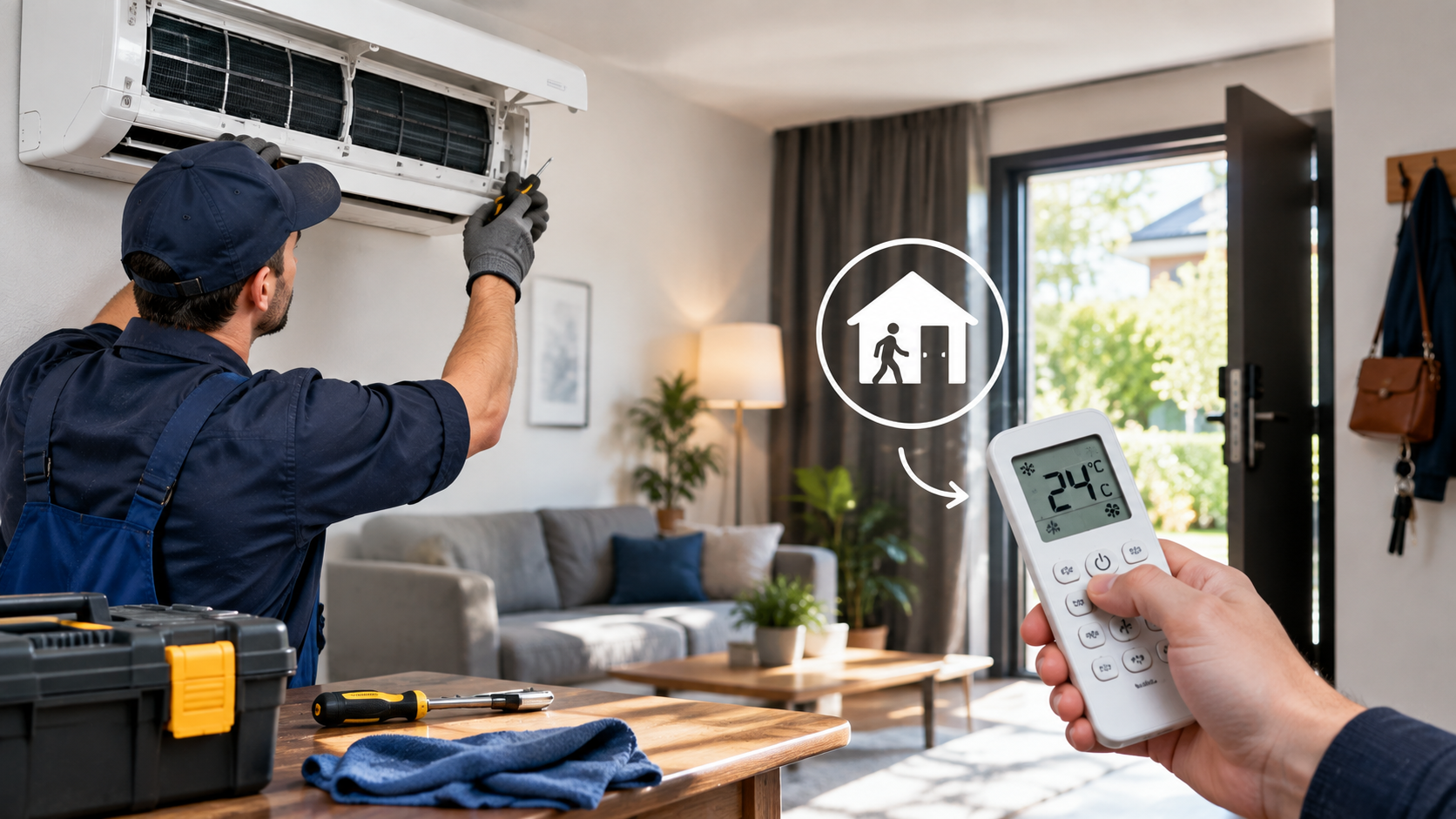
Short answer: don’t turn it completely off, bump the thermostat up instead. Shutting the AC off entirely during a hot South Carolina day usually costs you more in the long run, since the system has to work overtime to cool and dehumidify the house back down once you’re home. Raising the temperature by 5 to 8 degrees while you’re out gets you real savings without the drawbacks. This is one of the most common questions homeowners bring up on HVAC Rock Hill SC service calls once summer bills start climbing.
Why This Question Isn’t as Simple as It Sounds
1. The Old-School Advice vs. How Modern Systems Actually Work
There’s an old myth that’s stuck around for decades, the idea that it’s cheaper to just shut everything off and let the house heat up while nobody’s home. That logic made a little more sense with older, simpler systems. Modern AC units, especially ones sized and installed properly, are actually more efficient running a longer, steady cycle than fighting to catch up from a fully warm, humid house.
2. South Carolina Humidity Changes the Math
Here’s the part that trips people up. In a dry climate, letting the house heat up isn’t a big deal since there’s not much moisture to deal with when the system kicks back on. In South Carolina, humidity builds up right alongside the heat while your AC is off, and that moisture seeps into furniture, drywall, and anywhere else it can hide. Getting rid of it later takes real time and energy, which is a pattern our HVAC Rock Hill SC technicians see play out in homes all over York County every July.
What Happens When You Turn the AC Completely Off
1. The Restart Struggle
Picture your AC trying to cool a house that’s climbed to 85 or 90 degrees on a July afternoon. That’s a massive temperature gap to close, and the system has to run nonstop for hours just to get back to a comfortable range, drawing steady power the entire time. This is exactly the kind of strain that eventually turns into an AC repair Rock Hill SC call if it happens over and over.
2. Humidity Creeps Back In
Once the humidity rises indoors, it doesn’t just disappear the second the AC turns back on. It takes extra runtime to actually pull that moisture out of the air, which is part of why a house can feel muggy and uncomfortable even after the temperature reading looks fine.
3. Your System Works Harder to Catch Up
Long, hard runtimes to recover from a fully warmed-up house put more strain on the compressor than steady, moderate cycling would. Over time, that added stress can shorten the life of components that are expensive to replace.
The Better Middle Ground
1. Bumping the Thermostat Instead of Shutting It Off
Rather than turning the system off entirely, raise the thermostat while you’re out. The house drifts a bit warmer, but the system isn’t starting completely cold, and it doesn’t have nearly as steep a climb to recover once you’re back.
2. How Many Degrees Actually Makes Sense
A bump of 5 to 8 degrees above your normal setting while you’re away tends to hit the sweet spot, real energy savings without turning your home into a sauna or forcing a brutal recovery period. Going higher than that starts creeping back toward the same humidity and recovery issues as shutting it off completely.
3. Letting a Smart Thermostat Handle It
If you’ve got a smart thermostat, this decision basically makes itself. Set a schedule, or let it learn your patterns, and it’ll adjust automatically without you having to think about it every time you head out the door. It’s one of the easiest upgrades HVAC Rock Hill SC homeowners can make to stop worrying about this decision altogether.
When Turning It Off Completely Does Make Sense
1. Extended Vacations
If you’re leaving town for a week or more, that’s a different situation than a regular workday. For longer stretches, setting the thermostat to a higher holding temperature, rather than fully off, still protects against humidity buildup while saving meaningfully on energy over that longer period. It also spares you an unexpected AC repair Rock Hill SC visit from a system straining to recover after being off too long.
2. Homes With No Pets or Sensitive Belongings
If there’s nothing in the house sensitive to heat or humidity, no pets, no instruments, no humidity-prone furniture or electronics, the risk calculus shifts a little. Even then, we’d still lean toward a higher setting over a full shutdown, mainly to protect the system itself from a rough recovery cycle.
What This Means for Your Energy Bill
The savings from adjusting the thermostat instead of shutting the system off completely usually show up gradually rather than all at once, a few percent here and there depending on how consistently you do it. It’s a smaller, steadier win rather than one dramatic bill drop, but it adds up across a full summer. If your bills still feel high despite adjusting your habits, that’s often a sign of a bigger issue, and it might be worth having a technician look into AC repair Rock Hill SC options before assuming your thermostat habits are the only factor.
If you’re weighing a smart thermostat upgrade or just want a professional opinion on your setup, our team at atlasheatcool.com handles exactly this kind of question for HVAC Rock Hill SC homeowners every week, whether it’s a simple thermostat habit or a deeper efficiency concern worth a second look. For additional guidance on thermostat settings and energy savings, the U.S. Department of Energy’s thermostat guidance is a solid outside resource worth checking.
Conclusion
Turning your AC completely off when you leave feels like the obvious way to save money, but in a humid climate like South Carolina’s, it usually backfires. The better move is bumping the thermostat up a handful of degrees rather than shutting the system down entirely, which keeps humidity in check and spares your system a brutal recovery cycle. If you’re still seeing high bills or a system that struggles to keep up no matter what you do with the thermostat, it might be time to call around for HVAC Rock Hill SC service rather than keep adjusting settings and hoping for a different result, especially if AC repair Rock Hill SC visits have become a recurring pattern.
FAQs
1. Does turning off the AC really save money? Not usually in humid climates. The recovery cycle to cool and dehumidify the house back down often erases most of the savings, and repeated hard restarts are a common reason behind AC repair Rock Hill SC calls.
2. What temperature should I set my thermostat to when I leave? About 5 to 8 degrees above your normal comfortable setting works well for most homes in South Carolina.
3. Is it bad for my AC to turn it off and on frequently? Yes, frequent full shutdowns and hard restarts add more wear than steady, moderate cycling does.
4. Do smart thermostats actually help with this? Yes, they automate the adjustment so you get consistent savings without remembering to change settings manually every time.
5. Should I turn the AC off completely for a week-long vacation? Not entirely off. Set it to a higher holding temperature instead to avoid humidity buildup while you’re away.